

Could Distributed Peer Review Better Decide Grant Funding?
The landscape of academic grant funding is notoriously competitive and plagued by lengthy, bureaucratic processes, exacerbated by difficulties in finding willing reviewers. Distributed […]
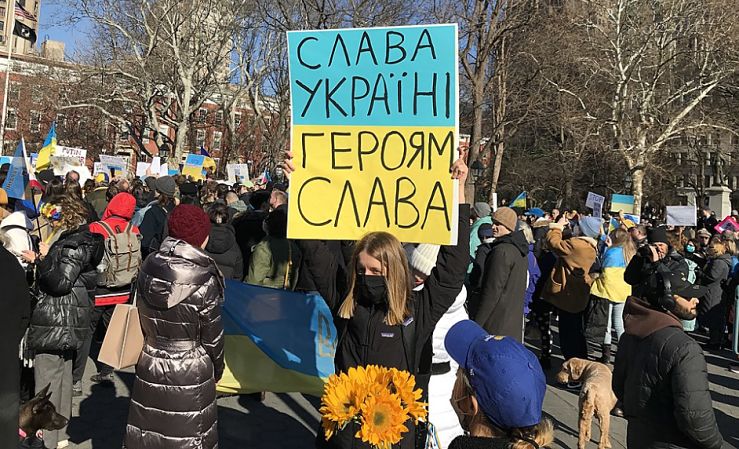
The full extent of the damage on scholars and research from Ukraine will not be known for some time, but predictions are grim.

The quick pace of change and the establishment of new industry actors inspired the authors to ask: what is driving service innovation and digitalization in the Swedish music market and how can we understand service in this context?

The first SAGE Open Long Form monograph, “Corporate Core Competencies’ Essence, Contexts, Discovery, and Future: A Call to Action for Executives and Researchers,” has now been released. It discusses how even though researchers and managers value and even extol the importance of core competencies, they often present “a sprawling, even fragmented picture of core competencies’ essence and contribution.”
On March 1 Britain’s Academy of Social Sciences conferred fellowships on 47 social scientists selected through an independent peer review.

More than 90 organizations based in higher education, ranging from the American Council on Education and American Association of University Professors to the Yes We Must Coalition and EDUCAUSE, have signed a statement supporting “academic inquiry and debate” on American campuses.

The climate crisis cannot be divorced from the study of projects. New scholars should embrace this cross-disciplinary way of thinking, especially as shifting policies have impacted project conceptualization.

In his new book, Richard Heller proposes a model he calls the distributed university – that is, a university that distributes education online to where it is needed.
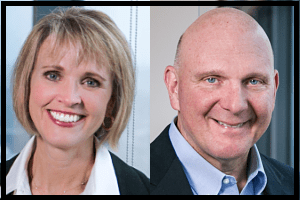
Connie and Steve Ballmer, co-founders of Ballmer Group Philanthropy, have promised $425 million to the University of Oregon to create The Ballmer Institute for Children’s Behavioral Health in Portland.
Jürgen Habermas, a globally known social theorist whose explorations of democracy, validity and communication have gained new prominence in the current moment, […] People often see science as a world apart: cool, rational and untouched by persuasion or performance. In this view, scientists simply discover […] “Research impact” means different things to different people. Some refer broadly to how science changes behaviors, beliefs, or practices outside academic institutions. […] David Canter considers informal places where people socialize, suggesting they’re an arena ChatGPT and other LLMs can’no’t replicate. As someone who lives […] It’s become cliche since Clive Humbly coined it in 2006, but data is indeed the new oil. It’s a mantra repeated by […] In September 2025, The Guardian reported about a lawyer in Australia having faced sanctions due to false citations. These citations were not […]
EXPLORE
Impact

Jürgen Habermas, 1929-2026: Exponent of the Public Sphere
READ MORE

Scientists Should Keep in Mind It’s Called the ‘Marketplace of Ideas’ for a Reason
READ MORE

Survey Finds Social Scientists Feel Unsupported in Seeking Societal Impact
READ MORE
Innovation

Reaching Parts to Which AI Has No Access
READ MORE

Andrea Medina-Smith on Making Research Data More FAIR
READ MORE

A Status Check on Hallucinated Case Law Incidents
READ MORE