Theresa Marteau on Healthy Environments
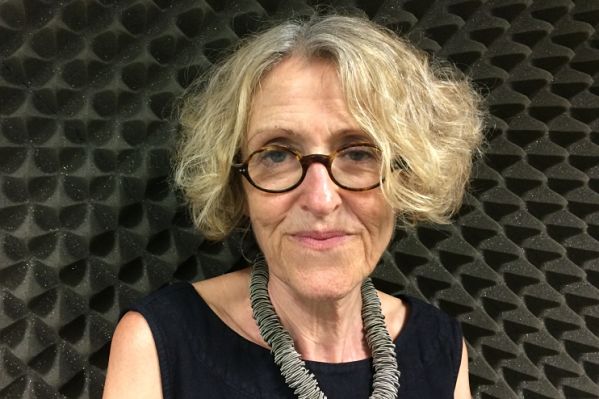
LISTEN TO THERESA MARTEAU NOW!
Under normal circumstances, if something was hurting you, you’d likely stop doing it. Except, well, as Theresa Marteau of Cambridge University’s Department of Public Health and Primary Care has explored deeply, in some key areas, you’re likely not stopping.
In a conversation with Social Science Bites host David Edmonds, she notes that the majority of premature deaths are due to four non-communicable diseases – diabetes, cancer, cardio-vascular disease, and lung disease. In turn, there are four main causes of these diseases – smoking, overconsumption of food, alcohol, and not moving around enough. All those causes, you’ll notice, flow from behavior.
And simply tapping someone on the shoulder and pointing out the connection has not been a particularly effective way to interrupt these pernicious behaviors.
“It’s quite a common idea that if people only understood better how they might be damaging their health, then they would tackle it,” Marteau explains. “Governments and others invest an amount of money in trying to communicate the risks to you and your health of engaging in these behaviors … and while it can raise awareness, it’s not that effective at changing your behavior.”
That’s perplexing, Marteau admits, but undeterred she’s spent much of her career at the intersection of basic psychology, neuroscience and behavioral science looking for ways that do work to change behavior. And, as this podcast explores, she’s focused on the environment.
Or rather, environments.
As director of Studies for Psychological and Behavioural Sciences at Cambridge’s Christ’s College, her research group examines how environment – and that includes the cultural, built and financial environments –buttresses short term pleasures over long term benefits.
Taking a cue from Daniel Kahneman’s Thinking Fast and Slow, Marteau finds that the ‘bad’ behaviors in question ultimately—despite any initial enthusiasm at some point to quit smoking or go to the gym – default to the so-called ‘fast‘ brain system that oversees routine behaviors. These routines in turn are shaped, or perhaps amplified, by those environments.
Ultimately, Marteau focuses on addressing these harmful behaviors, work which this June saw her named Dame Commander of the Order of the British Empire for her services to public health. That work has her collecting evidence for redesigning environments to promote healthy behavior, which touches on public and private industry issues like product pricing, availability (and proximity), portion size, excise taxes, and many others — “conceptually simple but legally and culturally more complex,” she admits.
To download an MP3 of this podcast, right-click HERE and save.
***
For a complete listing of past Social Science Bites podcasts, click HERE. You can follow Bites on Twitter @socialscibites and David Edmonds @DavidEdmonds100.