Polar Bears and the Ethics of Representation
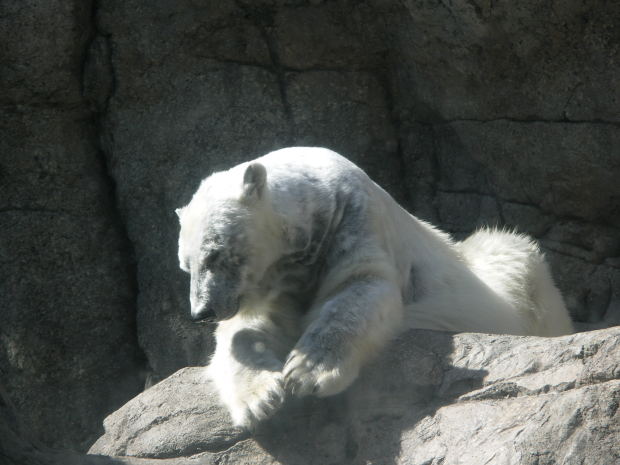
 There was a stir in some sections of the UK media just before Christmas when it was revealed that a sequence of a polar bear giving birth, in the BBC’s new blue-chip wildlife documentary series, Frozen Planet, had in fact been filmed in a Dutch animal park. While the BBC had noted the fabrication on the programme website, they had given it little prominence. It had not, for example, been included in the relevant ‘Making of…’ supplement that extends each episode from an internationally saleable 50 minutes to the 60 minutes required to fit UK non-commercial transmission slots.
Sociologists are often accused of ‘slow journalism’ but this is actually a case where we got there first. My former colleague, Meryl Aldridge, and I published a paper five years ago which included a dissection of another fabricated sequence, ironically also involving polar bears, in Frozen Planet’s predecessor, Blue Planet. Images filmed on different occasions had been edited to generate a humanized narrative about a female bear and her cubs. As we pointed out, though, this is only a problem if one assumes that wildlife documentaries are some kind of science education. In practice, they are a sophisticated form of popular entertainment, which may have the effect of enlightening their viewers about events and experiences that they will never personally witness, but which also have to compete for airtime with other kinds of reality show. At that time we focussed on a different ethical issue, namely the degree to which the genre constraints had unintentionally fostered a narrative approach that seemed very much like intelligent design creationism.
However, fabrication also raises some troubling issues for social scientists. Our outputs make many of the same truth claims as those of wildlife documentary – they simply happen to concern humans and are generally duller. For entirely proper ethical and scientific reasons, we promise anonymity and confidentiality to our research participants. Before ethical regulation was ever thought of, our community had gone to great lengths to develop professional conventions that sustained these promises. The result, though, is that our publications, whether quantitative or qualitative, are at least as fabricated as any wildlife programme. We select heroes and villains, condense time and collapse events, seeking to blur real identities behind numbers and tabulations or deliberately vague characterizations of places, organizations and people. From this process, we try to assemble a plausible narrative that represents the reality that we have inhabited, whether through observations, interviews or surveys. Even without these promises, no journal, publisher or reader could handle vast undigested slabs of reality – we must slice and dice, presenting fragments of data that purport to stand for the whole.
Some colleagues have taken this as a licence to tell stories in any way that they think proper on the basis of a prior ethical or normative commitment. Research is just a means of assembling material that can illustrate a predetermined plot, much like the single-mother-and-children account of the polar bear and her cubs that Meryl and I examined. If that is the case, though, what is the justification for claiming to offer a truthful account of society? Are we not just competing with creative artists, who can often do better than us because they have more explicit licences to edit the world to fit an imagined truth? Are the only criteria by which we can judge each other’s work those of the arts critic or the social activist?
There may, however, be a value to a society in news about itself that comes from a different kind of truth in representation: as I once put it, from a stance that can encompass, without rushing to judgements, the systematic relationships between top dogs, underdogs and lapdogs. Scientific truth is not achieved by any particular set of protocols but by the adoption of what the Austrian social theorist, Alfred Schutz, described as the scientific attitude, a principled scepticism about things that others consider to be matters of common sense. This representation is certainly filtered in various ways, but it is regulated by its aspiration to fair dealing. It gives equal weight and attention to success and failure and brings them into the same framework of explanation. It searches for the deviant cases and seeks to document and incorporate them within its understanding of the world. It is disciplined by the institutions of science – peer review, diverse publication outlets, multiple sources of funding, indifference to immediate impact – which are a highly evolved ecosystem of knowledge management and translation.
The results may lack the entertainment factor of the wildlife documentary, but their very coolness and detachment may be our most distinctive contribution.