Propaganda of the Deed: Learning the Lessons of Mikhail Bakunin
Although the term ‘terrorist’ originally emerged during the French Revolution’s 1790’s Reign of Terror, it did not take on its current meaning — of politically motivated violence being used by non-state groups — until more recent times. This quite different form of brutality developed an ideology and related strategies in the mid-19th century. Those developing the first theories from which current terrorism derives were anarchists, wishing to get rid of state controls. Notable amongst them was the Russian, Mikhail Bakunin, who turned to philosophy and politics after a military career.
As an experienced soldier he recognized that any small groups who were trying to overthrow the state could never have the power alone to do that. They were participating in what became known as an asymmetrical war. To deal with this he expounded the idea of carrying out significant violent acts that would draw attention to the cause. He knew such actions, no matter how gruesome, would ever topple the might of the state. However, he argued that they could set in motion a process that would. This was summarized as The Propaganda of the Deed.
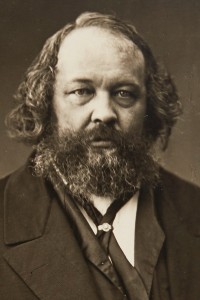
His belief was that significant violent actions would cause state actors to react with Draconian measures. These in turn would alienate the mass of the population, leading to a civilian uprising which would overthrow the state, clearing the way for a new form of political organization. The crucial feature of this process is that the state’s reaction has to be so severe that the public at large refuse to tolerate it, leading to a popular revolution.
It is interesting to note that the British in Northern Ireland, when John Major was prime minister, were at least implicitly aware that their dealings with the IRA should not be so harsh that it turned the total population against the British government. That would have created an atmosphere in which with the terrorist factions would be so incalcitrant that reaching any sort of peace accord would be impossible.
The IRA did not have as their stated aim the total destruction of Great Britain, unlike Hamas, its fellow travelers, and state supporters, whose clear objective is to obliterate the State of Israel. Yet these fundamentalist, Islamic terrorists are also involved in an asymmetrical war. They can never have the resources to overcome Israel’s Defence Force. But they can aspire to set in motion the process that Bakunin described almost two centuries earlier.
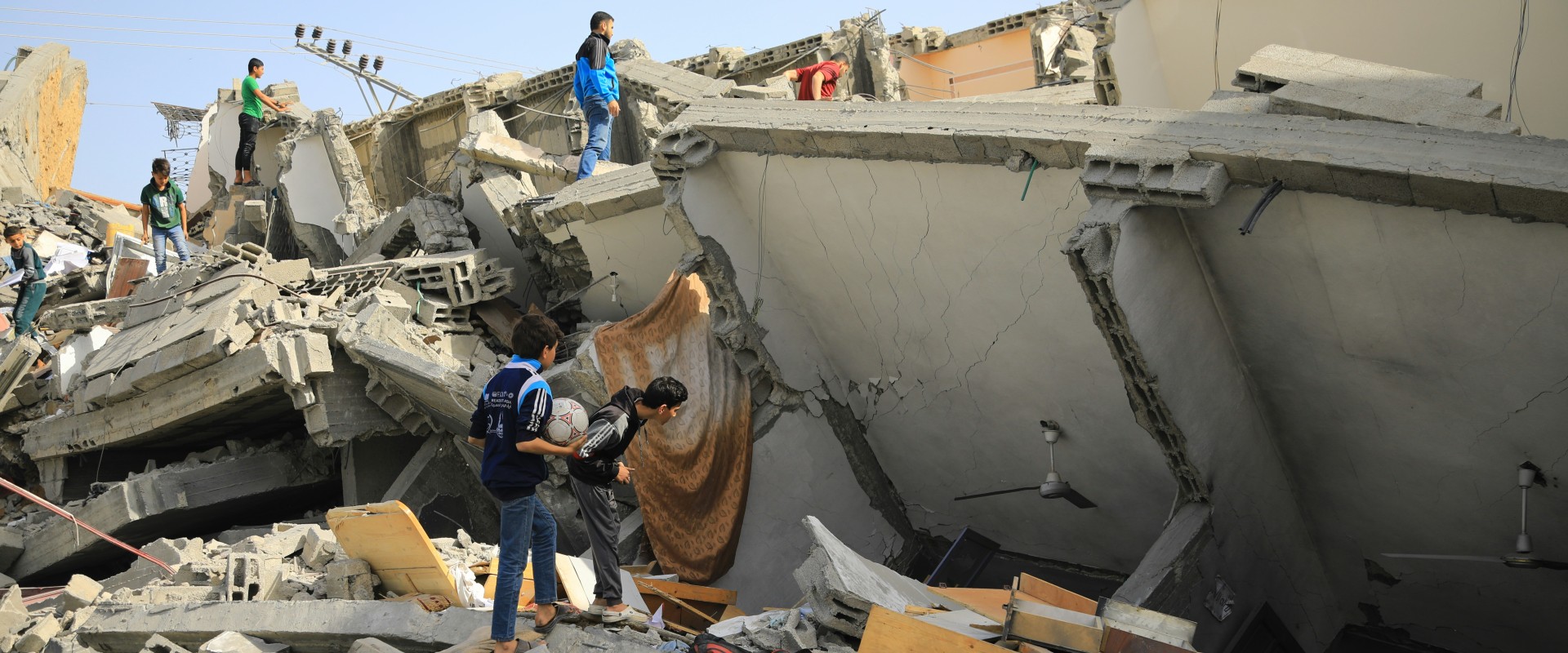
The horrifically violent massacre by Hamas of young people and local residents on October 7, 2023, was a deed that drew the attention of the world. As intended, it is provoking an extremely severe, relentless military response from the IDF under Netanyahu’s political leadership. It is clear that Hamas and their related military forces care nothing for the suffering of the people of Gaza. But their objective of bringing world-wide criticism of Israel and encouraging the recruitment of many more people to join their military than they have lost in battle is a clear success.
Israel’s extremely harsh response to the terrifying October massacre is understandable. It could even have been predicted from parallels to individual reactions. People who have been abused and terrorized in their youth, may in adulthood respond to unprovoked aggression with extremely violent reactions. Understandably, the shadow of the holocaust still hovers over Israeli and a broader Jewish state of mind. It is part of the founding ethos of the State of Israel to never let anything like that happen again. There may have been other local and geopolitical reasons for the IDF onslaught on Gaza, but the initial support for it within Israel could be explained partially as a generational response to the trauma that underpinned the establishment of Israel.
The complex crosscurrents that are involved in the IDF actions in Gaza, nonetheless demonstrate the process that Bakunin articulated, and that Hamas clearly anticipated. From that perspective the horror of October 7th can be understood as a trap that Netanyahu was willing to fall into. That is possibly because he and his own religious fundamentalists saw it as an opportunity for further territorial gains, as all previous Israeli wars have been. A less broad-based, vicious reaction to the October massacre may have been emotionally and politically difficult to accept, even though it would have undermined the power of the propaganda the deed was intended to set in motion.