Beyond Fact-Checking: Making Critical Thinking an Everyday Multimodal Habit
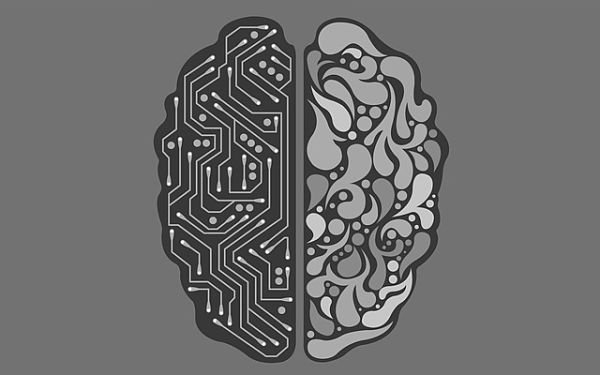
Students now encounter arguments mainly through digital feeds. These arguments are layered with music, editing, facial expressions, captions, filters, AI-generated imagery, and machine learning. Claims circulate as memes, reels, podcasts, reaction videos, and auto-generated summaries. However, many classrooms continue to teach critical thinking as if persuasion were primarily textual and static. To make critical thinking an everyday habit, we must teach students how meaning is constructed across multiple modes, not solely through written language.
Traditional critical thinking instruction regularly emphasizes:
- Evaluating source credibility
- Identifying logical fallacies
- Differentiating fact from opinion
- Constructing clear written arguments
While these skills continue to be essential, they are insufficient in situations where persuasion operates through affect, aesthetics, and platform design as much as through logic.
Students’ beliefs are rarely formed by syllogisms alone; they are commonly influenced by:
- The soundtrack behind a political clip
- The camera angle that confers authority
- The meme template that compresses complexity into familiarity
- The algorithm that repeats emotionally charged content
Treating critical thinking as a purely analytical, text-based skill overlooks the mechanisms of contemporary influence. What is missing in our teaching is multimodal awareness. As Marshall McLuhan (1964) presciently observed, “the medium is the message.” In digital environments, the medium now encompasses algorithmic systems that shape what we notice before we even begin to evaluate it.
To embed critical thinking as an everyday practice, I propose a simple, portable intervention called Pause the Scroll. This micro-habit can be applied daily, both within and beyond the classroom. Before reacting to, reposting, or dismissing content, students are encouraged to ask four questions:
- What is the claim? What is being asserted explicitly or implicitly?
- What is the feeling? What emotion does this content activate: urgency, outrage, pride, belonging?
- What is the frame? How do image, sound, editing, layout, or platform features shape interpretation?
- What is missing? Whose perspective is absent? What context has been cropped out?
This system broadens critical thinking from fact-checking to frame-checking, inviting students to recognize persuasion as a constructed process. To operationalize this habit, I assign the Algorithm Autopsy. Students collect five posts from their own feeds over one week across platforms such as TikTok, YouTube, or Instagram. For each post, they analyze:
- The primary claim
- The dominant communicative mode
- The affective tone
- Platform affordances (autoplay, looping, trending tags)
- The economic or ideological incentives behind circulation
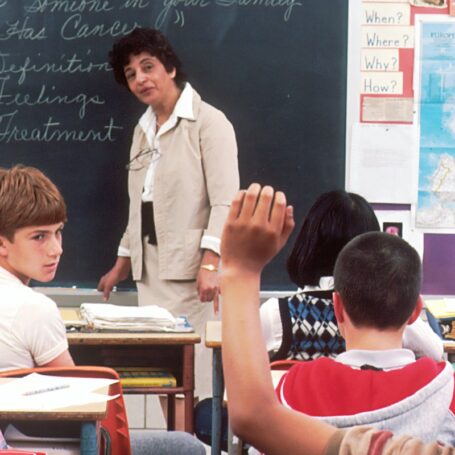
Students then write a brief analytic memo reflecting on their initial responses and examining how multimodal elements inform their interpretations. This assignment is applicable across disciplines, including first-year writing, political science, and media studies, and can be adapted for library-led information literacy sessions. The key shift is that critical thinking becomes integrated into students’ everyday media practices as opposed to being confined to formal essays. Students often describe this shift as initially disorienting. What earlier felt natural begins to reveal its underlying structure: the use of music intensifies a sense of urgency, while editing can lead to oversimplification, and repetition fosters familiarity. They start to notice emotional acceleration and recognize the subtle pressures of platform design that reward speed. When students can articulate how their attention is directed, they become active agents rather than passive recipients of influence. Critical thinking thus evolves from isolated evaluation to intellectual agency, becoming a daily act of reclaiming authorship over one’s own perception in environments designed to shape it.
Academic libraries are well positioned to support this evolution. Information literacy programs can incorporate multimodal decoding labs alongside traditional database instruction. Faculty-librarian collaborations may develop workshops focused on algorithm awareness and AI-generated media. These initiatives enable students to assess source credibility and to analyze how online infrastructures shape visibility and influence belief.
In conclusion, AI systems now generate text, images, voice, and video with remarkable fluency. Algorithms filter content before we consciously select it. In this context, critical thinking must evolve from isolated evaluation to continuous awareness. We are no longer preparing students to think within a print culture. For critical thinking to remain meaningful, it must become a habit of perceptual literacy. In a world saturated with multimodal persuasion, the central question is no longer, “Is this true?” but rather, “What is this doing to my thinking?” Teaching students to ask this second question and to pause long enough to answer it may be the most consequential act of critical pedagogy in our time.