
Could Distributed Peer Review Better Decide Grant Funding?
The landscape of academic grant funding is notoriously competitive and plagued by lengthy, bureaucratic processes, exacerbated by difficulties in finding willing reviewers. Distributed […]
Winning essays Overall winner “CITY Inc.” | James Fletcher, King’s College London Highly Commended “They know how much oxygen I breathe, which […]
Over the next 10 weeks Social Science Space will present the 10 shortlisted essays written by young social scientists look at how social science might change the world in the next half century. The overall winner was James Fletcher of King’s College London, whose essay “CITY Inc,” imagines what the London of 2065 will look like. His vision – a city transformed into a fifth state by the impact of social sciences and finance.

Canada’s Social Science and Humanities Research Council on Monday awarded five academics for their impactful research in a variety of key current issues, including language acquisition, refugees, water policy, homelessness and government surveillance.
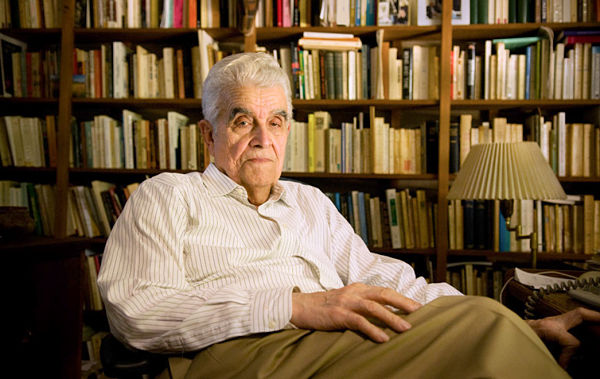
René Girard, whose academic career began in literary theory, and whose own theory of mimesis influenced people ranging from J.M. Coetzee to the founder of PayPal, died last week at his home at Stanford.
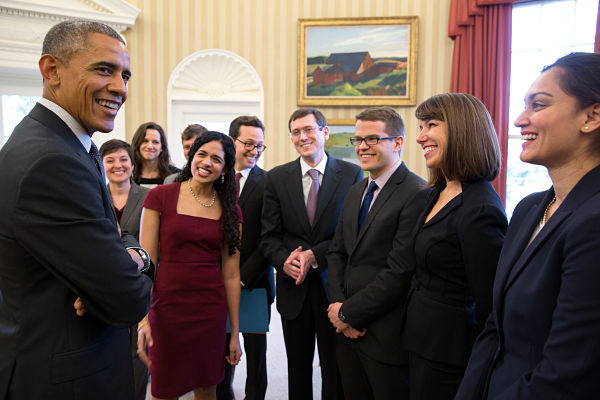
The White House’s Social and Behavioral Sciences Team has done an impressive job so far in using small, inexpensive changes to make federal policies better serve citizens.
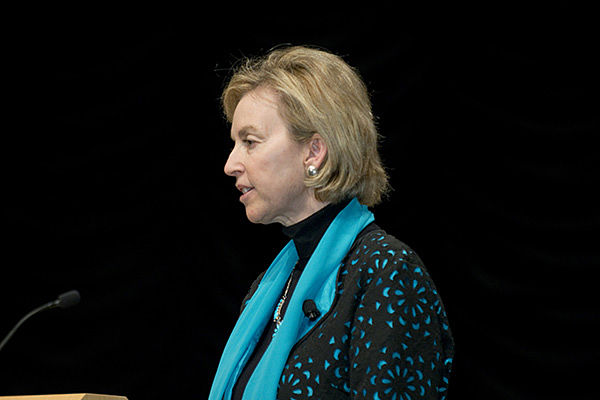
As part of a lecture series that commemorates the historic school desegregation court case of Brown vs. The Topeka Board of Education, an expert in indigenous education reviewed the arc of education native Americans in public settings.
The Global Insights Initiative, with its intriguing acronym of GINI, will bring experimentation to the World Bank’s poverty-fighting efforts by incorporating behavioral and social science into its project design and evaluation.

Angus Deaton’s work is a model of what applied economics ought to be, says Ian Preston. No award the Nobel committee has made has pleased the author as much, for the recognition it gives both Deaton and the type of work he does.
Jürgen Habermas, a globally known social theorist whose explorations of democracy, validity and communication have gained new prominence in the current moment, […] People often see science as a world apart: cool, rational and untouched by persuasion or performance. In this view, scientists simply discover […] “Research impact” means different things to different people. Some refer broadly to how science changes behaviors, beliefs, or practices outside academic institutions. […] David Canter considers informal places where people socialize, suggesting they’re an arena ChatGPT and other LLMs can’no’t replicate. As someone who lives […] It’s become cliche since Clive Humbly coined it in 2006, but data is indeed the new oil. It’s a mantra repeated by […] In September 2025, The Guardian reported about a lawyer in Australia having faced sanctions due to false citations. These citations were not […]
EXPLORE
Impact
Jürgen Habermas, 1929-2026: Exponent of the Public Sphere
READ MORE

Scientists Should Keep in Mind It’s Called the ‘Marketplace of Ideas’ for a Reason
READ MORE

Survey Finds Social Scientists Feel Unsupported in Seeking Societal Impact
READ MORE
Innovation

Reaching Parts to Which AI Has No Access
READ MORE

Andrea Medina-Smith on Making Research Data More FAIR
READ MORE

A Status Check on Hallucinated Case Law Incidents
READ MORE