
Could Distributed Peer Review Better Decide Grant Funding?
The landscape of academic grant funding is notoriously competitive and plagued by lengthy, bureaucratic processes, exacerbated by difficulties in finding willing reviewers. Distributed […]

There is a push to demonstrate the impact of the social sciences, especially as political and funding authorities start viewing them through an immediate-payoff prism. But showing impact doesn’t always come at no cost.
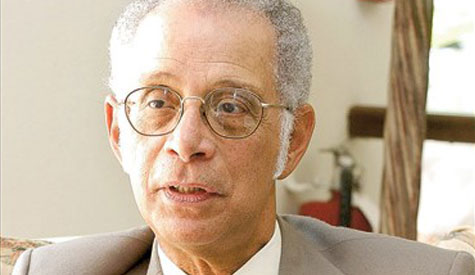
Economist Norman Girvan, one of the Caribbean’s most respected social scientists and a consistent and loud voice for greater unity in the region, died last month.
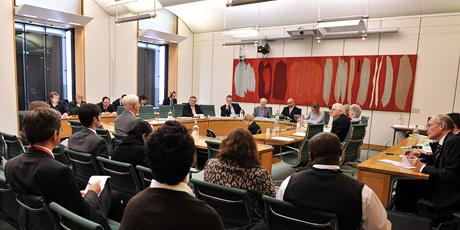
Last month a team of UK academics launched an initiative called the Evidence Information Service, which seeks to enable rapid dialogue between researchers and policy makers. Here, the system’s founders describe the response so far and the challenges that lie ahead.

Lack a personal website? No CV posted online? Is your work visible on digital listings? If you are answering no, Patrick Dunleavy offers some advice how to easily shed that monkish role — if you want to.
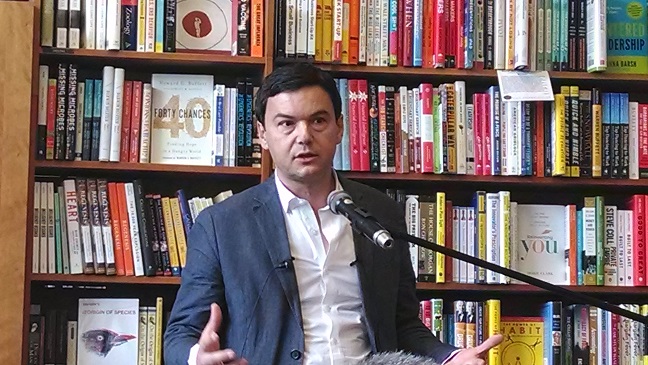
Is the French economist and meteoric public intellectual our generation’s Marx (or Malthus)?
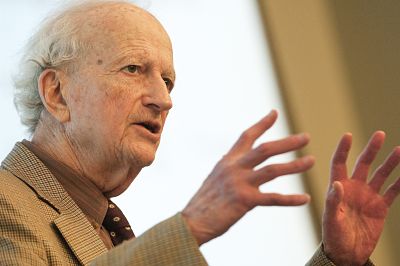
Nobel laureate Gary S. Becker, one of the University of Chicago economists who unshackled the dismal science from its focus on the behavior of money to the behavior of people, has died.

Under attack from some quarters for research that is portrayed as wasteful or out of touch, it’s time, argues Jason Ensor, to find newer and more public ways to engage the community beyond the ivory tower.
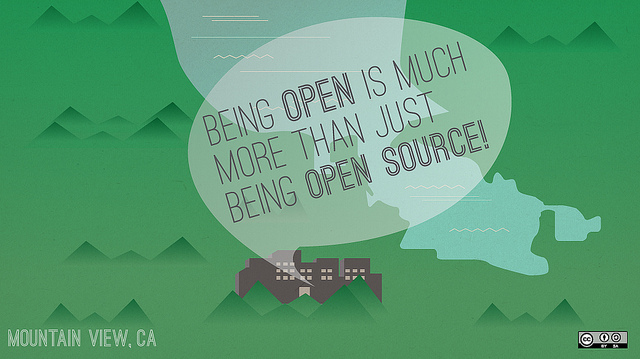
Ben Johnson posits that frequently asked questions concerning open access implementation for particular disciplines arise from an incomplete conception of the nature of openness that neglects one vital component: connection.
Jürgen Habermas, a globally known social theorist whose explorations of democracy, validity and communication have gained new prominence in the current moment, […] People often see science as a world apart: cool, rational and untouched by persuasion or performance. In this view, scientists simply discover […] “Research impact” means different things to different people. Some refer broadly to how science changes behaviors, beliefs, or practices outside academic institutions. […] David Canter considers informal places where people socialize, suggesting they’re an arena ChatGPT and other LLMs can’no’t replicate. As someone who lives […] It’s become cliche since Clive Humbly coined it in 2006, but data is indeed the new oil. It’s a mantra repeated by […] In September 2025, The Guardian reported about a lawyer in Australia having faced sanctions due to false citations. These citations were not […]
EXPLORE
Impact

Jürgen Habermas, 1929-2026: Exponent of the Public Sphere
READ MORE

Scientists Should Keep in Mind It’s Called the ‘Marketplace of Ideas’ for a Reason
READ MORE

Survey Finds Social Scientists Feel Unsupported in Seeking Societal Impact
READ MORE
Innovation

Reaching Parts to Which AI Has No Access
READ MORE
Andrea Medina-Smith on Making Research Data More FAIR
READ MORE

A Status Check on Hallucinated Case Law Incidents
READ MORE