



Could Distributed Peer Review Better Decide Grant Funding?
The landscape of academic grant funding is notoriously competitive and plagued by lengthy, bureaucratic processes, exacerbated by difficulties in finding willing reviewers. Distributed […]

Editors of the recently launched journal Research and Politics argue publishing in political science requires a reboot. Time lags in conventional publishing and the limited accessibility of articles can undermine researchers’ attempts to maximize the impact of their work.

Scholars are increasingly expected to consider the wider public, but with little to negative promotion incentive. Christopher Meyers finds much of what academics do does not fit into the standard boxes of teaching, scholarship and service. Is it time to replace these categories with a single holistic and qualitative standard?

At the kick off of the Campaign for Social Science’s lobbying effort before the 2015 UK general elections, journalist Tim Harford gives a real-life example of how social science both steps on and then enhances a compelling public policy narrative.
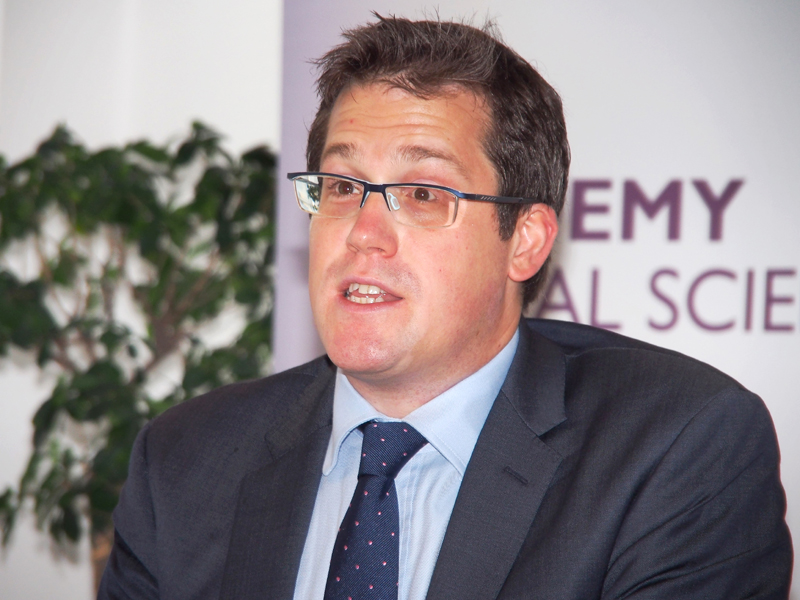
A major new effort to present social science’s best evidence-based case for value and impact to British policymakers has been unveiled. In an interview with Social Science Space, the project’s chair discusses how backers hope it influences the public conversation before next year’s general election.

One of the benefits of ostensibly narrow academic pursuits is how their resulting scholarship can inform the work of more widely lauded popularizers and public intellectuals.

Academics in children’s picture books tend to be elderly, old men, who work in science, called Professor SomethingDumb. Michelle Terras argues it matters if children are shown that researchers are male, mad and muddleheaded.

The generation of knowledge by professors. The transformative conversations that happen outside of the classroom. The advancements in our understanding of society. How can you put a value on any of these things?

Anyone under the impression that universities are the dominant suppliers to the United Kingdom government of commissioned research, advice, and knowledge, think again. Open data on government spending shows the relative dominance of other suppliers and mediators of knowledge to government – not least the private sector and think tanks. Simon Bastow presents some preliminary government-wide data.
Jürgen Habermas, a globally known social theorist whose explorations of democracy, validity and communication have gained new prominence in the current moment, […] People often see science as a world apart: cool, rational and untouched by persuasion or performance. In this view, scientists simply discover […] “Research impact” means different things to different people. Some refer broadly to how science changes behaviors, beliefs, or practices outside academic institutions. […] David Canter considers informal places where people socialize, suggesting they’re an arena ChatGPT and other LLMs can’no’t replicate. As someone who lives […] It’s become cliche since Clive Humbly coined it in 2006, but data is indeed the new oil. It’s a mantra repeated by […] In September 2025, The Guardian reported about a lawyer in Australia having faced sanctions due to false citations. These citations were not […]
EXPLORE
Impact

Jürgen Habermas, 1929-2026: Exponent of the Public Sphere
READ MORE

Scientists Should Keep in Mind It’s Called the ‘Marketplace of Ideas’ for a Reason
READ MORE

Survey Finds Social Scientists Feel Unsupported in Seeking Societal Impact
READ MORE
Innovation

Reaching Parts to Which AI Has No Access
READ MORE

Andrea Medina-Smith on Making Research Data More FAIR
READ MORE

A Status Check on Hallucinated Case Law Incidents
READ MORE