


Could Distributed Peer Review Better Decide Grant Funding?
The landscape of academic grant funding is notoriously competitive and plagued by lengthy, bureaucratic processes, exacerbated by difficulties in finding willing reviewers. Distributed […]

There they sit, giving the ‘thumbs-up’ to our lives, affirming that all is okay in our world. The ubiquitous “like” button, the […]

Back in the summer, John Holmwood, the current BSA President, sent me an email about impact and research ethics. Various contingencies have […]
Fifteen universities across the UK will receive £19.5 million to overhaul their social science teaching over […]
A recent Ipsos-Mori survey reveals the crucial role that social science has to play in modern democracy, a role which is frequently sabotaged.
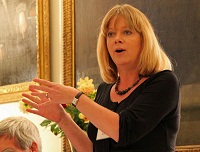
Social epidemiologist Kate Pickett, co-author (with Richard Wilkinson) of The Spirit Level: Why Equality is Better for Everyone, argues that inequality has bad […]
Critical scholarship and intellectual dissent are currently being closed down in favour of a model of academic life that accords scholars a limited role as purveyors of practically useful skills in ‘real-world’ labour markets.

A conversation with Kitty Kelly Epstein, winner of the 2013 Marilyn Gittell Activist Scholar Award and a university professor who took a four-year break from teaching to live her research.

The American Academy of Political and Social Sciences recognizes William Julius Wilson for his work on race, stratification, and disadvantage in the U.S.
Jürgen Habermas, a globally known social theorist whose explorations of democracy, validity and communication have gained new prominence in the current moment, […] People often see science as a world apart: cool, rational and untouched by persuasion or performance. In this view, scientists simply discover […] “Research impact” means different things to different people. Some refer broadly to how science changes behaviors, beliefs, or practices outside academic institutions. […] David Canter considers informal places where people socialize, suggesting they’re an arena ChatGPT and other LLMs can’no’t replicate. As someone who lives […] It’s become cliche since Clive Humbly coined it in 2006, but data is indeed the new oil. It’s a mantra repeated by […] In September 2025, The Guardian reported about a lawyer in Australia having faced sanctions due to false citations. These citations were not […]
EXPLORE
Impact

Jürgen Habermas, 1929-2026: Exponent of the Public Sphere
READ MORE

Scientists Should Keep in Mind It’s Called the ‘Marketplace of Ideas’ for a Reason
READ MORE

Survey Finds Social Scientists Feel Unsupported in Seeking Societal Impact
READ MORE
Innovation
Reaching Parts to Which AI Has No Access
READ MORE

Andrea Medina-Smith on Making Research Data More FAIR
READ MORE
A Status Check on Hallucinated Case Law Incidents
READ MORE