



Could Distributed Peer Review Better Decide Grant Funding?
The landscape of academic grant funding is notoriously competitive and plagued by lengthy, bureaucratic processes, exacerbated by difficulties in finding willing reviewers. Distributed […]

Academic book publishing is under threat. Global university rankings and competition for funding and international student enrolments are reshaping the research landscape. […]
Academic pipeline programs have created safe spaces for women, minorities and persons with disabilities to receive training in STEM disciplines for several […]

Eleanor Bernert Sheldon, a pioneer in the use of social indicators as an important tool of social science, died on May 8 at the age of 101.
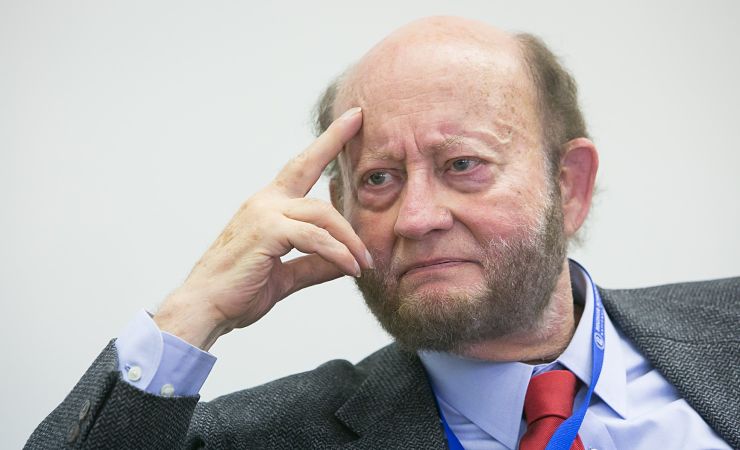
Ron Inglehart, a political scientist whose work on surveying values around the world set new and higher bars on what such studies could achieve, has died at age 86.
The National Academies’ Committee on National Statistics seeks nominations for members of an ad hoc consensus study panel — sponsored by the U.S. Census Bureau — to review and evaluate the quality of the 2020 Census.
SAGE Publishing is inviting applications for the 2021 SAGE Concept Grant, which provides funding for new software tools for social science research. Now in its fourth year, the Concept Grant scheme has to date invested over £120,000 in the development of early-stage software solutions that solve common problems faced by social researchers.
On May 12 – Women, Minorities, and Persons with Disabilities Day – a series of online events will mark the release of a report on the status of these groups in science, analyze the new data, and aim to provide an understanding of what to do next.

Research from Loren Falkenberg and Elizabeth Cannon shows universities must “future proof” themselves, which happens when an institutional strategy is focused on the future while mitigating the impact of unforeseen events.

Jürgen Habermas, a globally known social theorist whose explorations of democracy, validity and communication have gained new prominence in the current moment, […] People often see science as a world apart: cool, rational and untouched by persuasion or performance. In this view, scientists simply discover […] “Research impact” means different things to different people. Some refer broadly to how science changes behaviors, beliefs, or practices outside academic institutions. […] David Canter considers informal places where people socialize, suggesting they’re an arena ChatGPT and other LLMs can’no’t replicate. As someone who lives […] It’s become cliche since Clive Humbly coined it in 2006, but data is indeed the new oil. It’s a mantra repeated by […] In September 2025, The Guardian reported about a lawyer in Australia having faced sanctions due to false citations. These citations were not […]
EXPLORE
Impact

Jürgen Habermas, 1929-2026: Exponent of the Public Sphere
READ MORE

Scientists Should Keep in Mind It’s Called the ‘Marketplace of Ideas’ for a Reason
READ MORE

Survey Finds Social Scientists Feel Unsupported in Seeking Societal Impact
READ MORE
Innovation

Reaching Parts to Which AI Has No Access
READ MORE

Andrea Medina-Smith on Making Research Data More FAIR
READ MORE

A Status Check on Hallucinated Case Law Incidents
READ MORE