
Could Distributed Peer Review Better Decide Grant Funding?
The landscape of academic grant funding is notoriously competitive and plagued by lengthy, bureaucratic processes, exacerbated by difficulties in finding willing reviewers. Distributed […]
The National Academies’ Committee on National Statistics seeks nominations for members of an ad hoc consensus study panel — sponsored by the U.S. Census Bureau — to review and evaluate the quality of the 2020 Census.
SAGE Publishing is inviting applications for the 2021 SAGE Concept Grant, which provides funding for new software tools for social science research. Now in its fourth year, the Concept Grant scheme has to date invested over £120,000 in the development of early-stage software solutions that solve common problems faced by social researchers.
On May 12 – Women, Minorities, and Persons with Disabilities Day – a series of online events will mark the release of a report on the status of these groups in science, analyze the new data, and aim to provide an understanding of what to do next.
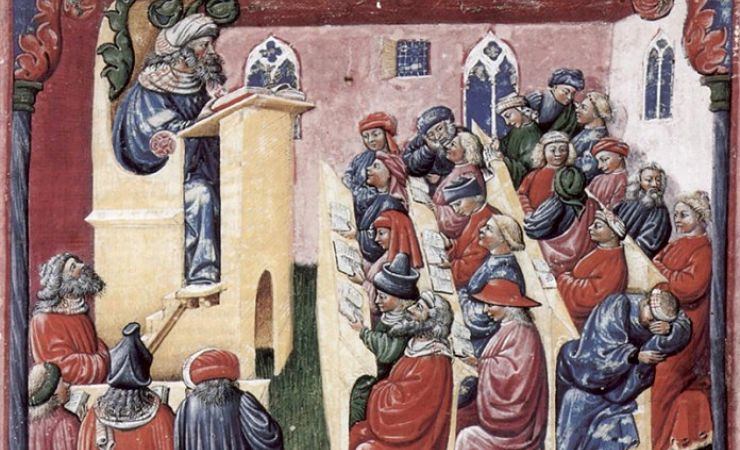
Research from Loren Falkenberg and Elizabeth Cannon shows universities must “future proof” themselves, which happens when an institutional strategy is focused on the future while mitigating the impact of unforeseen events.
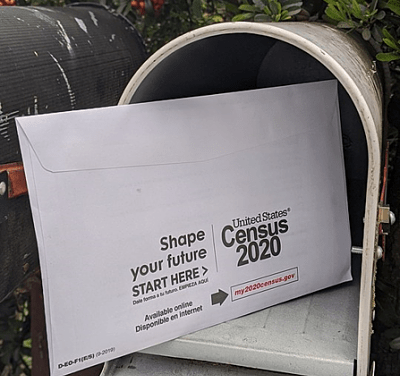
U.S. President Joe Biden announced that he would nominate Robert Santos, president of the American Statistical Association, as director of the Census Bureau.

Correcting mistakes in light of new data and updating findings to reflect this is often considered to be a key characteristic of scientific research. Commenting on the ‘Loss-of-Confidence Project’, a study into self-correction amongst psychologists, Julia M. Rohrer, suggests that in practice self-correction of published research is, infrequent, difficult to achieve and perceived to come with reputational costs. However, by reframing and changing the static nature of academic publications, it may be possible to develop a research culture more conducive to self-correction.

Princeton sociologist Marta Tienda will be the next president of the American Academy of Political and Social Science.

Volunteer reviewers are one key obstacle – or ally – in seeing scholarship from indigenous authors makes into mainstream academic journals. Here are some tips to remove obstacles.

The Royal Swedish Academy of Sciences has awarded this year’s Nobel Prize in Economic Sciences to the American economists Robert E. Hall […] Four Americans working in the social and behavioral sciences are among the 20 people named MacArthur Fellows this year. Recipients may be […] Euan Adie, the founder of Altmetric and later of Overton, discusses the reasons the led to Overton’s focus on showing researchers how […] The following is an adapted extract from The Cultural Industries, fifth edition, by David Hesmondhalgh. The increasing presence of information technology (IT) […] Developers of AI data centers have a public trust problem. According to multiple surveys, a majority of Americans say they would oppose […] I was adding some final flourishes on the topic of ‘iatrocracy’ to my forthcoming book with Natewindé Sawadogo – Sickness and Social […]
EXPLORE
Impact
Economic Peaks, Troughs and This Year’s Nobelists in Economics
READ MORE
Four From Social Science World Receive 2026 MacArthur Fellowships
READ MORE

Quick Insight: Euan Adie on Getting Academics Credit for Their Impact
READ MORE
Innovation
IT Giants and Their Operations: Should We Be Concerned?
READ MORE

What We Miss When We Study Public Trust with Surveys Alone
READ MORE

AI and ‘Iatrocracy’ – A Cautionary Tale
READ MORE