

Could Distributed Peer Review Better Decide Grant Funding?
The landscape of academic grant funding is notoriously competitive and plagued by lengthy, bureaucratic processes, exacerbated by difficulties in finding willing reviewers. Distributed […]

As SAGE Ocean builds up to this year’s winner announcement of the 2019 SAGE Concept Grant, they caught up with the three winners from 2018 to see what they’ve been up to and how the seed funding has helped in the development of their tools. Here is the second in a series of three interviews with the winners.
As SAGE Ocean builds up to this year’s winner announcement of the 2019 SAGE Concept Grant, they caught up with the three winners from 2018 to see what they’ve been up to and how the seed funding has helped in the development of their tools.
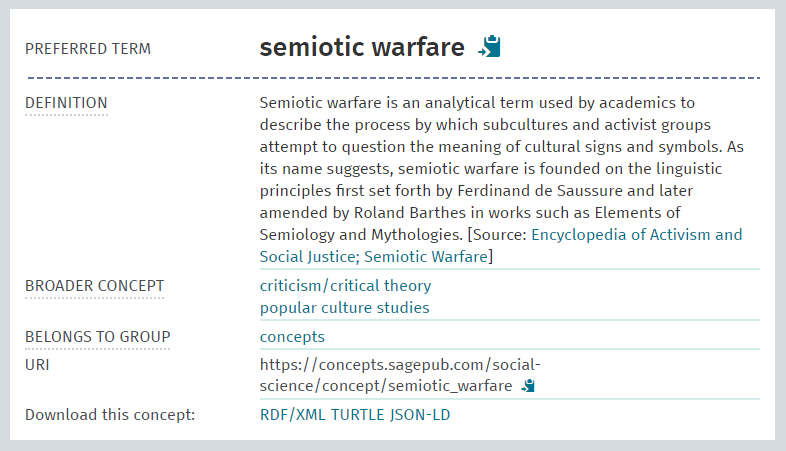
At SAGE’s new online Social Science Thesaurus, click around to discover information on over 61,000 concepts in the social and behavioral sciences, such as definitions of key terms and how they relate to other concepts. You can search for a specific concept, or try clicking the ‘Hierarchy’ tab and browse through the social sciences from the top down.

Graham MacDonald, chief data scientist at Urban Institute gets to work on interesting issues that intersect data science and social science every day. Looking back on his work over the year he looks towards the future as he shares the three things he’s most excited about at the intersection of data science and social science
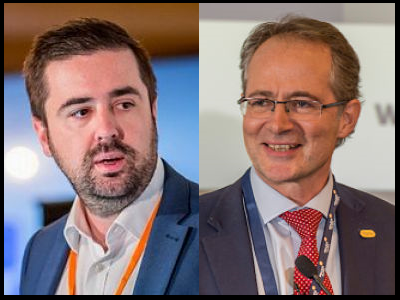
For this fifth article in the series of measuring impact, Louis Coiffait spoke to two leading UK experts who also know other countries; Dr Hamish McAlpine, head of knowledge exchange data and evidence at Research England, and Sean Fielding, director of innovation, impact and business at the University of Exeter, and also the chair of the UK national knowledge exchange association, PraxisAuril.
Daniel Nehring describes China’s social networking platform WeChat as ‘Facebook on steroids,’ and notes it has long surpassed e-mail as the main tool of mediating communication at Chinese universities while obliterating boundaries between work and home. Is this a cautionary tale for academe outside of China?
How can researchers use social media data in their research? The digitalization of social life offers researchers an unprecedented world of data with which to study human life and social systems. However, accessing this data has become increasingly difficult. Jason Radford here is to help you figure out what approach is right for you.
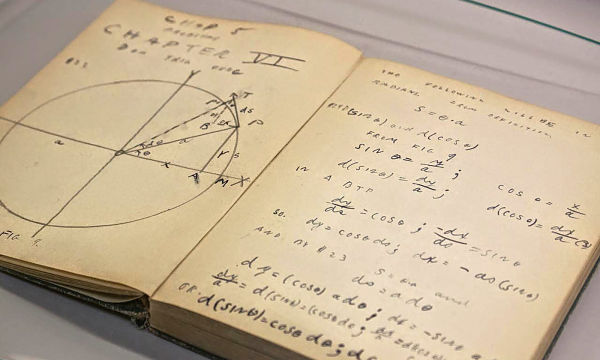
Outsourcing our memories — or actually forgetting once-vital skills that no longer matter in our daily lives — has always been with humanity. But how does the drift to artificial intelligence reflect what’s always been the case versus what should be a special case?
Jürgen Habermas, a globally known social theorist whose explorations of democracy, validity and communication have gained new prominence in the current moment, […] People often see science as a world apart: cool, rational and untouched by persuasion or performance. In this view, scientists simply discover […] “Research impact” means different things to different people. Some refer broadly to how science changes behaviors, beliefs, or practices outside academic institutions. […] David Canter considers informal places where people socialize, suggesting they’re an arena ChatGPT and other LLMs can’no’t replicate. As someone who lives […] It’s become cliche since Clive Humbly coined it in 2006, but data is indeed the new oil. It’s a mantra repeated by […] In September 2025, The Guardian reported about a lawyer in Australia having faced sanctions due to false citations. These citations were not […]
EXPLORE
Impact

Jürgen Habermas, 1929-2026: Exponent of the Public Sphere
READ MORE

Scientists Should Keep in Mind It’s Called the ‘Marketplace of Ideas’ for a Reason
READ MORE

Survey Finds Social Scientists Feel Unsupported in Seeking Societal Impact
READ MORE
Innovation

Reaching Parts to Which AI Has No Access
READ MORE

Andrea Medina-Smith on Making Research Data More FAIR
READ MORE

A Status Check on Hallucinated Case Law Incidents
READ MORE