

Could Distributed Peer Review Better Decide Grant Funding?
The landscape of academic grant funding is notoriously competitive and plagued by lengthy, bureaucratic processes, exacerbated by difficulties in finding willing reviewers. Distributed […]
How can researchers use social media data in their research? The digitalization of social life offers researchers an unprecedented world of data with which to study human life and social systems. However, accessing this data has become increasingly difficult. Jason Radford here is to help you figure out what approach is right for you.
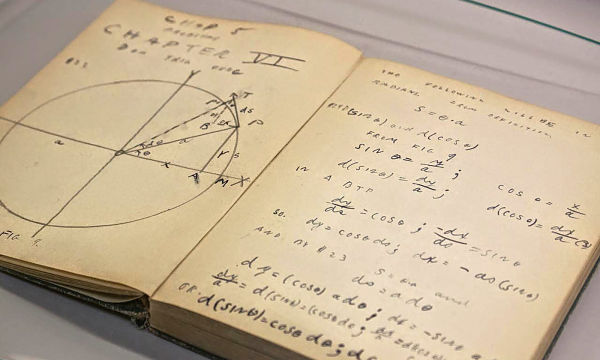
Outsourcing our memories — or actually forgetting once-vital skills that no longer matter in our daily lives — has always been with humanity. But how does the drift to artificial intelligence reflect what’s always been the case versus what should be a special case?
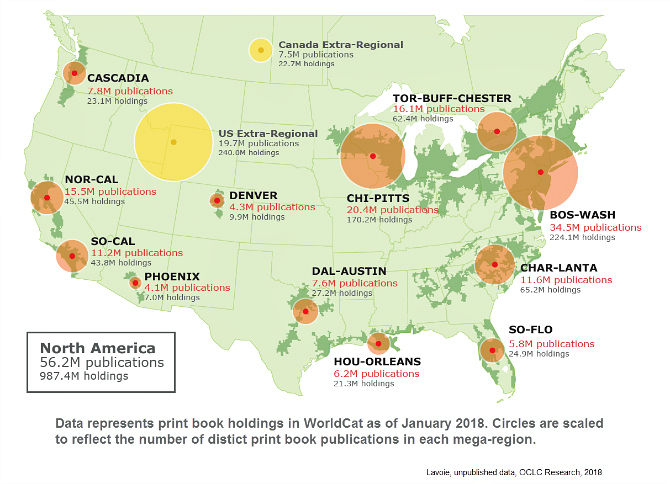
WorldCat, an aggregate database of library catalogs worldwide, was primarily set up to aid libraries in carrying out their work in areas such as cataloging or resource sharing. Brian Lavoie offers an insight into the types of questions WorldCat data can provide answers to, and how research of this kind also amplifies the value and impact of library collections.

Watch the SAGE Ocean panel event from the ESRC Festival of Social Science on what skills social scientists will need to be able to do the social research of the future.
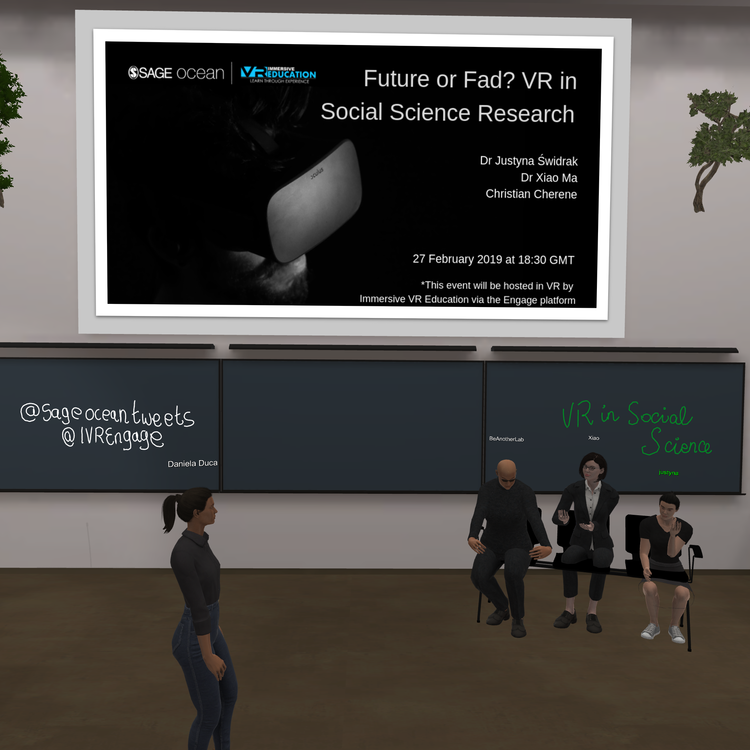
In February SAGE Ocean ran an enthralling event experience. Three panelists, two hosts and about 20 attendees all put their headsets on from their labs, offices and homes to join a virtual classroom decorated with trees, a castle, a slightly scary tiger and a hippo, to talk about the future of VR in social science research.
The U.S. military’s innovation incubator, the Defense Advanced Research Projects Agency, has signed the Center for Open Science to create a research claims database as DARPA’s first step to assign a ‘credibility score’ to social and behavioral science research.
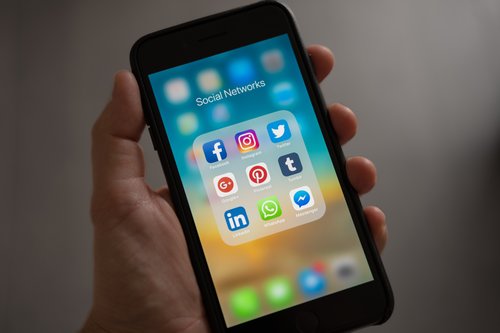
These two studies examined fake news on separate social media platforms; Facebook and Twitter, with both concluding that sharing this content was a rare occurrence but when users did share fake news articles they tended to be older Americans over 65.
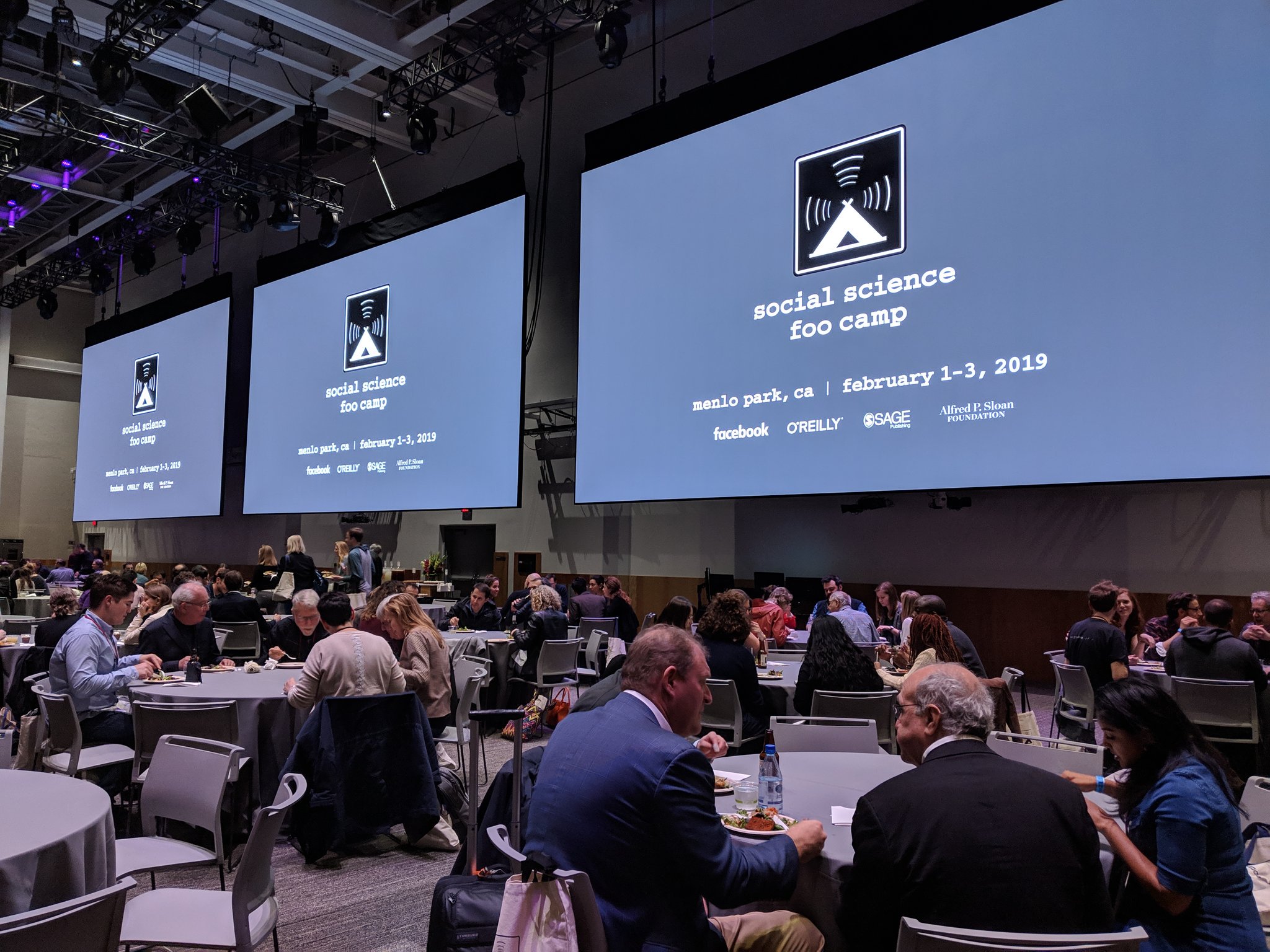
The second annual Social Science Foo Camp took place at Facebook’s headquarters in Menlo Park at the start of this month, convening an eclectic mix of more than 200 social scientists, technologists, funders, policy makers, business people and writers.

The Royal Swedish Academy of Sciences has awarded this year’s Nobel Prize in Economic Sciences to the American economists Robert E. Hall […] Four Americans working in the social and behavioral sciences are among the 20 people named MacArthur Fellows this year. Recipients may be […] Euan Adie, the founder of Altmetric and later of Overton, discusses the reasons the led to Overton’s focus on showing researchers how […] The following is an adapted extract from The Cultural Industries, fifth edition, by David Hesmondhalgh. The increasing presence of information technology (IT) […] Developers of AI data centers have a public trust problem. According to multiple surveys, a majority of Americans say they would oppose […] I was adding some final flourishes on the topic of ‘iatrocracy’ to my forthcoming book with Natewindé Sawadogo – Sickness and Social […]
EXPLORE
Impact
Economic Peaks, Troughs and This Year’s Nobelists in Economics
READ MORE

Four From Social Science World Receive 2026 MacArthur Fellowships
READ MORE

Quick Insight: Euan Adie on Getting Academics Credit for Their Impact
READ MORE
Innovation

IT Giants and Their Operations: Should We Be Concerned?
READ MORE

What We Miss When We Study Public Trust with Surveys Alone
READ MORE

AI and ‘Iatrocracy’ – A Cautionary Tale
READ MORE












































































