


Could Distributed Peer Review Better Decide Grant Funding?
The landscape of academic grant funding is notoriously competitive and plagued by lengthy, bureaucratic processes, exacerbated by difficulties in finding willing reviewers. Distributed […]

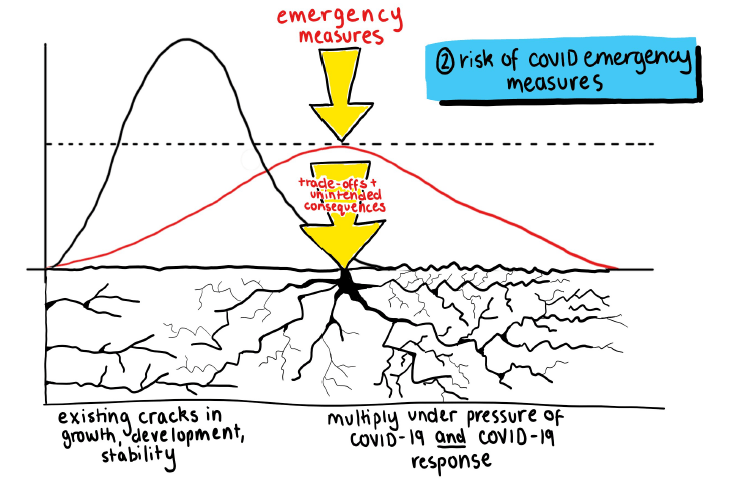
The big idea The scientific community worldwide has mobilized with unprecedented speed to tackle the COVID-19 pandemic, and the emerging research output […]

Today we welcome two scholars from Texas’s Baylor University whose research into how pathogens affect innovation has taken on new prominence in the wake of the current pandemic.

The appropriate training of human service professionals in digital platforms — entailing retrospection, revisions, and appropriation of the curriculum and training frameworks with an emphasis on the integration of technology with practice — can ensure the quality of services to the clients during emergencies like COVID-19.

People have long noticed, however, that some peculiar things happen in videoconferencing. Norm Friesen, and educational technology researcher, has explored this and presents four odd things that happen when you’re engaged in a videoconference.

Paper documents are still priceless records of the past, even in a digital world. Primary sources stored in local archives throughout Latin America, for example, describe a centuries-old multiethnic society grappling with questions of race, class and religion.
However, paper archives are vulnerable to…

For academic researchers working with social movements and activist groups can present unique challenges. Finding ways to work effectively together, whilst acknowledging differences in power and objectives, is often problematic. Drawing on perspectives from different social movements and academia, Diana Mitlin, Jhono Bennett, Philipp Horn, Sophie King, Jack Makau and George Masimba Nyama present insights from the Slum/Shack Dwellers International movement on how academics can successfully co-produce useful knowledge for social movements.

The Community College Libraries and Academic Support for Student Success project examines student success from the perspectives of the students themselves, the challenges they face in achieving it, and the services they think might effectively support them in their attainment of success. Given that three quarters of students surveyed also have jobs, when students’ needs aren’t met in their everyday lives, their academic performances suffer.

Transcribing can be a pain, and although recent progress in speech recognition software has helped, it remains a challenge. Speech recognition programs, do, however, raise ethical/consent issues: what if person-identifiable interview data is transcribed or read by someone who was not given the consent to do so? Furthermore, some conversational elements aren’t transcribed well by pattern recognition programs.

The Royal Swedish Academy of Sciences has awarded this year’s Nobel Prize in Economic Sciences to the American economists Robert E. Hall […] Four Americans working in the social and behavioral sciences are among the 20 people named MacArthur Fellows this year. Recipients may be […] Euan Adie, the founder of Altmetric and later of Overton, discusses the reasons the led to Overton’s focus on showing researchers how […] The following is an adapted extract from The Cultural Industries, fifth edition, by David Hesmondhalgh. The increasing presence of information technology (IT) […] Developers of AI data centers have a public trust problem. According to multiple surveys, a majority of Americans say they would oppose […] I was adding some final flourishes on the topic of ‘iatrocracy’ to my forthcoming book with Natewindé Sawadogo – Sickness and Social […]
EXPLORE
Impact

Economic Peaks, Troughs and This Year’s Nobelists in Economics
READ MORE

Four From Social Science World Receive 2026 MacArthur Fellowships
READ MORE

Quick Insight: Euan Adie on Getting Academics Credit for Their Impact
READ MORE
Innovation

IT Giants and Their Operations: Should We Be Concerned?
READ MORE

What We Miss When We Study Public Trust with Surveys Alone
READ MORE

AI and ‘Iatrocracy’ – A Cautionary Tale
READ MORE