



Could Distributed Peer Review Better Decide Grant Funding?
The landscape of academic grant funding is notoriously competitive and plagued by lengthy, bureaucratic processes, exacerbated by difficulties in finding willing reviewers. Distributed […]
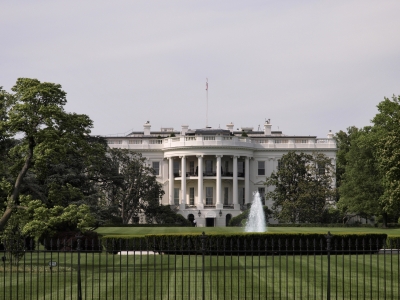
On May 9, the House of Representatives adopted a provision that would preclude the National Science Foundation (NSF) from supporting research in the field of political science.

Apparently Luka Rocco Magnotta made videos of himself killing cats and eating parts of his murdered victim, making the videos available online. […]

Recently, the US House of Representatives passed off an amendment offered by Representative Jeff Flake (R-AZ) that would prohibit funding for the Political Science Program with the National Science Foundation. If enacted into law, this amendment would set an extraordinary and disturbing precedent in which Congress chooses which scientific disciplines should be funded and not funded within the NSF’s research portfolio.

We have just witnessed a long weekend full of remarkable imagery celebrating longevity. However, media images of later life normally take two extremes – adverts […]

Some people have strong and visceral reactions to cities. They might love or loathe New York, or Jerusalem, or Berlin. This may have something to do with the architecture and the infrastructure of a place; it may also be a response, at some level, to the people, the culture, the politics, the way of life. Avner de-Shalit claims that some cities – not all cities but some – have a spirit.

We have reached a stage in the scientific understanding human behavior where very significant improvements in human wellbeing can be achieved.

While parts of Aditya Chakrabortty’s recent piece in the Guardian were sensible and informed, its central claim was unfair – that social science disciplines have been unable or unwilling to explore, explain, and confront the ‘Great Financial Crash’ of 2007-9

Across the world in the media, in policy, government discussions, and in our daily lives, there is evidence of social science at work. Whether it’s analysis of a cultural phenomenon like crime, or a major international concern such how climate change leads to changing lifestyles or inequality, social scientists help us understand cultures and behaviours.


Jürgen Habermas, a globally known social theorist whose explorations of democracy, validity and communication have gained new prominence in the current moment, […] People often see science as a world apart: cool, rational and untouched by persuasion or performance. In this view, scientists simply discover […] “Research impact” means different things to different people. Some refer broadly to how science changes behaviors, beliefs, or practices outside academic institutions. […] David Canter considers informal places where people socialize, suggesting they’re an arena ChatGPT and other LLMs can’no’t replicate. As someone who lives […] It’s become cliche since Clive Humbly coined it in 2006, but data is indeed the new oil. It’s a mantra repeated by […] In September 2025, The Guardian reported about a lawyer in Australia having faced sanctions due to false citations. These citations were not […]
EXPLORE
Impact

Jürgen Habermas, 1929-2026: Exponent of the Public Sphere
READ MORE

Scientists Should Keep in Mind It’s Called the ‘Marketplace of Ideas’ for a Reason
READ MORE

Survey Finds Social Scientists Feel Unsupported in Seeking Societal Impact
READ MORE
Innovation

Reaching Parts to Which AI Has No Access
READ MORE

Andrea Medina-Smith on Making Research Data More FAIR
READ MORE

A Status Check on Hallucinated Case Law Incidents
READ MORE