
Could Distributed Peer Review Better Decide Grant Funding?
The landscape of academic grant funding is notoriously competitive and plagued by lengthy, bureaucratic processes, exacerbated by difficulties in finding willing reviewers. Distributed […]

Fifteen universities across the UK will receive £19.5 million to overhaul their social science teaching over […]

Recent events in Congress suggest the attacks on funding will not only continue but will intensify. It is also worth remembering that these attacks are just the latest in a long standing effort by conservatives to eliminate funding for social science.

The humanities and social sciences in America could use a white knight, but instead they got a white elephant.
Studying ourselves is something the British do exceptionally well: specialists flock here from all over the world seeking answers to fundamental questions from our unique series of cohort birth studies, and no one else has anything quite like them.

As an academic, you are a brand not only as a matter of choice, but, increasingly, due to powerful institutional imperatives that are becoming harder and harder to ignore.
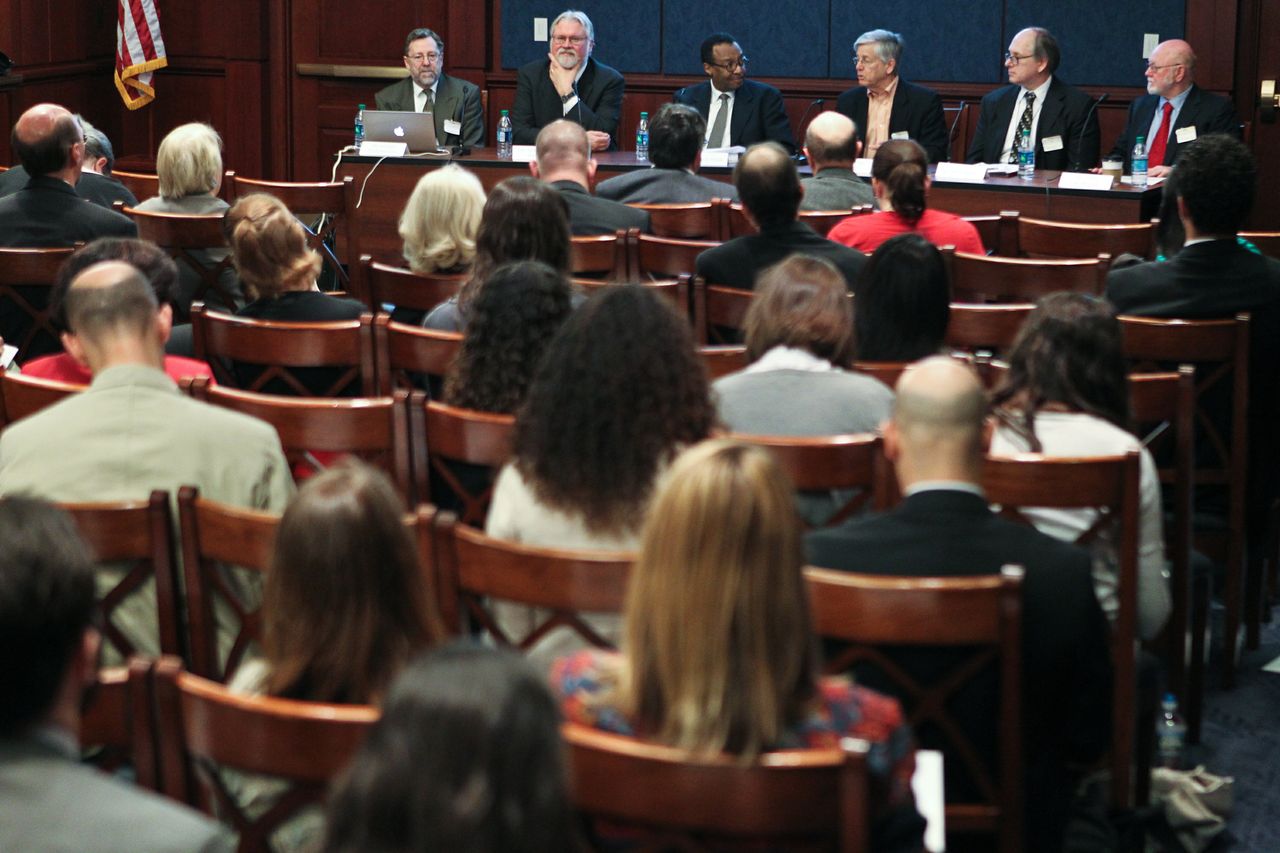
Last month The American Academy of Political and Social Science (AAPSS) put together a Congressional Briefing on the impact of falling response rates to social surveys and what can be done about it.

Survey researchers are increasingly unable to get people to respond to surveys. This is a real worry because nonresponse can lead to biased research and because nonresponse poses a significant threat to the federal statistical system in its entirety.

Federal surveys have been getting more expensive to administer, in part because the number of people who actually respond to surveys has been progressively declining.

Jürgen Habermas, a globally known social theorist whose explorations of democracy, validity and communication have gained new prominence in the current moment, […] People often see science as a world apart: cool, rational and untouched by persuasion or performance. In this view, scientists simply discover […] “Research impact” means different things to different people. Some refer broadly to how science changes behaviors, beliefs, or practices outside academic institutions. […] David Canter considers informal places where people socialize, suggesting they’re an arena ChatGPT and other LLMs can’no’t replicate. As someone who lives […] It’s become cliche since Clive Humbly coined it in 2006, but data is indeed the new oil. It’s a mantra repeated by […] In September 2025, The Guardian reported about a lawyer in Australia having faced sanctions due to false citations. These citations were not […]
EXPLORE
Impact

Jürgen Habermas, 1929-2026: Exponent of the Public Sphere
READ MORE

Scientists Should Keep in Mind It’s Called the ‘Marketplace of Ideas’ for a Reason
READ MORE

Survey Finds Social Scientists Feel Unsupported in Seeking Societal Impact
READ MORE
Innovation

Reaching Parts to Which AI Has No Access
READ MORE

Andrea Medina-Smith on Making Research Data More FAIR
READ MORE

A Status Check on Hallucinated Case Law Incidents
READ MORE