

Could Distributed Peer Review Better Decide Grant Funding?
The landscape of academic grant funding is notoriously competitive and plagued by lengthy, bureaucratic processes, exacerbated by difficulties in finding willing reviewers. Distributed […]

Working mothers tend to be happier and healthier than mothers who stay at home caring for young children, according to recent research. But many of those who work are often haunted by the question: “Am I screwing up my kids?”

Why do some people hide their light under a bushel while others promise more than they can deliver? In the latest edition of the Journal of Theoretical Politics, Dr René Lindstädt (University of Essex) and Dr Jeffrey Staton (Emory University, USA) have developed a theory to explain the phenomenon.

Social Science research is changing our understanding of the police and policing. This is raising fundamental questions about how police officers are recruited, trained and organised

Over the last ten years I have encountered a range of racist discourse in the teaching environment.The first often emanates from international students who inadvertently make inaccurate generalisations based on racial difference. The second is formed within the seminar room, and emanates from British students towards international students.
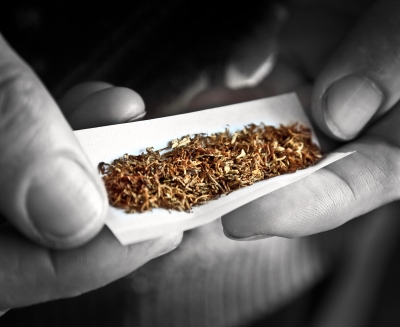
Gallagher – lynchpin of the popular Channel 4 TV series – has long been the UK’s poster boy for socially unacceptable behaviour and neatly illustrates a connection between smoking and antisocial behaviour that is reinforced by UK tobacco control policies.
As part of a series of occasional interviews with leading social scientists, Denis McQuail talks to socialsciencespace about his career in social science and some of the changes that he has witnessed.
There is increasing agreement that the world is warming and that there is a significant man-made contribution. But uncertainty continues about many of the physical consequences of climate change and even more so about the social effects.

The ability of people to keep their most desperate, innermost thoughts hidden from those around them is surely something that juries ought to be reminded of in cases where a death could be suicide or murder…


Jürgen Habermas, a globally known social theorist whose explorations of democracy, validity and communication have gained new prominence in the current moment, […] People often see science as a world apart: cool, rational and untouched by persuasion or performance. In this view, scientists simply discover […] “Research impact” means different things to different people. Some refer broadly to how science changes behaviors, beliefs, or practices outside academic institutions. […] David Canter considers informal places where people socialize, suggesting they’re an arena ChatGPT and other LLMs can’no’t replicate. As someone who lives […] It’s become cliche since Clive Humbly coined it in 2006, but data is indeed the new oil. It’s a mantra repeated by […] In September 2025, The Guardian reported about a lawyer in Australia having faced sanctions due to false citations. These citations were not […]
EXPLORE
Impact

Jürgen Habermas, 1929-2026: Exponent of the Public Sphere
READ MORE

Scientists Should Keep in Mind It’s Called the ‘Marketplace of Ideas’ for a Reason
READ MORE

Survey Finds Social Scientists Feel Unsupported in Seeking Societal Impact
READ MORE
Innovation

Reaching Parts to Which AI Has No Access
READ MORE

Andrea Medina-Smith on Making Research Data More FAIR
READ MORE

A Status Check on Hallucinated Case Law Incidents
READ MORE