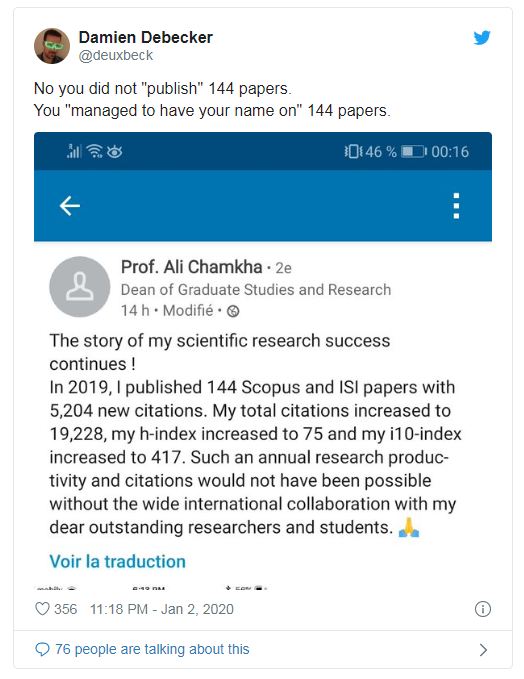

Could Distributed Peer Review Better Decide Grant Funding?
The landscape of academic grant funding is notoriously competitive and plagued by lengthy, bureaucratic processes, exacerbated by difficulties in finding willing reviewers. Distributed […]

What can I do to increase the chances of having my paper accepted? How long does it take for an article to get published? Who are good contacts to reach out to for more information about my article along the way? How can I play a role in the dissemination of my paper? Our free webinar will guide you through the author journey, from beginning to end. Featuring Jessica Lipowski, Publishing Editor at SAGE, and a panel of Editors-in-Chief from various disciplines, including management, medicine, and health, this webinar will break down each step of the process and detail best practices for authors or those who want to be authors, as well as answer your questions about the process.

Valentine cards are filled with expressions of unequivocal adoration and appreciation. That’s fitting for the holiday set aside to express love and reaffirm commitment to one’s romantic partner.
But what if there’s more going on below the surface of these adoring declarations? How might thoughts and feelings that people are not even aware of shape their romantic relationships?

Being moved, touched, team pride, patriotism, being touched by the Spirit, burning in the bosom, the feels, or even nostalgia. Many names for what Alan Fiske and his colleagues have determined is one emotion. So theycoined a scientific term for it, ‘kama muta.’
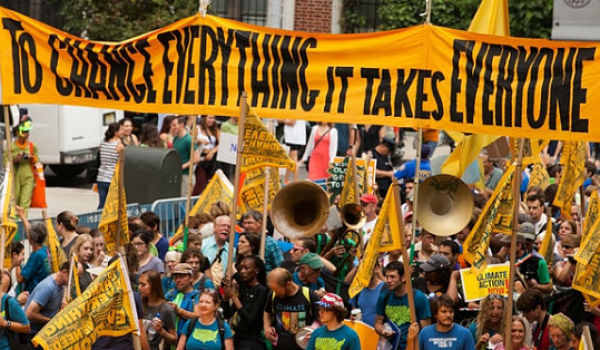
A new analysis published in the journal Energy Research & Social Science finds that funding for social science climate-change research is not only unhealthy but downright anemic at roughly 10 percent of the total spend. Meanwhile, total spending on climate-change research in total, regardless of discipline, comes to just 5 percent of all competitive research grants funded between 1950 and 2018.

Does a beautiful presentation actually lead to a better-liked gift? Or is it the other way around? There happens to be some research on that …

Social psychology teaches us that when people riot, their collective behavior is never mindless. It may often be criminal, but it is structured and coherent with meaning and conscious intent. To address the causes of such violence, we need to understand this.
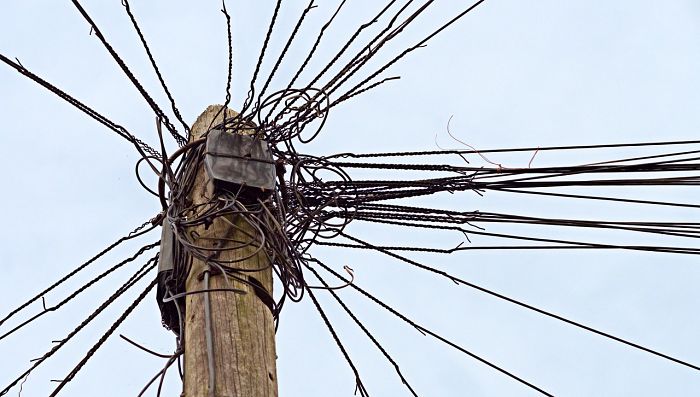
Here’s a clear, scientific reason drawn from the field of complexity economics to combat rising inequality: good business models that serve many people are becoming less profitable. Solid entrepreneurial ideas that would benefit everyone get passed over when there are easier opportunities to make money by catering to a few individuals with a whole lot of dollars to spend.
A new report from the Committee on Publication Ethics, or COPE, offers an intriguing way to look at the differences between academic disciplines: what do journal editors routinely identify as struggles?
People often see science as a world apart: cool, rational and untouched by persuasion or performance. In this view, scientists simply discover […] “Research impact” means different things to different people. Some refer broadly to how science changes behaviors, beliefs, or practices outside academic institutions. […] One researcher studies how war affects children, another took a literal worm’s eye view to examine rural development, while two others scrutinized […] David Canter considers informal places where people socialize, suggesting they’re an arena ChatGPT and other LLMs can’no’t replicate. As someone who lives […] It’s become cliche since Clive Humbly coined it in 2006, but data is indeed the new oil. It’s a mantra repeated by […] In September 2025, The Guardian reported about a lawyer in Australia having faced sanctions due to false citations. These citations were not […]
EXPLORE
Impact

Scientists Should Keep in Mind It’s Called the ‘Marketplace of Ideas’ for a Reason
READ MORE

Survey Finds Social Scientists Feel Unsupported in Seeking Societal Impact
READ MORE
Canada’s SSHRC Names 2025 Impact Winners
READ MORE
Innovation

Reaching Parts to Which AI Has No Access
READ MORE

Andrea Medina-Smith on Making Research Data More FAIR
READ MORE

A Status Check on Hallucinated Case Law Incidents
READ MORE