

Could Distributed Peer Review Better Decide Grant Funding?
The landscape of academic grant funding is notoriously competitive and plagued by lengthy, bureaucratic processes, exacerbated by difficulties in finding willing reviewers. Distributed […]

Is it possible that the experience of receiving gifts we do not like can take a toll on our mental well-being? Is […]

How much are you conscious of right now? Are you conscious of just the words in the center of your visual field or all the words surrounding it? We tend to assume that our visual consciousness gives us a rich and detailed picture of the entire scene in front of us. The truth is very different

Free webinar: Having conversations about race in the classroom Professor of criminal justice Stephanie A. Jirard offers suggestions on how to approach […]

Biplav Srivastava, professor of computer science at the University of South Carolina, and his team have developed a data-driven tool that helps demonstrate the effect of wearing masks on COVID-19 cases and deaths. His model utilizes a variety of data sources to create alternate scenarios that can tell us “What could have happened?” if a county in the U.S. had a higher or lower rate of mask adherence.
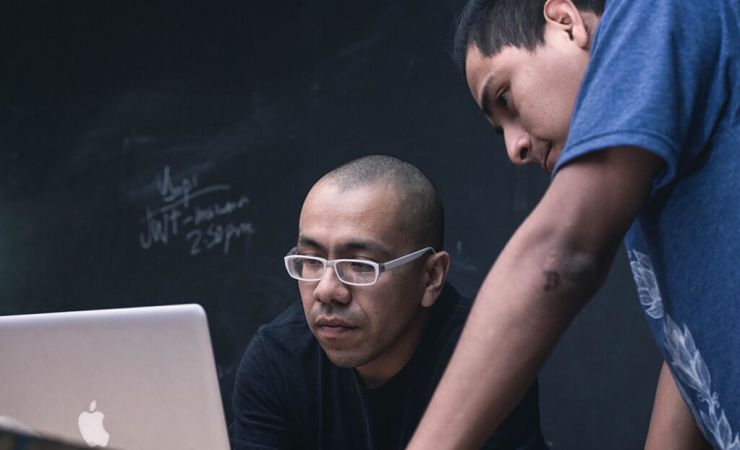
COVID-19 has led to new ways of working which have transformed research practices. This has created opportunities for research cultures to be more inclusive and accessible- especially to those for whom the university is a barrier. However, post-pandemic, research cultures also need to change. In this post, Stuart Read, Anne Parfitt and Tanvir Bush outline three provocations that researchers can ask as part of an inclusive research practice.
An online seminar hosted by the NAS’ Division of Behavioral and Social Sciences and Education featured a series of presentations on what can we do to lessen, reverse and even thrive in the face of changes wrought by the pandemic.
From vaccinations to climate change, getting science wrong has very real consequences. But journal articles, a primary way science is communicated in […]
With replication – and concerns about the lack of it – occupying much of the discussion about social and behavioral research, efforts […]

The Royal Swedish Academy of Sciences has awarded this year’s Nobel Prize in Economic Sciences to the American economists Robert E. Hall […] Four Americans working in the social and behavioral sciences are among the 20 people named MacArthur Fellows this year. Recipients may be […] Euan Adie, the founder of Altmetric and later of Overton, discusses the reasons the led to Overton’s focus on showing researchers how […] The following is an adapted extract from The Cultural Industries, fifth edition, by David Hesmondhalgh. The increasing presence of information technology (IT) […] Developers of AI data centers have a public trust problem. According to multiple surveys, a majority of Americans say they would oppose […] I was adding some final flourishes on the topic of ‘iatrocracy’ to my forthcoming book with Natewindé Sawadogo – Sickness and Social […]
EXPLORE
Impact
Economic Peaks, Troughs and This Year’s Nobelists in Economics
READ MORE
Four From Social Science World Receive 2026 MacArthur Fellowships
READ MORE

Quick Insight: Euan Adie on Getting Academics Credit for Their Impact
READ MORE
Innovation
IT Giants and Their Operations: Should We Be Concerned?
READ MORE

What We Miss When We Study Public Trust with Surveys Alone
READ MORE

AI and ‘Iatrocracy’ – A Cautionary Tale
READ MORE