
Could Distributed Peer Review Better Decide Grant Funding?
The landscape of academic grant funding is notoriously competitive and plagued by lengthy, bureaucratic processes, exacerbated by difficulties in finding willing reviewers. Distributed […]
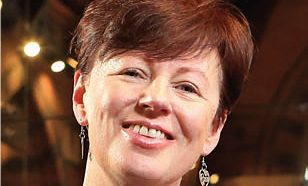
Rosie Cowan ticked numerous beats in her journalism career: politics for the Press Association, business for The Belfast Telegraph, and Ireland and later crime for the Guardian. Now a postgraduate research student in the School of Law at Queen’s University Belfast, she displays both her subject-matter expertise and writing skills in this co-winning essay from the ESRC Better Lives Writing Competition. The competition asked PhD students who have received money from the ESRC write short essays about how their research leads too better lives.
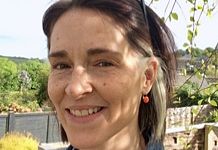
Celia Robbins, a PhD student at the University of Exeter, spent 25 years working in environment and sustainability. In this shortlisted essay from the ESRC Better Lives Writing Competition, she examines how wind energy has been playing out in Cornwall, and what that means for renewables beyond that bucolic county.
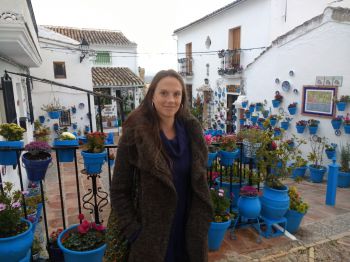
Social anthropologist Chloë Place, a research student at the University of Sussex, had both worked for the National Health Service working with older people with dementia and spent a lot of time living in Andalusia when she became interested in studying approaches to aging in the Andalusian context. In this shortlisted essay from the ESRC Better Lives Writing Competition, in which PhD students who have received money from the ESRC write short essays about how their research leads too better lives, she describes how her ethnographic look at kinship care in a rural Spanish setting influences her perspectives on care elsewhere.

As part of a pioneering effort to systematically use privacy-protected Facebook data to study the platform’s impact on democracy, the Social Science Research Council and its partner Social Science One have named the inaugural recipients of the Social Media and Democracy Research Grants.
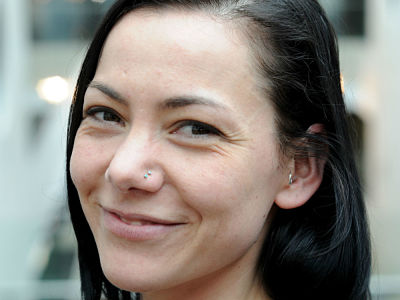
Sociologist Lauren O’Connell, a postgraduate research student at the University of Essex, holds a scholarship from the Economic and Social Research Council for her doctoral research exploring how clinical diagnosis and treatment shapes the experience of anorexia nervosa. In this shortlisted essay from the ESRC Better Lives Writing Competition, in which PhD students who have received money from the ESRC write short essays about how their research leads too better lives, she details how her own experiences influenced her work.
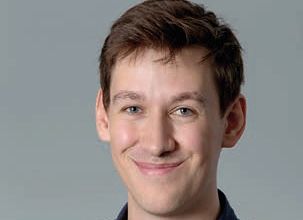
Niall McLoughlin is a PhD candidate in psychology and arts scholar at the University of Bath, as well as an associate with Climate Outreach. In this shortlisted essay from the ESRC Better Lives Writing Competition, in which PhD students who have received money from the ESRC write short essays about how their research leads too better lives, McLoughlin discusses the psychological catastrophe that accompanied the natural disaster of the 2015 Cumbrian floods and what that might teach us for addressing climate change.
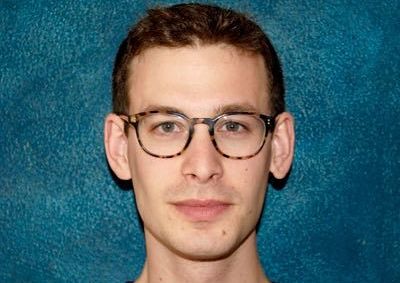
Alessandro Massazza, a PhD student in the Department of Clinical, Educational and Health Psychology, at University College London has received money from the Economic and Social Research Council to research the psychiatric consequences of complex emergencies. In this shortlisted essay from the ESRC Better Lives Writing Competition, in which PhD students who have received money from the ESRC write short essays about how their research leads too better lives, he explores how the double-edged sword of memory affects us after a traumatic event.
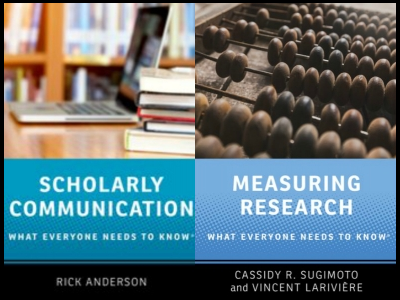
Academics are required to not only find effective ways to communicate their research, but also to increasingly measure and quantify its quality, impact and reach. In Scholarly Communication: What Everyone Needs to Know, Rick Anderson puts us in the picture. And in Measuring Research: What Everyone Needs to Know, Cassidy Sugimoto and Vincent Lariviere critically assess over 20 tools currently available for evaluating the quality of research.

The Royal Swedish Academy of Sciences has awarded this year’s Nobel Prize in Economic Sciences to the American economists Robert E. Hall […] Four Americans working in the social and behavioral sciences are among the 20 people named MacArthur Fellows this year. Recipients may be […] Euan Adie, the founder of Altmetric and later of Overton, discusses the reasons the led to Overton’s focus on showing researchers how […] The following is an adapted extract from The Cultural Industries, fifth edition, by David Hesmondhalgh. The increasing presence of information technology (IT) […] Developers of AI data centers have a public trust problem. According to multiple surveys, a majority of Americans say they would oppose […] I was adding some final flourishes on the topic of ‘iatrocracy’ to my forthcoming book with Natewindé Sawadogo – Sickness and Social […]
EXPLORE
Impact
Economic Peaks, Troughs and This Year’s Nobelists in Economics
READ MORE

Four From Social Science World Receive 2026 MacArthur Fellowships
READ MORE

Quick Insight: Euan Adie on Getting Academics Credit for Their Impact
READ MORE
Innovation

IT Giants and Their Operations: Should We Be Concerned?
READ MORE

What We Miss When We Study Public Trust with Surveys Alone
READ MORE

AI and ‘Iatrocracy’ – A Cautionary Tale
READ MORE












































































