

Could Distributed Peer Review Better Decide Grant Funding?
The landscape of academic grant funding is notoriously competitive and plagued by lengthy, bureaucratic processes, exacerbated by difficulties in finding willing reviewers. Distributed […]
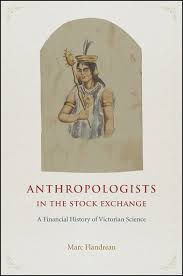
In Anthropologists in the Stock Exchange: A Financial History of Victorian Science, Marc Flandreau traces the interwoven development of anthropology, global finance and scientific study, placing all three at the heart of late-19th-century British imperialism.

“Cold War Anthropology: The CIA, The Pentagon and the Growth of Dual Use Anthropology” offers a historical account of how the US military industrial complex has had a profound influence on the development of US anthropology during the Cold War and into the present day. Reviewer Joseph Anderson sees the book as a dense but readable outline that confronts how ethnographic research in the field has been shaped by wider political-economic force.

Anthropologists use ethnographic methods designed to facilitate their competency in another culture to understand what people do, think, feel and say that might seem strange to an outsider but are completely familiar to an insider. But what does that mean in practice?

One of the leading exponents of what might be called the second coming of kinship studies, Janet Carsten, a professor of social and cultural anthropology at the University of Edinburgh, has (literally) brought new blood into the field, exploring kinship’s nexus with politics, work and gender.

A corporate anthropologist is told to write a report that will “name what’s taking place right now” and is “the First and Last Word on our age.” And so we set the stage for what in turn David Rudrum argues is itself a zeitgeist-defining work.
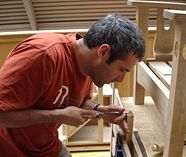
It’s an unusual approach for an academic: a hands-on approach. Literally a hands-on approach. Trevor Marchand is an anthropologist interested in how information about crafts is transferred from expert to novice. This has led him to Nigeria, Yemen, Mali, and East London …
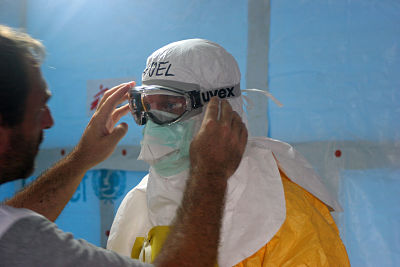
There is a genuine cost from ignoring lessons from social science in the fight against Ebola. What’s even sadder — these lessons were taught in blood three decades ago in the fights against AIDS. Are we ready for the next malady?

Just what is the “Global Brain”? In his article “Global Brain and the Future of Human Society,” Cadell Last defines the Global […]

Four Americans working in the social and behavioral sciences are among the 20 people named MacArthur Fellows this year. Recipients may be […] Euan Adie, the founder of Altmetric and later of Overton, discusses the reasons the led to Overton’s focus on showing researchers how […] Here’s a couple of quick questions for you. What is the smallest of the eight discipline-based directorates at the United States’ National […] Developers of AI data centers have a public trust problem. According to multiple surveys, a majority of Americans say they would oppose […] I was adding some final flourishes on the topic of ‘iatrocracy’ to my forthcoming book with Natewindé Sawadogo – Sickness and Social […] How is AI changing the shape and space of higher education? Critical thinking continues to rank highly among key skills and attributes […]
EXPLORE
Impact

Four From Social Science World Receive 2026 MacArthur Fellowships
READ MORE

Quick Insight: Euan Adie on Getting Academics Credit for Their Impact
READ MORE

NSF’s Embattled SBE Directorate Shown as Agency’s Policy Heavyweight
READ MORE
Innovation

What We Miss When We Study Public Trust with Surveys Alone
READ MORE

AI and ‘Iatrocracy’ – A Cautionary Tale
READ MORE

The Critical Student: How GenAI Reshapes Critical Skills and Higher Education’s Role Preparing Students For It
READ MORE










































































