
Could Distributed Peer Review Better Decide Grant Funding?
The landscape of academic grant funding is notoriously competitive and plagued by lengthy, bureaucratic processes, exacerbated by difficulties in finding willing reviewers. Distributed […]

Angus Deaton’s work is a model of what applied economics ought to be, says Ian Preston. No award the Nobel committee has made has pleased the author as much, for the recognition it gives both Deaton and the type of work he does.

New research looking at international relations courses finds that male professors assign more readings by males — and much of it their own work — than do female professors. And this does a disservice to students, argues Jeff Colgan.
Angus Deaton called for the applied microeconomists not to abandon economic theory in favor of experiments but instead to think more deeply about the consequences of economic theories and how they can be tested using real-world data. This is the approach he has followed throughout his career and what has led to him win a Nobel Prize.
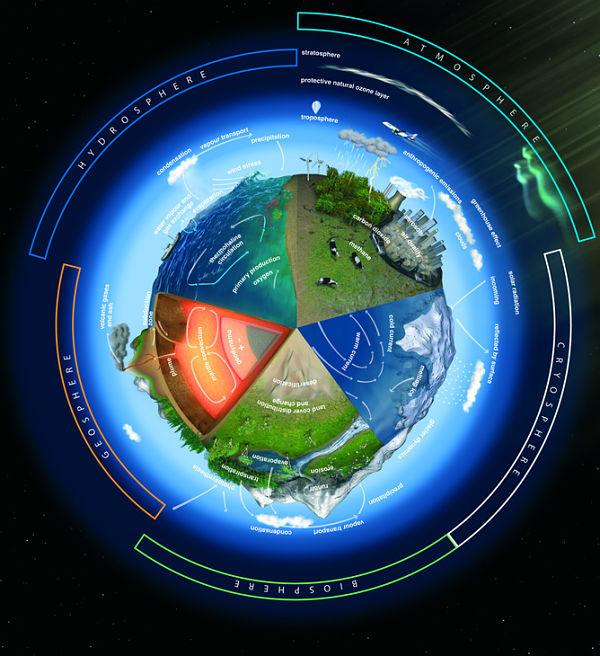
Sustainability science must be integrated into society. We cannot begin to solve complex problems, argues Benjamin P. Warner, without working with the people most impacted by them.
Psychology is still digesting the implications of a large study published last month, in which a team led by University of Virginia’s […]

Even when the news is good — women win grants from the ESRC at the same rate as men, and those grants are actually a bit larger on average — it’s tinged with bad — because there are so few senior women in academic social sciences men still get majority of the money.
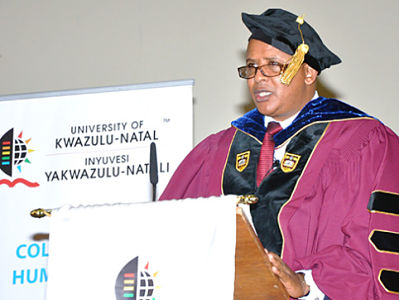
The director of directs the International Network for Higher Education in Africa argues that a nascent effort to rank the continent’s institutions of higher education ‘seems to me to be doomed from the start.’
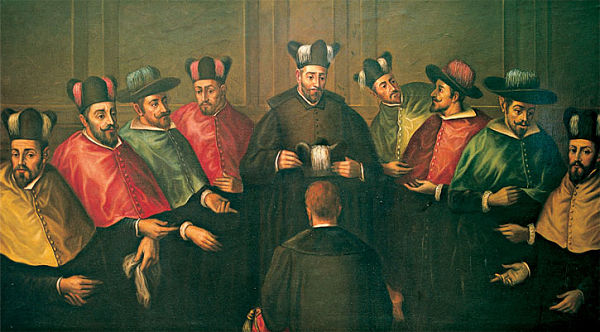
After collecting reflections on their PhD journey from 28 doctoral scholars, Rhodes University’s Sioux McKenna distilled some of their collected wisdom into five ideas that might make the uphill effort to earn a doctorate less of of a Sisyphean task.
Jürgen Habermas, a globally known social theorist whose explorations of democracy, validity and communication have gained new prominence in the current moment, […] People often see science as a world apart: cool, rational and untouched by persuasion or performance. In this view, scientists simply discover […] “Research impact” means different things to different people. Some refer broadly to how science changes behaviors, beliefs, or practices outside academic institutions. […] David Canter considers informal places where people socialize, suggesting they’re an arena ChatGPT and other LLMs can’no’t replicate. As someone who lives […] It’s become cliche since Clive Humbly coined it in 2006, but data is indeed the new oil. It’s a mantra repeated by […] In September 2025, The Guardian reported about a lawyer in Australia having faced sanctions due to false citations. These citations were not […]
EXPLORE
Impact
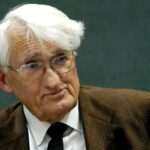
Jürgen Habermas, 1929-2026: Exponent of the Public Sphere
READ MORE

Scientists Should Keep in Mind It’s Called the ‘Marketplace of Ideas’ for a Reason
READ MORE

Survey Finds Social Scientists Feel Unsupported in Seeking Societal Impact
READ MORE
Innovation

Reaching Parts to Which AI Has No Access
READ MORE

Andrea Medina-Smith on Making Research Data More FAIR
READ MORE

A Status Check on Hallucinated Case Law Incidents
READ MORE