


Could Distributed Peer Review Better Decide Grant Funding?
The landscape of academic grant funding is notoriously competitive and plagued by lengthy, bureaucratic processes, exacerbated by difficulties in finding willing reviewers. Distributed […]
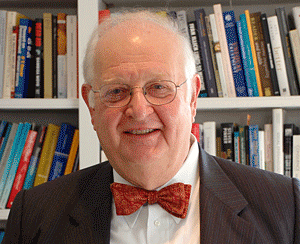
Angus Deaton called for the applied microeconomists not to abandon economic theory in favor of experiments but instead to think more deeply about the consequences of economic theories and how they can be tested using real-world data. This is the approach he has followed throughout his career and what has led to him win a Nobel Prize.

Sustainability science must be integrated into society. We cannot begin to solve complex problems, argues Benjamin P. Warner, without working with the people most impacted by them.
Psychology is still digesting the implications of a large study published last month, in which a team led by University of Virginia’s […]

Even when the news is good — women win grants from the ESRC at the same rate as men, and those grants are actually a bit larger on average — it’s tinged with bad — because there are so few senior women in academic social sciences men still get majority of the money.
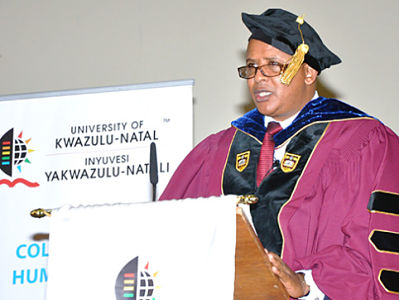
The director of directs the International Network for Higher Education in Africa argues that a nascent effort to rank the continent’s institutions of higher education ‘seems to me to be doomed from the start.’
After collecting reflections on their PhD journey from 28 doctoral scholars, Rhodes University’s Sioux McKenna distilled some of their collected wisdom into five ideas that might make the uphill effort to earn a doctorate less of of a Sisyphean task.

A small but vocal contingent of researchers has maintained that many, perhaps most, published studies are wrong. But how bad is this problem, exactly? And what features make a study more or less likely to turn out to be true? A team of 270 researchers asked the question of published psychology studies.

The professor whose use of the ‘prisoner’s dilemma’ in his class went viral here explains how that same piece of game theory can help bridge liberal and conservative differences.

The Royal Swedish Academy of Sciences has awarded this year’s Nobel Prize in Economic Sciences to the American economists Robert E. Hall […] Four Americans working in the social and behavioral sciences are among the 20 people named MacArthur Fellows this year. Recipients may be […] Euan Adie, the founder of Altmetric and later of Overton, discusses the reasons the led to Overton’s focus on showing researchers how […] The following is an adapted extract from The Cultural Industries, fifth edition, by David Hesmondhalgh. The increasing presence of information technology (IT) […] Developers of AI data centers have a public trust problem. According to multiple surveys, a majority of Americans say they would oppose […] I was adding some final flourishes on the topic of ‘iatrocracy’ to my forthcoming book with Natewindé Sawadogo – Sickness and Social […]
EXPLORE
Impact
Economic Peaks, Troughs and This Year’s Nobelists in Economics
READ MORE

Four From Social Science World Receive 2026 MacArthur Fellowships
READ MORE
Quick Insight: Euan Adie on Getting Academics Credit for Their Impact
READ MORE
Innovation

IT Giants and Their Operations: Should We Be Concerned?
READ MORE

What We Miss When We Study Public Trust with Surveys Alone
READ MORE

AI and ‘Iatrocracy’ – A Cautionary Tale
READ MORE