

Could Distributed Peer Review Better Decide Grant Funding?
The landscape of academic grant funding is notoriously competitive and plagued by lengthy, bureaucratic processes, exacerbated by difficulties in finding willing reviewers. Distributed […]

Brexit seems likely to extend the hostility of the UK immigration system to scholars from European Union countries — unless a significant change of migration politics and prevalent public attitudes towards immigration politics took place in the UK. There are no indications that the latter will happen anytime soon.

Rupert Brown, the biographer of Henri Tajfel, talks about the pioneering explorer of prejudice in this Social Science Bites podcast. Brown reviews the roots of Tajfel’s research arising from the Holocaust, and the current repercussions of Tajfel’s personal misdeeds.

The Psychological Science Accelerator is a global network of more than 500 labs in more than 70 countries which aims to re-do older psychology experiments, but on a mass-scale in several different settings. The effort is one of many targeting a problem that has plagued the discipline for years: the inability of psychologists to get consistent results across similar experiments.

Vicky Randall, a political scientist whose research into how marginalized populations – such as women, the aged, and those outside the First World – can and do interact in politics, died on November 22. The emeritus professor of government at Essex University was 74.

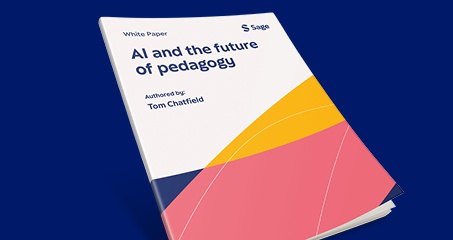
Choice is overwhelming. This should be no surprise to anyone who has spent a good few hours in a department store looking for the right pair of jeans. What if you’re a researcher looking at the landscape of technological tools available for data collection, analysis, or participant recruitment? A new white paper from SAGE has some answers.

If you were going to create an encyclopedia about “mass media,” your first task likely would be to define both words in the term. Doing so was immeasurably easier in the 1920s, when the term “mass media” first started making the rounds, but it’s grown corresponding harder as both the popular conception of ‘mass’ has mutated and the very media itself has evolved from purely paper to heavily broadcast to OMG online.

Social psychology teaches us that when people riot, their collective behavior is never mindless. It may often be criminal, but it is structured and coherent with meaning and conscious intent. To address the causes of such violence, we need to understand this.

Spats, fall-outs and intellectual and personal feuds have long been commonplace among scholars. And, because critiques of ideas and publications are also exercises in freedom of expression, they are integral to the rough and tumble of academic life. But British universities are now facing much more insidious challenges…

People often see science as a world apart: cool, rational and untouched by persuasion or performance. In this view, scientists simply discover […] “Research impact” means different things to different people. Some refer broadly to how science changes behaviors, beliefs, or practices outside academic institutions. […] One researcher studies how war affects children, another took a literal worm’s eye view to examine rural development, while two others scrutinized […] David Canter considers informal places where people socialize, suggesting they’re an arena ChatGPT and other LLMs can’no’t replicate. As someone who lives […] It’s become cliche since Clive Humbly coined it in 2006, but data is indeed the new oil. It’s a mantra repeated by […] In September 2025, The Guardian reported about a lawyer in Australia having faced sanctions due to false citations. These citations were not […]
EXPLORE
Impact

Scientists Should Keep in Mind It’s Called the ‘Marketplace of Ideas’ for a Reason
READ MORE

Survey Finds Social Scientists Feel Unsupported in Seeking Societal Impact
READ MORE

Canada’s SSHRC Names 2025 Impact Winners
READ MORE
Innovation

Reaching Parts to Which AI Has No Access
READ MORE

Andrea Medina-Smith on Making Research Data More FAIR
READ MORE

A Status Check on Hallucinated Case Law Incidents
READ MORE