

Could Distributed Peer Review Better Decide Grant Funding?
The landscape of academic grant funding is notoriously competitive and plagued by lengthy, bureaucratic processes, exacerbated by difficulties in finding willing reviewers. Distributed […]

Celia Robbins, a PhD student at the University of Exeter, spent 25 years working in environment and sustainability. In this shortlisted essay from the ESRC Better Lives Writing Competition, she examines how wind energy has been playing out in Cornwall, and what that means for renewables beyond that bucolic county.

Turnitin and similar programs don’t deal with the causes of plagiarism. Rather, argue Amanda Mphahlele and Sioux McKenna, they allow institutions to claim they’re doing something without really tackling the issues that lead students to plagiarize.

A new preprint was recently shared on PeerJ Preprints on the Use of the Journal Impact Factor in academic review, promotion, and tenure evaluations. Alice Fleerackers, Juan Pablo Alperin, and Erin McKiernan discuss the investigation and the findings on how the flawed metric is currently used in tenure and promotion decisions in universities across North America.
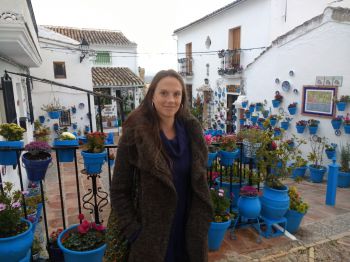
Social anthropologist Chloë Place, a research student at the University of Sussex, had both worked for the National Health Service working with older people with dementia and spent a lot of time living in Andalusia when she became interested in studying approaches to aging in the Andalusian context. In this shortlisted essay from the ESRC Better Lives Writing Competition, in which PhD students who have received money from the ESRC write short essays about how their research leads too better lives, she describes how her ethnographic look at kinship care in a rural Spanish setting influences her perspectives on care elsewhere.

As part of a pioneering effort to systematically use privacy-protected Facebook data to study the platform’s impact on democracy, the Social Science Research Council and its partner Social Science One have named the inaugural recipients of the Social Media and Democracy Research Grants.

Daniel Nehring describes China’s social networking platform WeChat as ‘Facebook on steroids,’ and notes it has long surpassed e-mail as the main tool of mediating communication at Chinese universities while obliterating boundaries between work and home. Is this a cautionary tale for academe outside of China?
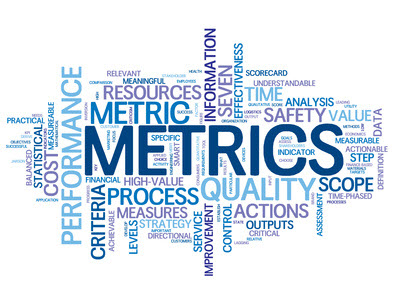
A new survey of university faculty finds that the idea of altmetrics – using something aside from journal citations as the measure of scholarly impact – has made less headway among faculty than might be expected given the hoopla surrounding altmetrics. These new measures are the most familiar in the social science community (barely) and least familiar in the arts and humanities (dramatically so).

Sociologist Lauren O’Connell, a postgraduate research student at the University of Essex, holds a scholarship from the Economic and Social Research Council for her doctoral research exploring how clinical diagnosis and treatment shapes the experience of anorexia nervosa. In this shortlisted essay from the ESRC Better Lives Writing Competition, in which PhD students who have received money from the ESRC write short essays about how their research leads too better lives, she details how her own experiences influenced her work.
People often see science as a world apart: cool, rational and untouched by persuasion or performance. In this view, scientists simply discover […] “Research impact” means different things to different people. Some refer broadly to how science changes behaviors, beliefs, or practices outside academic institutions. […] One researcher studies how war affects children, another took a literal worm’s eye view to examine rural development, while two others scrutinized […] David Canter considers informal places where people socialize, suggesting they’re an arena ChatGPT and other LLMs can’no’t replicate. As someone who lives […] It’s become cliche since Clive Humbly coined it in 2006, but data is indeed the new oil. It’s a mantra repeated by […] In September 2025, The Guardian reported about a lawyer in Australia having faced sanctions due to false citations. These citations were not […]
EXPLORE
Impact

Scientists Should Keep in Mind It’s Called the ‘Marketplace of Ideas’ for a Reason
READ MORE

Survey Finds Social Scientists Feel Unsupported in Seeking Societal Impact
READ MORE
Canada’s SSHRC Names 2025 Impact Winners
READ MORE
Innovation

Reaching Parts to Which AI Has No Access
READ MORE

Andrea Medina-Smith on Making Research Data More FAIR
READ MORE

A Status Check on Hallucinated Case Law Incidents
READ MORE