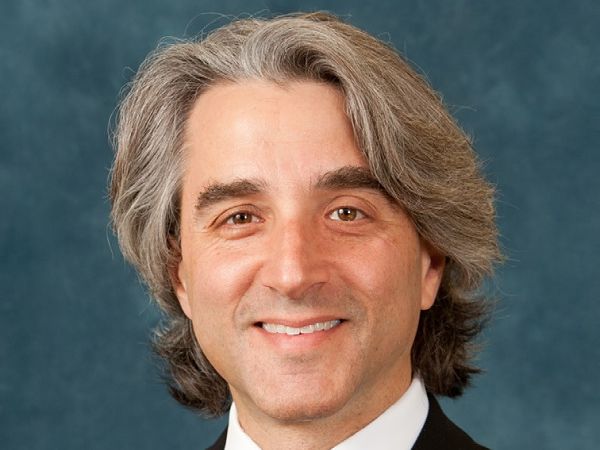

Could Distributed Peer Review Better Decide Grant Funding?
The landscape of academic grant funding is notoriously competitive and plagued by lengthy, bureaucratic processes, exacerbated by difficulties in finding willing reviewers. Distributed […]
Both houses of the United States Congress have appropriations bills that increase funding for the National Science Foundation and the 2020 Census in the works, and ‘regular order’ is still the rule for seeing them advance to passage. But how long will regular order be regular?

We need to bridge the gap between academic research and public policy. Sarah Quarmby takes a look inside a knowledge brokering organization, the Wales Centre for Public Policy, to see how its day-to-day workings tally with the body of knowledge about evidence use in policymaking.
March for Science wants to continue the momentum from their global marches with the first ever March for Science three-day summit aimed at teaching community organizing and communication skills, and advocacy. The event, called the S|IGNS SUMMIT, will be held starting on July 6 in Chicago.

The Social Science Research Council has added Melissa Nobles and Jennifer Richeson to its board of directors. Nobles is the Kenan Sahin Dean […]

In this Social Science Bites podcast, social epidemiologist Richard Wilkinson lays out the case that inequality should be fought specifically because it fosters a litany of ill effects.

How can the impact of an academic article be measured? It seems that everyone wants to find an answer to this question – from the researcher and author teams that create research articles, to the editors and peer reviewers who curate them, to the societies and publishers who ensure that the articles are released to the world.

Arbitrary choices –all those political considerations that twist and constrain scholarship without adding to it in intellectually meaningful ways — are rife in contemporary academic sociology, says our Daniel Nehring. Tired of trying to pointlessly argue against them in hopes they disappear, he asks that we make these choices explicit and visible.
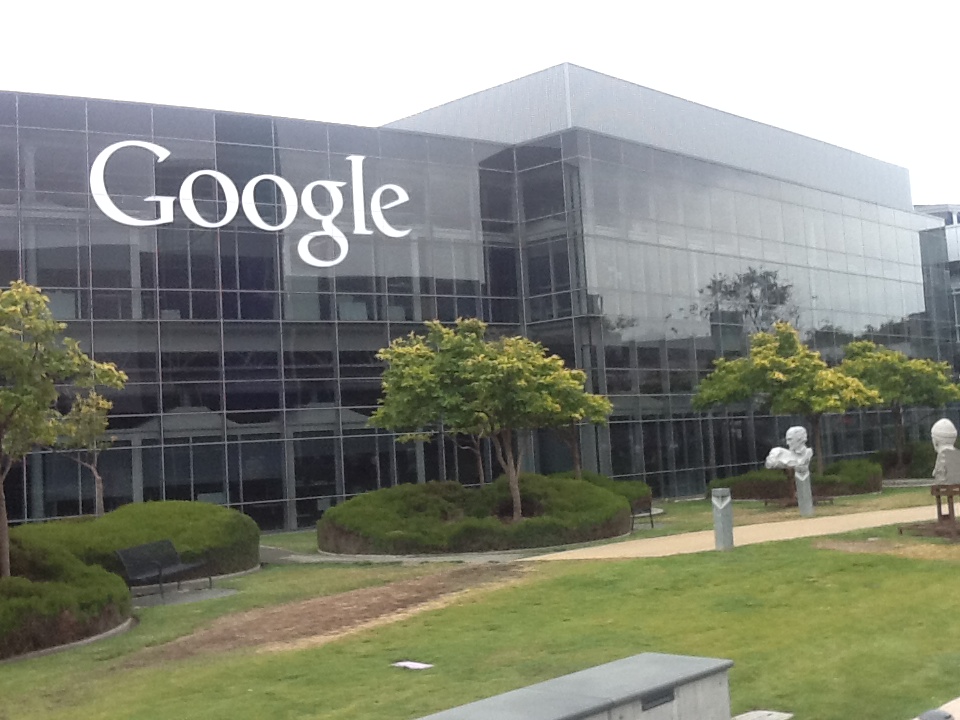
SAGE’s Ziyad Marar describes his recent time at the 2018 SciFoo and some of his impressions mingling with its 330 assembled scientists, technologists, writers and more (the largest ever SciFoo) and compares it to the first SciFoo he attended five years ago.
People often see science as a world apart: cool, rational and untouched by persuasion or performance. In this view, scientists simply discover […] “Research impact” means different things to different people. Some refer broadly to how science changes behaviors, beliefs, or practices outside academic institutions. […] One researcher studies how war affects children, another took a literal worm’s eye view to examine rural development, while two others scrutinized […] David Canter considers informal places where people socialize, suggesting they’re an arena ChatGPT and other LLMs can’no’t replicate. As someone who lives […] It’s become cliche since Clive Humbly coined it in 2006, but data is indeed the new oil. It’s a mantra repeated by […] In September 2025, The Guardian reported about a lawyer in Australia having faced sanctions due to false citations. These citations were not […]
EXPLORE
Impact

Scientists Should Keep in Mind It’s Called the ‘Marketplace of Ideas’ for a Reason
READ MORE

Survey Finds Social Scientists Feel Unsupported in Seeking Societal Impact
READ MORE
Canada’s SSHRC Names 2025 Impact Winners
READ MORE
Innovation

Reaching Parts to Which AI Has No Access
READ MORE

Andrea Medina-Smith on Making Research Data More FAIR
READ MORE

A Status Check on Hallucinated Case Law Incidents
READ MORE