


Could Distributed Peer Review Better Decide Grant Funding?
The landscape of academic grant funding is notoriously competitive and plagued by lengthy, bureaucratic processes, exacerbated by difficulties in finding willing reviewers. Distributed […]
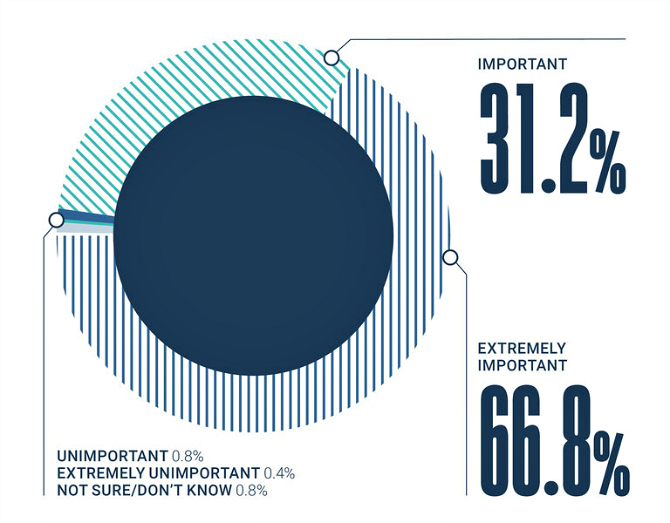
During this Peer Review Week 2018, Tom Culley shares findings from the new Publons “Global State of Peer Review” report. As demands on the peer review system increase, reviewers are actually becoming less responsive to invitations.
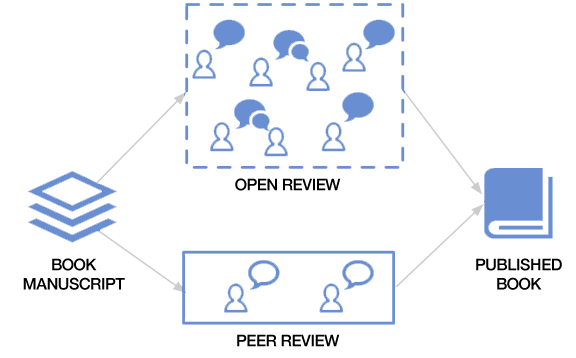
A new process developed by Princeton’s Matthew Salganik for reviewing academic manuscripts allows the world at large to examine and weigh in on a book at the same time the manuscript is undergoing peer review.

A report from RBC Royal Bank reaffirms what thought leaders keep insisting — there will be more and more demand for a liberal arts education in our increasingly digital world. “I prefer to call them “essential skills,” because we all need them every day, though we don’t always use them well. They are the foundational skills that allow us to learn and live and work productively with other people.”

Most early career researchers receive little to no training on how to peer review, and it’s not always easy to find consistent or helpful guidance. Here, during Peer Review Week, Katrina Newitt offers some helpful advice on how to get started.

Sociologist Wendy Larner, provost at Victoria University of Wellington, began her three-year term as president of New Zealand’s Royal Society Te Apārangi […]

The British Academy is honoring political journalists Zeinab Badawi and Dame Frances Cairncross among a number of individuals awarded for their services to the humanities and social sciences.
The US Senate approved a “minibus” appropriations bill that combined the FY19 Defense and Labor-Health and Human Services-Education Appropriations Acts. The Senate also cleared for the president’s signature the FY19 Defense Authorization Act, and the measure was signed into law on August 13. But the bill that includes NSF funding has gone nowhere.

As Brexit Britain appears headed straight for a chaotic exit from the European Union, its universities are raising questions about their future with growing alarm. The consequences which post-Brexit nationalism will have for universities, students, and scholars are hardly being discussed at all.
Euan Adie, the founder of Altmetric and later of Overton, discusses the reasons the led to Overton’s focus on showing researchers how […] Here’s a couple of quick questions for you. What is the smallest of the eight discipline-based directorates at the United States’ National […] Sage’s 10-Year Impact Awards recognize academic papers appearing in Sage-published journals that have achieved lasting impact. The winning papers are the most […] I was adding some final flourishes on the topic of ‘iatrocracy’ to my forthcoming book with Natewindé Sawadogo – Sickness and Social […] How is AI changing the shape and space of higher education? Critical thinking continues to rank highly among key skills and attributes […] My colleagues and I recently spoke with a group of talented, interesting students who just completed their first year of college about […]
EXPLORE
Impact
Quick Insight: Euan Adie on Getting Academics Credit for Their Impact
READ MORE

NSF’s Embattled SBE Directorate Shown as Agency’s Policy Heavyweight
READ MORE
Sage’s 10-Year Impact Awards Capture Longer-Term Significance
READ MORE
Innovation

AI and ‘Iatrocracy’ – A Cautionary Tale
READ MORE

The Critical Student: How GenAI Reshapes Critical Skills and Higher Education’s Role Preparing Students For It
READ MORE

AI Doesn’t Drive Student Cheating. It Just Hitches a Ride
READ MORE