

Could Distributed Peer Review Better Decide Grant Funding?
The landscape of academic grant funding is notoriously competitive and plagued by lengthy, bureaucratic processes, exacerbated by difficulties in finding willing reviewers. Distributed […]

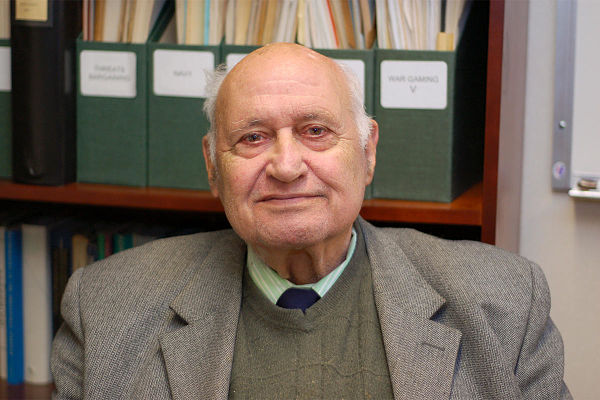
A survey of environmental research shows only 26 percent of the projects made their data accessible, despite data-sharing requirements from funders. In this commentary, lead author Jessica Couture urges data sharing for open science.
Have you ever wanted to engage with thousands of individuals from the evaluation community? Perhaps gather for a shared experience to discuss […]
The Social Science Research Council’s Social Data Initiative, which aims to provide the social science research community with secure, reliable access to proprietary social media data, is seeking the first requests for proposals for its Social Media and Democracy Research Grants competition in collaboration with Social Science One.

Journalism professor Vince Filak opted to be a nice guy and answer a quick survey from a university he’d once attended. ‘I’m not sure how much help I was to the people who put the survey out,’ he says, ‘but given the various problems I had with this survey, I’m hoping I can help you all learn how to avoid what went wrong for them.’

Standards are high and getting an academic article published is not easy, but there are certain things you can do to improve your success rate. A member of the SAGE Journals Author Relations team — SAGE is the parent of Social Science Space — offers five tips on the smartest way to navigate these challenges.

In the latest of its monthly series of interdisciplinary microsites addressing important public issues, SAGE Publishing is offering free access to a suite academic articles that focus on research about big data through November 15.

Africa has a real challenge when it comes to using academic research and evidence to design policies. “The problem is twofold,” says author Ruth Stewart, “policymakers sometimes don’t call on available research, while for their part academics don’t know how to engage with policymakers.” But this isn’t stopping the continent from taking strides in the right direction.

Author of SAGE textbook “Introduction to Educational Research,” and TEDx lecturer Dr. Craig A. Mertler draws on his 32 years of […]

Euan Adie, the founder of Altmetric and later of Overton, discusses the reasons the led to Overton’s focus on showing researchers how […] Here’s a couple of quick questions for you. What is the smallest of the eight discipline-based directorates at the United States’ National […] Sage’s 10-Year Impact Awards recognize academic papers appearing in Sage-published journals that have achieved lasting impact. The winning papers are the most […] I was adding some final flourishes on the topic of ‘iatrocracy’ to my forthcoming book with Natewindé Sawadogo – Sickness and Social […] How is AI changing the shape and space of higher education? Critical thinking continues to rank highly among key skills and attributes […] My colleagues and I recently spoke with a group of talented, interesting students who just completed their first year of college about […]
EXPLORE
Impact
Quick Insight: Euan Adie on Getting Academics Credit for Their Impact
READ MORE

NSF’s Embattled SBE Directorate Shown as Agency’s Policy Heavyweight
READ MORE
Sage’s 10-Year Impact Awards Capture Longer-Term Significance
READ MORE
Innovation

AI and ‘Iatrocracy’ – A Cautionary Tale
READ MORE

The Critical Student: How GenAI Reshapes Critical Skills and Higher Education’s Role Preparing Students For It
READ MORE

AI Doesn’t Drive Student Cheating. It Just Hitches a Ride
READ MORE