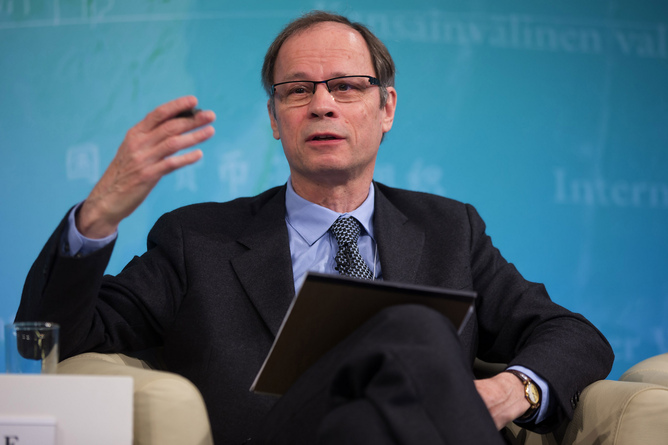


Could Distributed Peer Review Better Decide Grant Funding?
The landscape of academic grant funding is notoriously competitive and plagued by lengthy, bureaucratic processes, exacerbated by difficulties in finding willing reviewers. Distributed […]

Are social and behavioral sciences receiving the respect they deserve in the US today? SAGE founder and executive chairman Sara Miller McCune […]

In a cross-posting with Viva Voce podcasts, Richard Budd at the University of Bristol describes the differences between English and German university systems and student attitudes toward them.

At what point to private (and perhaps unpalatable) opinions expressed off-campus impinge on a scholar’s employment? This abstract question has been made concrete in two recent cases.
Journal of Service Research is now accepting research for the upcoming special section entitled “Health Service Research: A Multidisciplinary Perspective,” which will […]

In an award-winning paper, political scientist Alberto Simpser looks at the persistence and mobility of corruption in an increasingly mobile world.
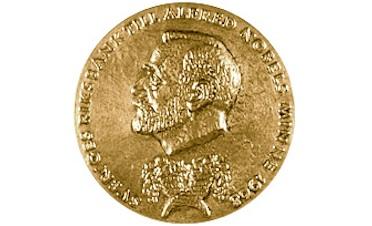
This year’s winner of the not-quite Nobel Prize in economics once again demonstrates the triumph of the blackboard over the real world in what gets recognized — and that’s not good, argues David Spencer.
Lord Richard Best, the longtime chief executive of the Joseph Rowntree Foundation; David Willets, a Conservative Party MP and until July the minister of state for universities and science; and Loraine R R Gelsthorpe, the current president of the British Society for Criminology, are among 34 leading social science scholars and practitioners named as 2014 fellows to the Academy of Social Sciences today in London.
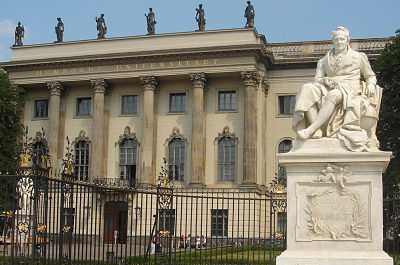
If Germany has done it, why can’t we? That’s the question being asked by many students around the world in countries that charge tuition fees to university. Barbara Kehm explains how Germany reached this point, and whether it’s likely to stay there.
People often see science as a world apart: cool, rational and untouched by persuasion or performance. In this view, scientists simply discover […] “Research impact” means different things to different people. Some refer broadly to how science changes behaviors, beliefs, or practices outside academic institutions. […] One researcher studies how war affects children, another took a literal worm’s eye view to examine rural development, while two others scrutinized […] David Canter considers informal places where people socialize, suggesting they’re an arena ChatGPT and other LLMs can’no’t replicate. As someone who lives […] It’s become cliche since Clive Humbly coined it in 2006, but data is indeed the new oil. It’s a mantra repeated by […] In September 2025, The Guardian reported about a lawyer in Australia having faced sanctions due to false citations. These citations were not […]
EXPLORE
Impact

Scientists Should Keep in Mind It’s Called the ‘Marketplace of Ideas’ for a Reason
READ MORE

Survey Finds Social Scientists Feel Unsupported in Seeking Societal Impact
READ MORE
Canada’s SSHRC Names 2025 Impact Winners
READ MORE
Innovation

Reaching Parts to Which AI Has No Access
READ MORE

Andrea Medina-Smith on Making Research Data More FAIR
READ MORE

A Status Check on Hallucinated Case Law Incidents
READ MORE