

Could Distributed Peer Review Better Decide Grant Funding?
The landscape of academic grant funding is notoriously competitive and plagued by lengthy, bureaucratic processes, exacerbated by difficulties in finding willing reviewers. Distributed […]

“Memory institutions” can’t keep everything they have been tasked with saving, especially as new tools and new ideas reshape the boundaries of what they already hold.

A concern for Orientalist thinking should lead us to ask what British and American elites are doing with their representation of this imagined “Asia.”
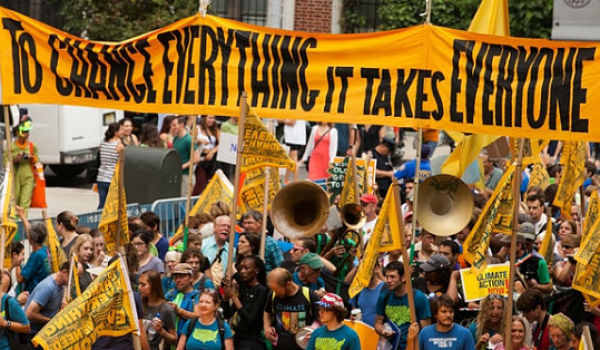
As researchers in growing numbers subscribe to movements, Giuseppe Delmestri argues that researchers have a duty to take positions that align with their work, rather than hide behind claims to value-neutrality.

In the previous two blog posts I have reflected on the space(s) within social science for psychogeographical thinking. During the 1950s and […]
Peer Community In is a peer-review-based service for recommending preprints which greenlights articles and makes them and their reviews, data, codes and scripts available on an open-access basis.
Shortly before the new year, legislation — which among many other things increased funding for the United States National Science Foundation by 12 percent compared to the current year – was signed by President Joe Biden.

Given the prevalence of trigger warnings, there is little consensus on the extent to which they are, in fact, an effective strategy for reducing the risk of trauma exposure, vicarious trauma, and re-traumatization.

The role of AI in the production of research papers is rapidly moving from being a futuristic vision, towards an everyday reality; a situation with significant consequences for research integrity and the detection of fraudulent research. Rebecca Lawrence and Sabina Alam argue that for publishers, collaboration and open research workflows are key to ensuring the reliability of the scholarly record.
When people trust science, they can make better decisions, follow helpful rules and work together on big problems like health, climate change […] Do you know a social or behavioral science researcher whose work resonates across disciplines and which has made a significant impact in […] Please note: this contest has now closed. The winner will be contacted in due course. This November, Sage and Overton invite you to share the unexpected […] The latest generation of artificial intelligence models is sharper and smoother, producing polished text with fewer errors and hallucinations. As a philosophy […] In a new white paper by Tom Chatfield, the philosopher of tech and critical thinking outlines a practical roadmap for integrating artificial intelligence into […] Distance learning far precedes the digital age. Before online courses, people relied on print materials (and later radio and other technologies) to […]
EXPLORE
Impact

There Is a Cost to Being Honest About Science
READ MORE

Outstanding Social and Behavioral Scientists Sought for Sage-CASBS Award
READ MORE
Share Your Most Surprising Policy Citation for Chance to Win $500 [Closed]
READ MORE
Innovation

An AI Authorship Protocol Aims to Sharpen a Sometimes-Fuzzy Line
READ MORE

A Box Unlocked, Not A Box Ticked: Tom Chatfield on AI and Pedagogy
READ MORE

AI Gaming of Some Online Courses Threatens Their Credibility
READ MORE