Quick Insight: Roz Tedford on Research, Tenure, and Censorship
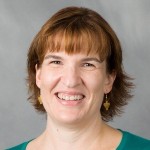
Rosalind “Roz” Tedford, director for research, instruction, and outreach at Wake Forest University, discusses the effects of censorship on higher education faculty and entire areas of research. She also explores issues of self-censorship, where the environment of fear leads those in higher education to limit their free expression before being told explicitly to do so. Tedford also explores how libraries can help navigate complex issues, support informed discussion, and create space for learners to reach their own conclusions.
A transcript of her talk appears below the video.
Rosalind Tedford, I am director for research, instruction and outreach at the Z. Smith Reynolds Library at Wake Forest University in North Carolina.
So I think there’s two parts to that. I’m at a private institution, so I’m less, we are less impacted by book challenges as a general rule than some of our colleagues at state institutions. But that definitely is happening. There are state institutions that are getting book challenges in the way that high school libraries and public libraries are getting them. I think I’ll talk about it in a slightly different way, and that’s through the lens of academic freedom and our system of tenure in the United States.
We have faculty who have to publish in order to get tenure at most of our institutions. There’s also an increasing number of faculty without tenure status, which is a political discussion for another day. Those faculty, in order to have true academic freedom, those faculty need to believe that their institution will stand behind them should a challenge arise. Should that challenge come from a student, right, or another faculty member? Or should that challenge, which, and this is more likely what has been happening, from folks external to the institution who then find them on social media and harass them and bully them about their research areas, their research interests, the things they’re publishing and presenting on. And there is the belief that your institution will support you, and that institution could be the legal part of the university, could be your library, could be a whole variety, your department chair, your tenure committee. But then there’s the actual support that universities give, and some universities, especially public universities, can be constrained in that by state laws.
So what happens, I think, is that you’re starting to see, and I hear faculty talking about this, the self-censoring of research interests, right? So maybe as they were developing their PhD topics, they were guided away from the more controversial, things that are seen as controversial, topics to do their research on, either by peers who had had negative experiences online, you don’t want to write about that because you’ll get your comment sections, right, will get filled up, by their departments who aren’t interested in bringing that attention to themselves, right, or even by their institutions, which means they take a safer path through their graduate programs, and then they’re on a safer path when they come to colleges and universities. And we don’t want faculty to be on safe paths, right? We want faculty to be researching those really tough, thorny, complex questions.
And I worry, I think, about that, about the, well, what I’d really love to research is this, but I’ve got to get tenure, and I’m afraid if I publish about it, right, then I’m going to get, from somewhere, my institution, online, you know, there have been researchers, and this, of course, happens more with marginalized groups, right, LGBTQ researchers, minority researchers, all of that. And they, because of fear which is totally warranted, they need to keep their job, they need to get tenure, they self-censor their research areas, what they publish about.
So one thing, I think, is to be partners with the faculty who are teaching these, right, complex, nuanced things. So I am a political science librarian at Wake Forest, also an English librarian, and I want to be seen by my faculty, who are doing their own research, who are teaching, as someone who can collaborate with them on getting the materials that they need. How do we bring critical thinking into their assignments, right? How do we make it so that the students are actually wrestling with these issues in an appropriate way that allows them to discover the complexities and the nuances that maybe, not maybe, that definitely the media is not going to show them?
We can make sure our collections reflect the full range of information about something without judgment. You don’t want students researching an issue and only finding good quality research that is one side, right, of that, and not everything has two equal sides. But you want students to have good quality, informative, factual information about whatever it is they’re researching. So really advocating and really keeping an eye on our collection so that we are bringing in all voices, so that when a faculty comes to us and says, I’d like you to come talk to my students about, you know, doing research in this particular issue, you know that you can point them to things across a spectrum of information, historical, primary source, data that is reliable and trustworthy. And at least at our institution, librarians are seen as particularly trustworthy, and that can take a little pressure off a faculty member, I think, who might be teaching something that they’re a little nervous, that they know they need to teach about it, but there are landmines in college classes.
And to bring us in to talk through those things and to say, hey, this is a tricky subject. There’s a lot of information out here about it. Let’s get you to the right things. Let’s help you sort of wrestle with it. Let’s make sure you have good information before you form your own opinions. And then we can take a little bit of that pressure off faculty, at least ideally. We can, by presenting a different voice, another voice coming in and saying, this is good information, draw your conclusions with accurate, factual information.