Emergencies: Why Do We Leave It So Late?
It may be thought that the slow reaction in many countries to the emergence of COVID-19 was due to the invisibility of the pathogen. Not being able to see the enemy may have been the explanation of waiting until it was having visible effects before setting out to fight it. However, there were many warnings in advance. As Richard Horton, the editor of The Lancet, put it, the delays in government responses to the pandemic is “the greatest science policy failure in a generation.”
But the delay is typical of many emergencies, both large and small. People die in buildings on fire because they do not heed the early warnings, seeking information and guidance, trying to fight the fire on its own. Like the emergence of The Virus, people think that danger grows, whether from a fire in the living room, or a climate crisis, in a simple linear fashion. In fact, it tends to develop in an exponential or geometric way. In the early stages, therefore, the estimates of growth are reasonably accurate. This lulls people into thinking that they understand what is happening, but their estimates become ever more inaccurate as time moves on until the emergency gets out of control.
This misreading of the growth of the emergency is supported by the desire to maintain existing patterns of behavior. Our understanding of what is expected of our interactions with each other. What we assume is appropriate where and when. It takes a major jolt to get us to re-evaluate what we think is happening and to change how we think of ourselves and our activities. We have to recognize that the place we are at has changed so that different rules apply – until that is the case, we are reluctant to change our habitual actions.
This behavioral inertia is what happens when emergencies become disasters. It was fatally illustrated in major industrial accidents such as Piper Alpha and the Herald of Free Enterprise, and even in large scale international disasters such as Rwanda and Bosnia. There is always an ignoring of early indicators of danger with the consequent delay in recognizing that something needs to be done. This continues until the indicators of danger are so overwhelming that decision makers can then accept that the situation has changed to something so different that they can now apply new rules. By then it is often too late and so disaster is inevitable.
It is worth emphasizing this central point. Emergencies become disasters because initial warnings are ignored. They are not ignored out of obstinacy or ignorance but because of what I’ve called the first law of human behavior, paraphrasing Newton’s first law of motion: A person continues with the current activity of rest or unthinking motion unless acted on by some external or internal force. We have a natural inertia because normally that is essential for survival within a social context; working and relating to each other.
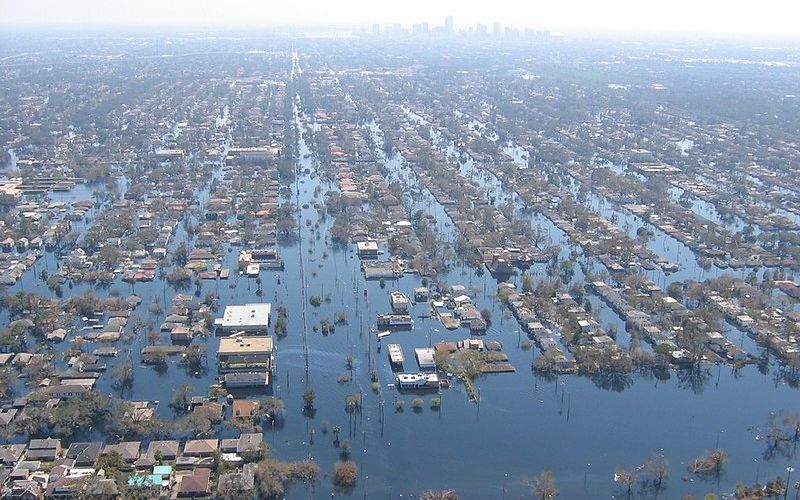
The examples are all too familiar. Railway disasters came about in a climate in which trains were going past signals set at danger. Before the New Orleans floods many people said the levees needed to be developed and strengthened and that more money needed to be put into flood control. It was all highly predictable but the processes in place stopped that happening. The deaths from COVID-19 are just one more example of our reluctance to recognize the need for a new normal.