Sheila Jasanoff on Science and Technology Studies

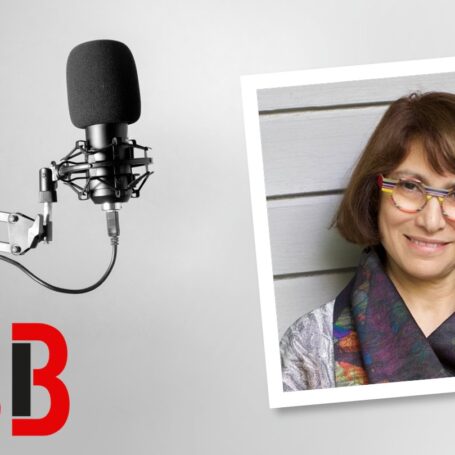
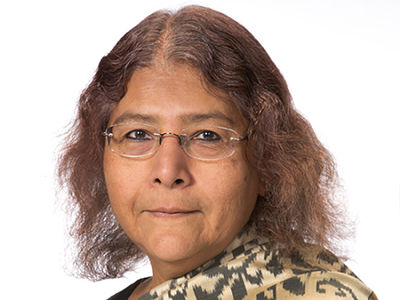
Sheila Jasanoff, the Pforzheimer Professor of Science and Technology Studies at Harvard University’s John F. Kennedy School of Government, is a pioneer in the field of STS. That acronym can be unpacked as either ‘science and technology studies’ or ‘science, technology and society.’ Jasanoff — who describes herself as a sociologist of knowledge and a constructivist, trained in law, working in the tradition of the interpretive social sciences – is content with either use.
“I think that represents two phases of the same field,” she tells interviewer David Edmonds in this Social Science Bites podcast. “First of all, it’s the field that looks in detail at the institutions of science and technology and asks, ‘What are they like?’ ‘What does it feel like to be doing them?’ ‘What do they operate like as social institutions, as cultures, as formations in society?’ The other face of STS – science, technology and society – is more about how science and technology function when they get out into the world at large.”
Amid that expansive view, some areas, of course, particularly interest Jasanoff. “The more interesting turn,” she details, “was the turn that tried to occupy the territory previously given to philosophy of science, and started asking sociological and political questions about it.”
One such question is the eternal “What is truth?” STS, a brash newcomer, took on the inquiry with gusto.
“It took a kind of arrogance, if you will, certainly a bravery, in the 1970s, to say that, ‘Hey, truth isn’t just out there. It’s not just a Platonic thing and we try to approximate it. We can actually study truth as if it was a social production.’ That,” she explains, “was the heartland of science and technology studies.”
In the interview, Jasanoff outlines how science is often presented as a capital-T repository of Truth even in an age where the ‘death of the expert’ has become a common trope.
Citing the pandemic and how scientific advice changed on mask wearing, Jasanoff argues that “people should not be surprised that in crisis mode the way we know things changes and therefore the advice may change. Science has been sold as a bill of goods for so long that it is the Truth, it is reliable, a fact is always fact the moment we assert it, that these sorts of commonsensical things that we ought to understand have become difficult for people to grasp.” (Jasanoff’s own research often looks at cross-national differences in her research, and after looking at mask-wearing in 16 nations she reports that “only in America has it become an article of faith – are you for science or against science” – based on your mask usage.)
Remember, she continues, “The expert is not an embodiment of scientific fact. An expert is a particular kind of person who is qualified in particular ways, and every time we say ‘qualification,’ something about the English language or about language in general, forces us to look at the skills that allow one to be considered qualified.
“In fact, we should look at the external periphery of the qualification; a qualification sets boundaries on what you know, but it also sets boundaries on what you don’t know.” Expertise is this double edged-thing.”
Jasanoff is the founder and director of Harvard’s Program on Science, Technology and Society. She’s the author of several books aimed at both the academy and the public, such as 1990’s The Fifth Branch: Science Advisers as Policymakers, 2012’s Science and Public Reason, and Can Science Make Sense of Life? in 2019.
The University of Bergen, acting for the Norwegian Ministry of Education and Research, awarded her the Holberg Prize in March. That was the latest in a slew of honors for her research, including the University of Ghent Sarton Chair and the Reimar Lüst Award from the Alexander von Humboldt and Fritz Thyssen Foundations, a Guggenheim fellowship in 2010, and in 2018 the Albert O. Hirschman Prize from the Social Science Research Council. She is an elected foreign member of the Royal Danish Academy of Sciences and Letters, and a fellow of the American Association for the Advancement of Science, where she served on the board of directors.
To download an MP3 of this podcast, right-click HERE and save.
Join the debate and discuss this episode with fellow listeners on our Multytude conversation. Multytude is a new social media app that aims to make sense of the online conversation. With support from the SAGE Concept Grant, the Multytude team is working to create a new method of qualitative research for social scientists to better understand what people are saying about the big issues of today.
For a complete listing of past Social Science Bites podcasts, click HERE. You can follow Bites on Twitter @socialscibites and David Edmonds @DavidEdmonds100.