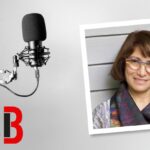
Ellen Peters on Numeracy

“It’s been said there are three kinds of people in the world, those who can count and those who can’t count.” So reads a sentence in the book Innumeracy in the Wild: Misunderstanding and Misusing Numbers, published by Oxford University Press in 2020.
The author of Innumeracy in the Wild is Ellen Peters, Philip H. Knight Chair and director of the Center for Science Communications Research at the University of Oregon. In this Social Science Bites podcast, Peters – who started as an engineer and then became a psychologist – explains to interviewer David Edmonds that despite the light tone of the quote, innumeracy is a serious issue both in scale and in effect.
As to scale, she notes that a survey from the Organisation for Economic Co-operation and Development found 29 percent of the US adult population (and 24 percent in the UK) can only do simple number-based processes, things like counting, sorting, simple arithmetic and simple percentages. “What it means,” she adds, “is that they probably can’t do things like select a health plan; they probably can’t figure out credit card debt,” much less understand the figures swirling around vaccination or climate change.
Peters groups numeracy into three (a real three this time) categories: Objective numeracy, the ability to navigate numbers that can be measured with a math test; subjective numeracy, which is “not your actual ability, but your confidence in your ability to understand numbers and to use numeric kinds of concepts;” and intuitive or evolutionary numeracy, a human being’s natural ability to do things like quickly determine if a quantity is bigger or smaller than another quantity.
That middle type of numeracy, the subjective, is measured by self-reporting. “The original reasons for developing some of these subjective numeracy scales had to do with them just being a proxy for objective numeracy,” says Peters. “But what’s really interesting is that having numeric confidence seems to free people to be able to use their numeric ability.” While freedom is generally reckoned to be good – and objective results back this up – that’s not the case for those confident about their abilities but actually bad with numbers. Similarly, those who have high ability but are underconfident also do poorly compared to high ability and high confidence individuals.
“There are some very deep psychological habits that people who are very good with numbers have that people who are not as good with numbers don’t have,” Peters explains. “It is the case that people who are highly numerate are better at calculations, but they also just simply have a better, more developed set of habits with numbers.”
Less numerate people “are kind of stuck” with the numeric information as presented to them, rather than transforming the information into something that might better guide their decisions. Peters offered the example of a person with a serious disease being told that a life-saving treatment still has a 10 percent chance of killing them. Highly numerate people recognize that that means it has a 90 percent survival rate, but the less numerate might just fixate on the 10 percent chance of dying.
Closing out the podcast, Peters offers some tips for addressing societal innumeracy. This matters because, she notes, research shows that despite high rates of innumeracy, providing numbers helps people make better decisions, with benefits for both their health and their wealth.
To download an MP3 of this podcast, right-click HERE and save.
Join the debate and discuss this episode with fellow listeners on our Multytude conversation. Multytude is a new social media app that aims to make sense of the online conversation. With support from the SAGE Concept Grant, the Multytude team is working to create a new method of qualitative research for social scientists to better understand what people are saying about the big issues of today.
For a complete listing of past Social Science Bites podcasts, click HERE. You can follow Bites on Twitter @socialscibites and David Edmonds @DavidEdmonds100.