Quick Insight: Ken Porter on Developing Infrastructure for Impact-Driven Research

Discussions of technology transfer usually center on physical sciences with a focus on products that can be seen or manipulated. Must that leave social sciences and humanities in the cold? Not based on the work of Ken Porter, who in this Quick Insight video talks about taking a model he helped develop in Canada to the University of Maryland, where he is working to harness non-STEM disciplines for practical and useful application outside the academy.
I’m Ken Porter. I’m the executive director for Young Mentors College Park here at the University of Maryland, where the technology transfer office for the university, about 90% of the work that we do is in science and engineering. But the University of Maryland has 12 colleges. So what about everybody else?
And we’ve been thinking about that for the past couple of years, started thinking about everybody else, social sciences, humanities and arts. Back when I was at the University of Calgary doing it with a similar assignment, the dean of the faculty of social work came to us and asked us to look at his faculty from a value proposition point of view.
And he wanted to use this catalog of information about their faculty for donors, for students, for professor, for perspective faculty to, to, to get across the message that the faculty of social work at the University of Calgary was a Take Action Group, to not only study in the ivory towers, but also to have practical application in the community.
And so we did that project and, and from that grew a social innovation program at the University of Calgary. And that eventually grew to 12 [full-time equivalent staff] ES and a $10 million budget. So quite successful at Calgary.
I came here in 2018 and the proposition was similar. We do a lot of work in science and engineering, not a lot of work in the behavioral sciences although this is one of the largest colleges on our campus. And not a lot of work in our excellent schools of journalism and education. So we started thinking about what could we do for those faculty to involve them, faculty members, to involve them in the community, to involve them in more impact-driven research.
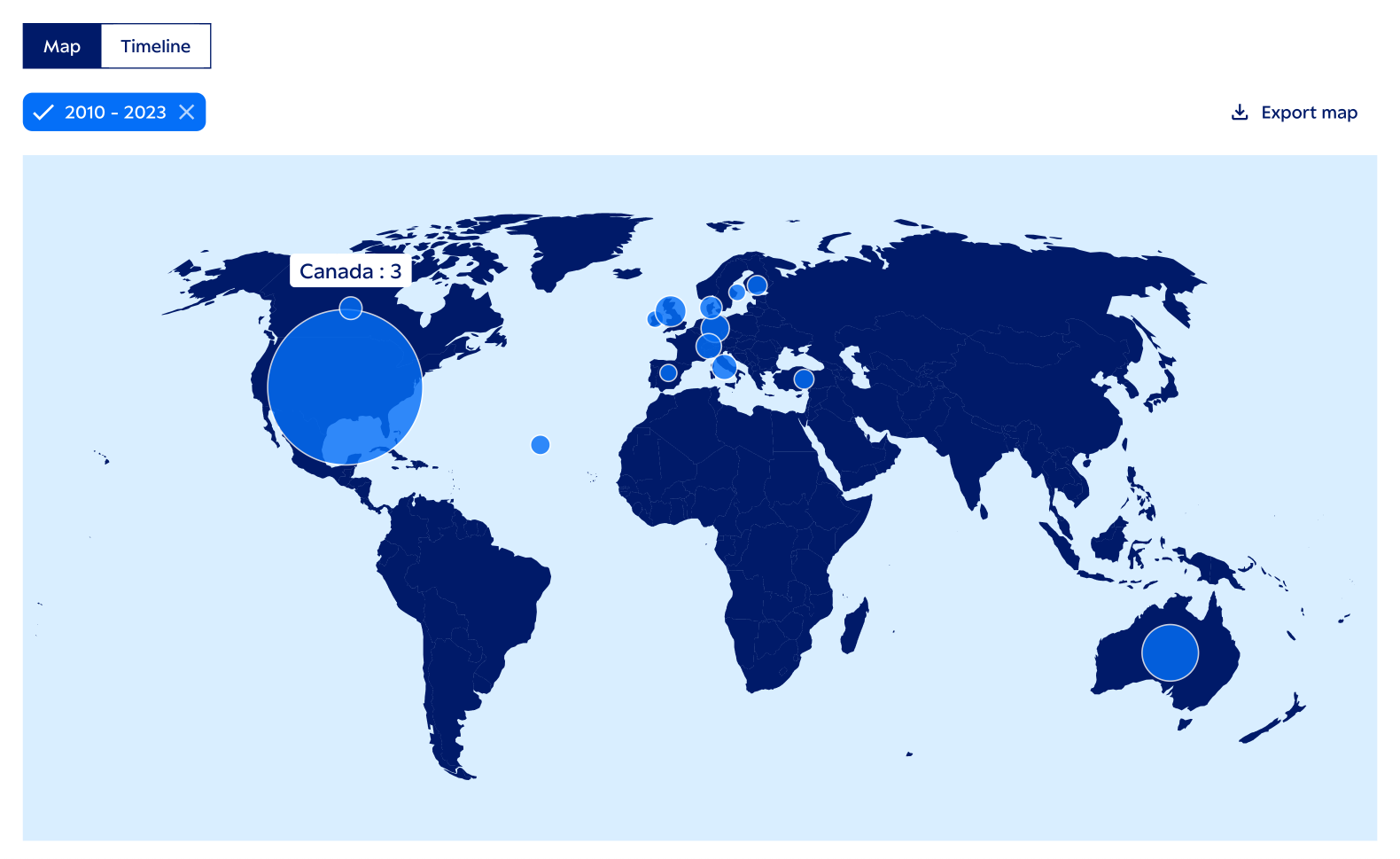
And so we hired a contractor from the University of Calgary to come down here and to not just replicate the model at Calgary, but to adapt the model that would suit the University of Maryland. And so we started surveying the world. We started talking to people in Canada and Europe and Africa about what were some of the approaches to social innovation, social enterprise and social entrepreneurship that we might apply to our situation here and in Maryland.
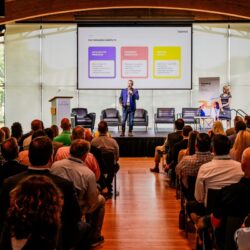
And, and so that that project grew into this Mpact conference where we’ve convened 200 people across mostly the US for this conference in a discussion of how can the social sciences, the humanities and the arts conduct effective impact-driven research.
So that’s where we are. We have a few examples where we’ve been able to adopt our model for accelerating science and engineering companies into education. So we have funding models. We have an advisory network, and we have a network of people, of business executives, that may lead these enterprises.
So it remains a work in progress, and we are inviting the community to contribute their process narratives, their case studies, of what’s worked at different areas of the country, or different areas of the world, that others might adopt to their situations.