Four From Social Science World Receive 2026 MacArthur Fellowships
Four Americans working in the social and behavioral sciences are among the 20 people named MacArthur Fellows this year. Recipients may be writers, scientists, artists, social scientists, humanists, teachers, entrepreneurs, or individuals in other fields, with or without institutional affiliations. This year’s social scientists have explored ideas ranging from the nature of memory to the externalities of climate-change policy. One, Ellora Derenoncourt, has been a guest on our Social Science Bites podcast.
The awards have been made by the John D. and Catherine T. MacArthur Foundation since 1981; the latest cohort was announced Tuesday.
The fellowships, colloquially known as “genius grants,” honor individuals who, according to the foundation, have shown “exceptional creativity; promise for important future advances based on a track record of significant accomplishments; and potential for the Fellowship to enable or facilitate subsequent creative work.”
The MacArthur Fellowship is a “no-strings-attached” award supporting people rather than projects. No specific output is required, although fellows are expected to continue making innovative and impactful contributions to society. Each receives $800,000, paid in equal quarterly installments over five years.
As the foundation explains, “the fellowship is not a lifetime achievement award—it is an investment in a person’s originality, insight, and potential.”
While every fellow has a record of significant achievement, the award emphasizes the work still ahead.
The four social and behavioral science fellows are:
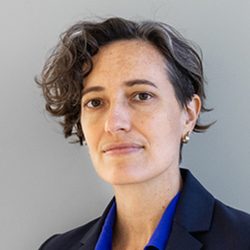
Holly Jean Buck — Sociologist and Energy Policy Researcher
Focus: Sociology and energy and natural-resource policy; investigating the social, ethical, and political dimensions of climate policy and emerging technologies.
Buck, 45, of Buffalo, New York, studies how climate and energy transitions can be governed fairly and effectively. Her work ranges from rural natural-resource management and clean-energy development to carbon removal and solar-radiation modification. In After Geoengineering, she uses research and speculative scenarios to consider how climate interventions might serve both the public interest and local communities. In Ending Fossil Fuels, she argues that expanding clean energy is not enough: governments also need democratic plans to wind down fossil-fuel production, support workers, and build public consent. Her newer research examines how rural communities can help shape technologies, including batteries, semiconductors, and artificial intelligence in agriculture, so innovation responds to local needs and advances a just transition.
Websites: geo.design | University at Buffalo | After Geoengineering
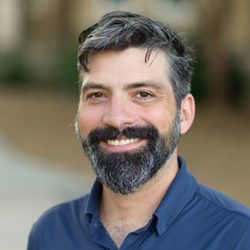
Felipe De Brigard — Philosopher and Cognitive Scientist
Focus: Philosophy, psychology, and cognitive science; reshaping how we understand memory and its relationship to imagination.
De Brigard, 47, of Durham, North Carolina, combines philosophy, psychology, and neuroscience to study episodic memory. He challenges the idea that memory functions mainly as an archive, arguing instead that recollection is constructive and closely tied to imagining alternatives of what could have happened or might happen next. Behavioral experiments and brain-imaging studies support his view that remembering and hypothetical thinking draw on overlapping systems. His research also connects basic cognition to moral and social questions. With collaborators in his native Colombia, he studies how forgiveness changes memories of political violence. Their findings suggest forgiveness may reduce a memory’s emotional intensity without changing its factual content, opening new ways to think about moral repair and social healing.
Websites: Imagination and Modal Cognition Lab | Duke University | Memory and Forgiveness Project
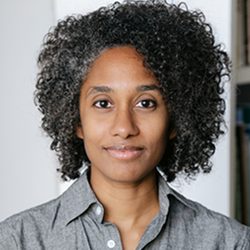
Ellora Derenoncourt — Labor Economist and Economic Historian
Focus: Economics and American history; uncovering the roots and continuing drivers of racial disparities in wealth and income mobility in the United States.
Derenoncourt, 39, of Princeton, New Jersey, builds historical datasets to explain persistent racial gaps in earnings, wealth, and mobility. Her work on the Great Migration shows that although Black migrants initially gained by moving north, later generations faced reduced opportunity as segregation, policing, incarceration, and urban disinvestment intensified. She has also shown that the 1966 expansion of the federal minimum wage to industries employing many Black workers accounted for about one-fifth of the Civil Rights–era narrowing of the racial earnings gap. In “Wealth of Two Nations,” Derenoncourt and co-authors created a continuous record of the U.S. racial wealth gap from 1860 to 2020, finding that unequal returns on investment assets have widened the gap since the 1980s.
Websites: Personal website | Program for Research on Inequality
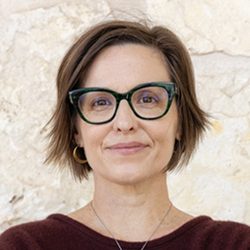
Kate Spradley — Forensic Anthropologist
Focus: Immigration and biological anthropology; identifying and repatriating the remains of migrants who died along the Texas–Mexico border.
Spradley, 53, of San Marcos, Texas, combines forensic science, coalition building, and policy reform to identify migrants who die crossing the Texas–Mexico border and return their remains to their families. She founded Operation Identification in 2013 after learning that many remains had been buried without investigation or DNA sampling. Spradley developed partnerships with county officials and landowners, created population-specific reference data to improve analysis of remains of Latin American origin, and expanded methods for recovering identifying information. OpID has identified and repatriated nearly 300 people. Through the Forensic Border Coalition, she also helped establish a cross-border humanitarian DNA database and trains students to combine technical expertise with ethical, collaborative practice.
Websites: Texas State University | Operation Identification | Forensic Border Coalition