




Could Distributed Peer Review Better Decide Grant Funding?
The landscape of academic grant funding is notoriously competitive and plagued by lengthy, bureaucratic processes, exacerbated by difficulties in finding willing reviewers. Distributed […]
Steven Lubet, the author of ‘Interrogating Ethnography: Why Evidence Matters,’ explains the importance of his approach to investigating the discipline — to ‘put it on trial’ — and to reiterate the idea that accuracy matters in social science. Spurring on his restatement is a recent review on Social Science Space that Lubet argues missed his point entirely.

A combination of influences — practice, classroom and POWER — has made Patricia Goodson’s book ‘Becoming an Academic Writer: 50 Exercises for Paced, Productive, and Powerful Writing’ a winner for many academics around the world, and now the Textbook & Academic Authors Association has awarded Goodson’s book with one of its 2018 Textbook Excellence Awards. We talk to the author about writing, both her own and perhaps yours!

Kenneth Jost has been watching the U.S. Supreme Court for decades, and producing annual yearbook looking at the term just passed. We asked him to reflect on his career and his subject. In this interview, originally posted in February, he predicted that “the fight over any Trump nominee would be a no-holds-barred battle.”
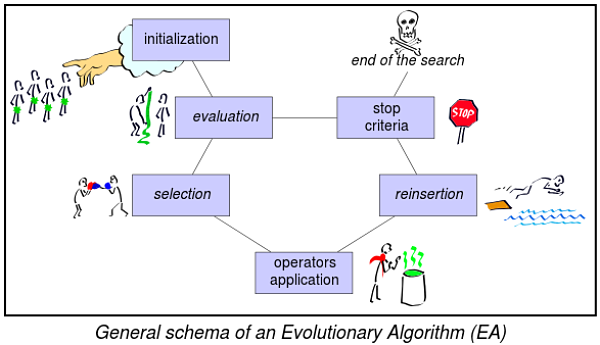
When discussing the nexus of computer science and social science, the transaction is usually in one direction – what can computer scientists do for social scientists. But a recent paper from Tufts University anthropologist Nick Seaver reverses that flow, using the tool of ethnography to interrogate the tools of engineering.
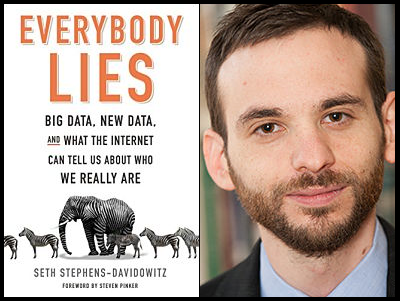
The underlying conceit of economist and data scientist Seth Stephens-Davidowitz’s work, whether in his new book, on the op-ed pages of the New York Times or in the classroom, or on campus, is that people’s search activity on a search engine reveals much more about them than do surveys, polls, or other social media
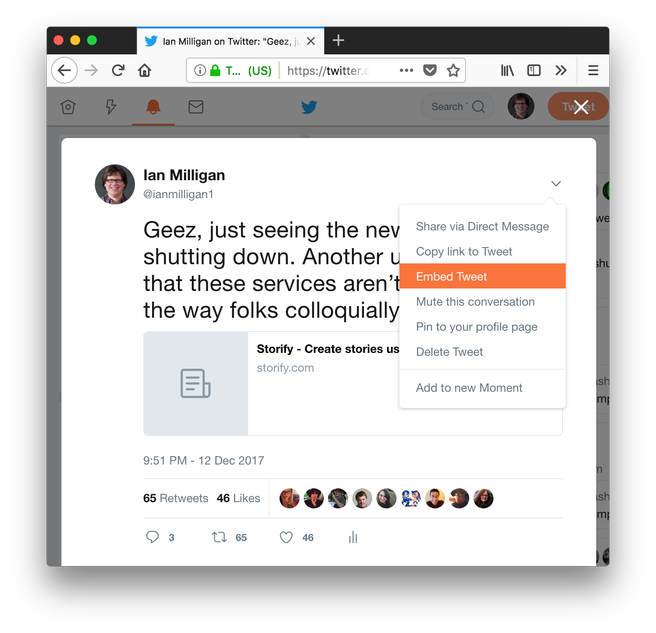
Storify is dead The service, which let you take social media content like Twitter and Facebook posts and aggregate them together into stories, announced that they’ll be shutting down and deleting all content as of March 16th, 2018. It’s not as bad as some platform shutdowns – there is notice and at least you can export your own content (one story at a time) – but it’s still a reminder of how vulnerable user-generated content can be online.

A connection can be made in between Ursula Le Guin’s fiction and her father’s groundbreaking work in anthropology. His ideas – which had a profound influence on his daughter’s writing – stemmed from an important development in the discipline of anthropology, one that viewed human culture as something that wasn’t ingrained, and had to be taught and learned.

Peer review has become a major editorial challenge for publishers worldwide, but options do exist to help tackle fraudulent peer reviewers. In this post from the Publons blog, some options for what publishers can do are examined.

The Royal Swedish Academy of Sciences has awarded this year’s Nobel Prize in Economic Sciences to the American economists Robert E. Hall […] Four Americans working in the social and behavioral sciences are among the 20 people named MacArthur Fellows this year. Recipients may be […] Euan Adie, the founder of Altmetric and later of Overton, discusses the reasons the led to Overton’s focus on showing researchers how […] The following is an adapted extract from The Cultural Industries, fifth edition, by David Hesmondhalgh. The increasing presence of information technology (IT) […] Developers of AI data centers have a public trust problem. According to multiple surveys, a majority of Americans say they would oppose […] I was adding some final flourishes on the topic of ‘iatrocracy’ to my forthcoming book with Natewindé Sawadogo – Sickness and Social […]
EXPLORE
Impact

Economic Peaks, Troughs and This Year’s Nobelists in Economics
READ MORE

Four From Social Science World Receive 2026 MacArthur Fellowships
READ MORE

Quick Insight: Euan Adie on Getting Academics Credit for Their Impact
READ MORE
Innovation

IT Giants and Their Operations: Should We Be Concerned?
READ MORE

What We Miss When We Study Public Trust with Surveys Alone
READ MORE

AI and ‘Iatrocracy’ – A Cautionary Tale
READ MORE