


Could Distributed Peer Review Better Decide Grant Funding?
The landscape of academic grant funding is notoriously competitive and plagued by lengthy, bureaucratic processes, exacerbated by difficulties in finding willing reviewers. Distributed […]

Researchers decided to conduct behavioral testing on competition and the process of peer review. What they learned offers some prescriptions for improving peer review going forward.
The new report of the REF from Lord Stern hopefully may shift the spotlight away from individual researchers themselves and onto the organizational practice of their universities, argues Richard Watermeyer.

Universities need faculty who are dedicated to teaching, but the most persuasive argument in support of tenure – its role in protecting academic freedom– has come to be too narrowly associated with research.
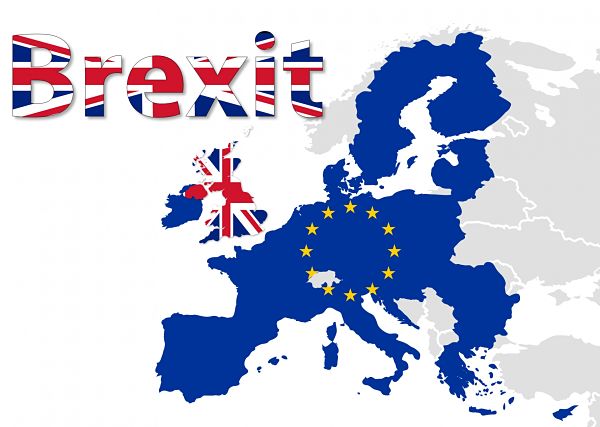
German-born Daniel Nehring insists that the upcoming Brexit vote is founded less on reason and more on xenophobia, and argues that the toxic atmosphere surrounding the vote is already doing harm to Britain’s fabled academic enterprise.

There are at least 12 university rankings that claim to be global, and in this video Michelle Stack focuses on the big three — the Times Higher Education, QS, and the Academic Ranking of World Universities. She asks what does being a “top-ranked” university mean to students? And who decides this ranking anyway?

The new government report ‘Succeeding as a Knowledge Economy’ takes forward most of the ideas about improving teaching at Britain institutions of higher education already found in a green paper published in November 2015. So what does this new report tell us about the future?
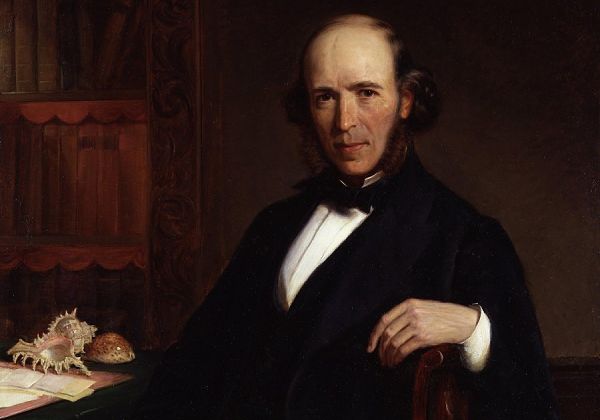
Rebutting Daniel Nehring’s recent post asking if sociology still matters in Britain, Robert Dingwall responds that sociology does have a good story to tell about itself, even in the age of austerity.
Daniel Nehring sees a fundamental contradiction between the critically engaged scholarship on social inequalities and power structures that British sociologists still produce and the thoroughly financialized, individualistic, and highly competitive organisational logics of the universities in which they work.

Jürgen Habermas, a globally known social theorist whose explorations of democracy, validity and communication have gained new prominence in the current moment, […] People often see science as a world apart: cool, rational and untouched by persuasion or performance. In this view, scientists simply discover […] “Research impact” means different things to different people. Some refer broadly to how science changes behaviors, beliefs, or practices outside academic institutions. […] David Canter considers informal places where people socialize, suggesting they’re an arena ChatGPT and other LLMs can’no’t replicate. As someone who lives […] It’s become cliche since Clive Humbly coined it in 2006, but data is indeed the new oil. It’s a mantra repeated by […] In September 2025, The Guardian reported about a lawyer in Australia having faced sanctions due to false citations. These citations were not […]
EXPLORE
Impact

Jürgen Habermas, 1929-2026: Exponent of the Public Sphere
READ MORE

Scientists Should Keep in Mind It’s Called the ‘Marketplace of Ideas’ for a Reason
READ MORE

Survey Finds Social Scientists Feel Unsupported in Seeking Societal Impact
READ MORE
Innovation

Reaching Parts to Which AI Has No Access
READ MORE

Andrea Medina-Smith on Making Research Data More FAIR
READ MORE

A Status Check on Hallucinated Case Law Incidents
READ MORE