


Could Distributed Peer Review Better Decide Grant Funding?
The landscape of academic grant funding is notoriously competitive and plagued by lengthy, bureaucratic processes, exacerbated by difficulties in finding willing reviewers. Distributed […]

From sexual abuse to pay and promotion gaps and beyond, coeducation has not kept up with the promises which with it was introduced, argues the author of a new book on the subject.

If the public institution is committed to public interest, then privatization of research and teaching cannot be allowed. Work done should be seen, heard and critiqued. Innovation in knowledge can come when people take away ideas from us, just as we did. Research should be made public, accountable and responsible. The data commons in public interest cannot be sacrificed at the altar of intellectual autonomy.

Higher education is a globally competitive market and institutions with a high rank can claim exceptionalism that brings in students and funding, acknowledges our Michelle Stack. But are rankings genuinely useful for students or for research?

The never-ending audit makes a crucial point about the ways in which power structures have shifted within universities, argues our Daniel Nehring. In effect, it suggests the death of the ideal of the autonomous scholar-researcher-teacher.
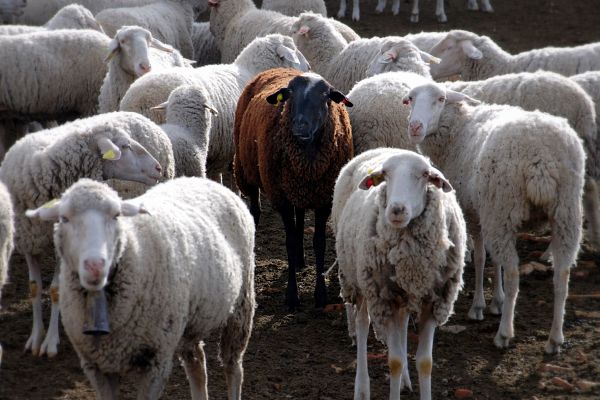
Alice Dreger says shecan see clearly that universities in which the majority of the faculty feel unsafe in terms of job security become places where no one feels safe to do anything that might risk upsetting someone.

A culture of bad science can evolve as a result of institutional incentives that prioritize simple quantitative metrics as measures of success, argues Paul Smaldino. But, he adds, not all is lost as new initiatives such as open data and replication are making a positive difference.

Craig Brandist compares aspects of British higher education to the old Soviet Union, with a similar tendency towards stagnation and strategies that workers adopt to absorb managerial pressure.
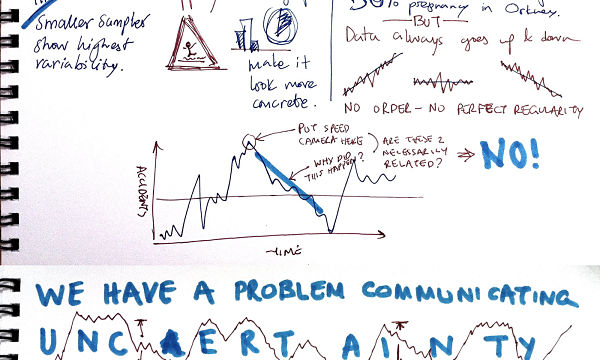
We likely all remember the maxim about statistics and lies. Statistical data do not allow for lies so much as semantic manipulation, explains Jonathan Goodman. In short, numbers drive the misuse of words.

The Royal Swedish Academy of Sciences has awarded this year’s Nobel Prize in Economic Sciences to the American economists Robert E. Hall […] Four Americans working in the social and behavioral sciences are among the 20 people named MacArthur Fellows this year. Recipients may be […] Euan Adie, the founder of Altmetric and later of Overton, discusses the reasons the led to Overton’s focus on showing researchers how […] The following is an adapted extract from The Cultural Industries, fifth edition, by David Hesmondhalgh. The increasing presence of information technology (IT) […] Developers of AI data centers have a public trust problem. According to multiple surveys, a majority of Americans say they would oppose […] I was adding some final flourishes on the topic of ‘iatrocracy’ to my forthcoming book with Natewindé Sawadogo – Sickness and Social […]
EXPLORE
Impact

Economic Peaks, Troughs and This Year’s Nobelists in Economics
READ MORE

Four From Social Science World Receive 2026 MacArthur Fellowships
READ MORE

Quick Insight: Euan Adie on Getting Academics Credit for Their Impact
READ MORE
Innovation
IT Giants and Their Operations: Should We Be Concerned?
READ MORE

What We Miss When We Study Public Trust with Surveys Alone
READ MORE

AI and ‘Iatrocracy’ – A Cautionary Tale
READ MORE