


Could Distributed Peer Review Better Decide Grant Funding?
The landscape of academic grant funding is notoriously competitive and plagued by lengthy, bureaucratic processes, exacerbated by difficulties in finding willing reviewers. Distributed […]

A concern for free expression and respect for science journalism are two themes Canadian novelist Margaret Atwood expounds on in an article in the newest edition of ‘Index on Censorship.’
Academics in the United Kingdom and in Australia interviewed about the impact agenda show fears that the balance between applied and basic knowledge may be tilting too far in one way.

In academic institutions that value hierarchies and compliance and seek to understand scholarship in terms of its economic value, argues our Daniel Nehring, there is little space for a discipline that aims to critically interrogate the intersections of structure and agency and the social production of inequalities.
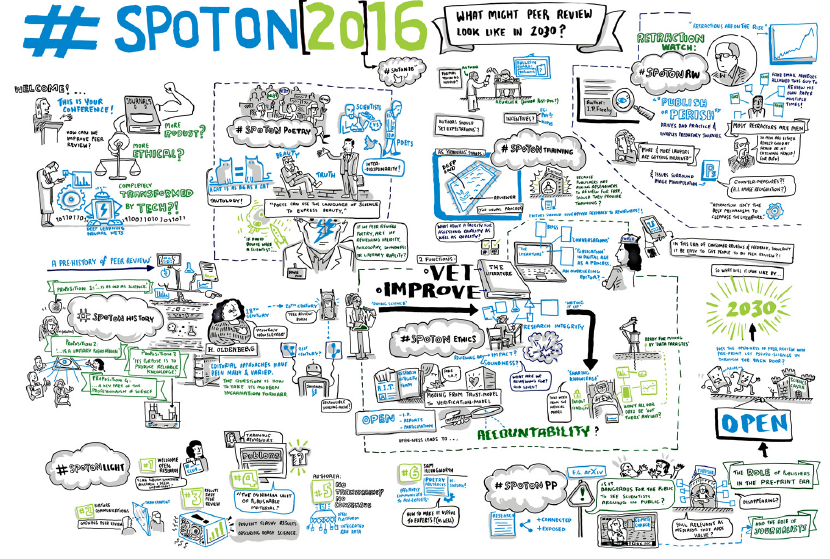
The founder of StateReviewer outlines a future where humans are written out of the publication process by artificial intelligence. But is the goal of eradicating bias and other malignancies potentially opening the door to a new set of ills?
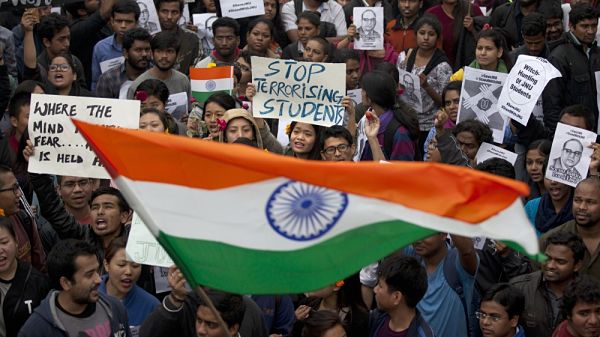
The only way out of the current state of tension for Indian universities, argues political scientists Aftab Alam, is for the institutions to learn to tolerate everything except intolerance.

A survey by Nature found that 52 percent of researchers believed there was a ‘significant reproducibility crisis’ and 38 percent said there was a ‘slight crisis.’ Here, three experts give their views on the issue.

Sociology today, argues our Daniek Nehring, is defined by a fundamental contradiction between its everyday labor practices and its imaginary ethos.
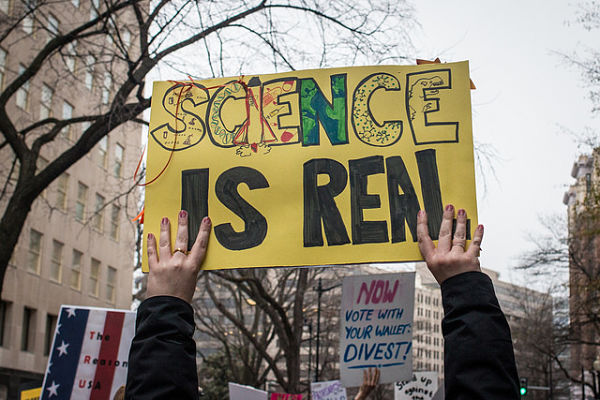
With science on the defensive for the time being, and the the fear of retribution palpable, the long-standing question of whether scientists should ever become advocates has come into sharper focus.

The Royal Swedish Academy of Sciences has awarded this year’s Nobel Prize in Economic Sciences to the American economists Robert E. Hall […] Four Americans working in the social and behavioral sciences are among the 20 people named MacArthur Fellows this year. Recipients may be […] Euan Adie, the founder of Altmetric and later of Overton, discusses the reasons the led to Overton’s focus on showing researchers how […] The following is an adapted extract from The Cultural Industries, fifth edition, by David Hesmondhalgh. The increasing presence of information technology (IT) […] Developers of AI data centers have a public trust problem. According to multiple surveys, a majority of Americans say they would oppose […] I was adding some final flourishes on the topic of ‘iatrocracy’ to my forthcoming book with Natewindé Sawadogo – Sickness and Social […]
EXPLORE
Impact
Economic Peaks, Troughs and This Year’s Nobelists in Economics
READ MORE
Four From Social Science World Receive 2026 MacArthur Fellowships
READ MORE

Quick Insight: Euan Adie on Getting Academics Credit for Their Impact
READ MORE
Innovation

IT Giants and Their Operations: Should We Be Concerned?
READ MORE

What We Miss When We Study Public Trust with Surveys Alone
READ MORE

AI and ‘Iatrocracy’ – A Cautionary Tale
READ MORE