




Could Distributed Peer Review Better Decide Grant Funding?
The landscape of academic grant funding is notoriously competitive and plagued by lengthy, bureaucratic processes, exacerbated by difficulties in finding willing reviewers. Distributed […]
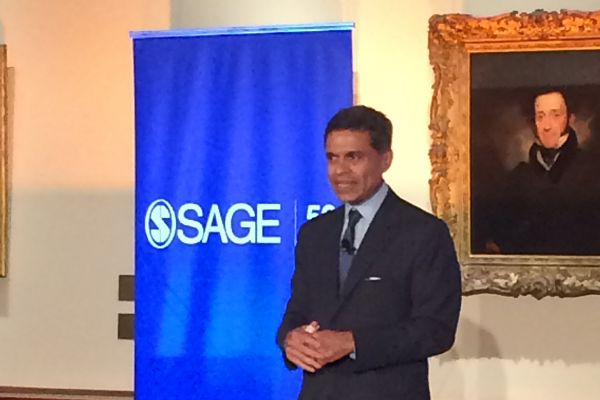
In celebration of the 50th anniversary of SAGE at the New York Public Library last week, journalist and author Fareed Zakaria addressed the importance of the humanities and social science to society. Zakaria’s latest book, ‘In Defense of a Liberal Education,’ tackles those same themes in depth.

Even when the news is good — women win grants from the ESRC at the same rate as men, and those grants are actually a bit larger on average — it’s tinged with bad — because there are so few senior women in academic social sciences men still get majority of the money.

When universities make note of how they ‘mobilize knowledge,’ they tend to focus on a select group of activities for an equally select audience. That’s a disservice.
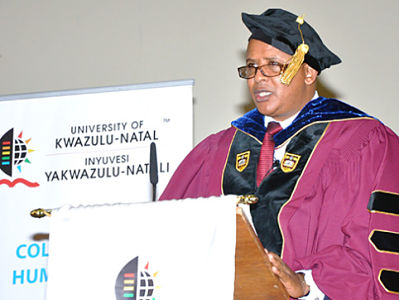
The director of directs the International Network for Higher Education in Africa argues that a nascent effort to rank the continent’s institutions of higher education ‘seems to me to be doomed from the start.’

The printed book, though still part of the academic library ensemble, is being relegated to the role of supporting player rather than the lead actor, argues a University of California librarian.

Objective outsiders focused on the purse or knowledgeable insiders focused on the scholarship — who should decide the best way to derive the productivity and innovations sought from Britain’s Research Councils?

In his recent encyclical that made waves for addressing climate change, notes our blogger Michelle Stack, Pope Francis also spoke about the current emphasis on education as a consumer product that focuses on “self-interested pragmatism.”
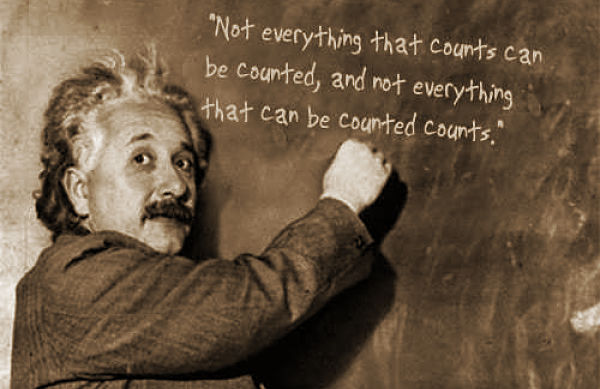
A new report looking at the role of metrics in analyzing British academe finds, ‘A lot of the things we value most in academic culture resist simple quantification, and individual indicators can struggle to do justice to the richness and diversity of our research.’

The Royal Swedish Academy of Sciences has awarded this year’s Nobel Prize in Economic Sciences to the American economists Robert E. Hall […] Four Americans working in the social and behavioral sciences are among the 20 people named MacArthur Fellows this year. Recipients may be […] Euan Adie, the founder of Altmetric and later of Overton, discusses the reasons the led to Overton’s focus on showing researchers how […] The following is an adapted extract from The Cultural Industries, fifth edition, by David Hesmondhalgh. The increasing presence of information technology (IT) […] Developers of AI data centers have a public trust problem. According to multiple surveys, a majority of Americans say they would oppose […] I was adding some final flourishes on the topic of ‘iatrocracy’ to my forthcoming book with Natewindé Sawadogo – Sickness and Social […]
EXPLORE
Impact
Economic Peaks, Troughs and This Year’s Nobelists in Economics
READ MORE

Four From Social Science World Receive 2026 MacArthur Fellowships
READ MORE

Quick Insight: Euan Adie on Getting Academics Credit for Their Impact
READ MORE
Innovation

IT Giants and Their Operations: Should We Be Concerned?
READ MORE

What We Miss When We Study Public Trust with Surveys Alone
READ MORE

AI and ‘Iatrocracy’ – A Cautionary Tale
READ MORE