
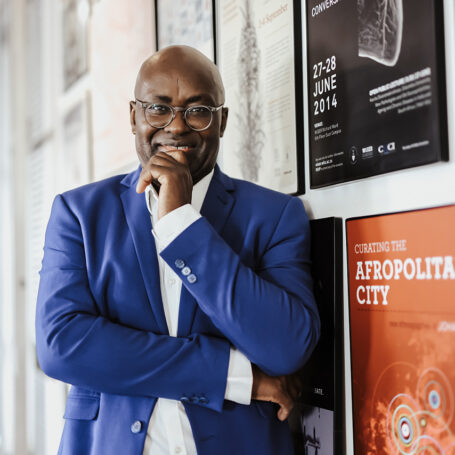



Could Distributed Peer Review Better Decide Grant Funding?
The landscape of academic grant funding is notoriously competitive and plagued by lengthy, bureaucratic processes, exacerbated by difficulties in finding willing reviewers. Distributed […]
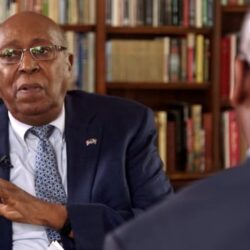
Political scientist Charles V. Hamilton, the tokenizer of the term ‘institutional racism,’ an apostle of the Black Power movement, and at times deemed both too radical and too deferential in how to fight for racial equity, died on November 18, 2023. He was 94.
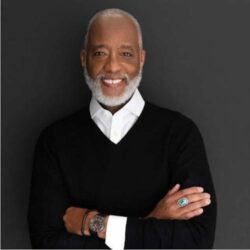
Norman B. Anderson, a clinical psychologist whose work as both a researcher and an administrator saw him serve as the inaugural director of the U.S. National Institute of Health’s Office of Behavioral and Social Sciences Research and as chief executive officer of the American Psychological Association, died on March 1.
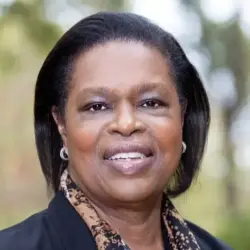
Kaye Husbands Fealing, an economist who has done pioneering work in the “science of broadening participation,” has been named the new leader of the U.S. National Science Foundation’s Directorate for Social, Behavioral and Economic Sciences.

In the UK, out of 164 university vice-chancellors, only two are Black. Professor David Mba was recently appointed as the first Black vice-chancellor […]

Anthropology is the holistic study of human culture, environment and biology across time and space. Biological anthropology focuses on the physiological aspects of people and our nonhuman primate relatives. Forensic anthropology is a further subspecialty that analyzes skeletal remains of the recently deceased within a legal setting.

Gabriel Miller, currently the president and chief executive officer of the Canadian Federation for the Humanities and Social Sciences, has been named the president and chief executive officer of Universities Canada effective March 18.

In the following Q&A, Roger J. Kreuz, a psychology professor who is working on a manuscript about the history and psychology of plagiarism, explains the nature and prevalence of plagiarism and the challenges associated with detecting it in the age of AI.

Inspired by ‘design sprints’ a Google where projects could create a prototype in five days, the authors started doing ‘research sprints’ in 2015.

The Royal Swedish Academy of Sciences has awarded this year’s Nobel Prize in Economic Sciences to the American economists Robert E. Hall […] Four Americans working in the social and behavioral sciences are among the 20 people named MacArthur Fellows this year. Recipients may be […] Euan Adie, the founder of Altmetric and later of Overton, discusses the reasons the led to Overton’s focus on showing researchers how […] The following is an adapted extract from The Cultural Industries, fifth edition, by David Hesmondhalgh. The increasing presence of information technology (IT) […] Developers of AI data centers have a public trust problem. According to multiple surveys, a majority of Americans say they would oppose […] I was adding some final flourishes on the topic of ‘iatrocracy’ to my forthcoming book with Natewindé Sawadogo – Sickness and Social […]
EXPLORE
Impact
Economic Peaks, Troughs and This Year’s Nobelists in Economics
READ MORE

Four From Social Science World Receive 2026 MacArthur Fellowships
READ MORE

Quick Insight: Euan Adie on Getting Academics Credit for Their Impact
READ MORE
Innovation
IT Giants and Their Operations: Should We Be Concerned?
READ MORE

What We Miss When We Study Public Trust with Surveys Alone
READ MORE

AI and ‘Iatrocracy’ – A Cautionary Tale
READ MORE