

Could Distributed Peer Review Better Decide Grant Funding?
The landscape of academic grant funding is notoriously competitive and plagued by lengthy, bureaucratic processes, exacerbated by difficulties in finding willing reviewers. Distributed […]

Peer review clearly isn’t perfect, but rather than simply bypassing it and releasing even more information into an overloaded system, we should focus on making it better, says this life sciences editor. The first step is to reset and clearly state our standards for quality in both publishing and peer reviewing.
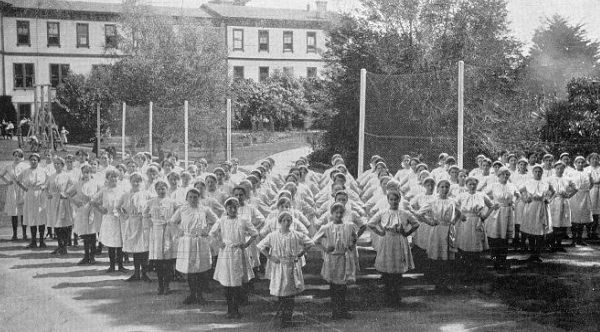
From sexual abuse to pay and promotion gaps and beyond, coeducation has not kept up with the promises which with it was introduced, argues the author of a new book on the subject.
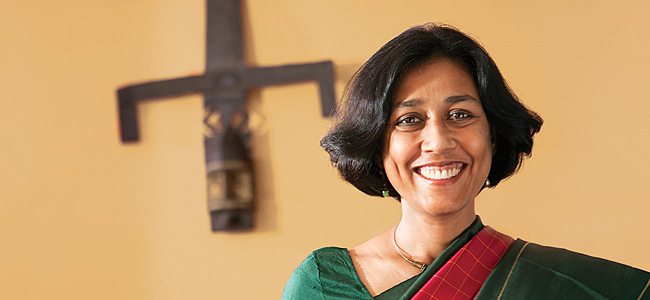
UPDATE: Two Indian social scientists are among 10 people charged with murder in an Indian state wracked by an ongoing insurgency by Maoist rebels that the academics were actively studying. Almost 200 Indian sociologists are protesting the arrest.
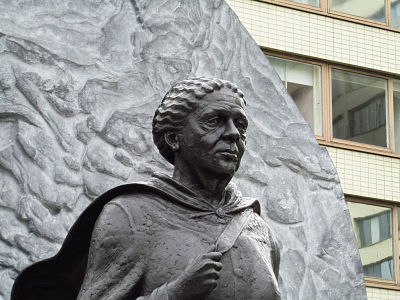
In what he describes as the obverse of the Rhodes Must Fall campaign, Robert Dingwall argues that the secular sainthood conferred on Mary Seacole steps on historical scholarship and ignores more genuine exemplars.

Higher education is a globally competitive market and institutions with a high rank can claim exceptionalism that brings in students and funding, acknowledges our Michelle Stack. But are rankings genuinely useful for students or for research?
Academics need to retain their freedom to speak on matters of interest, which intersect with their specialized knowledge, even where that intersection is tangential or not visible to others.

The never-ending audit makes a crucial point about the ways in which power structures have shifted within universities, argues our Daniel Nehring. In effect, it suggests the death of the ideal of the autonomous scholar-researcher-teacher.
Last month the webinar “Battling Bannings- Authors discuss intellectual freedom and the freedom to read” saw Index on Censorship’s Vicky Baker moderate a discussion between historian Wendy Doniger and children’s book authors Christine Baldacchino and Jessica Herthel.
Jürgen Habermas, a globally known social theorist whose explorations of democracy, validity and communication have gained new prominence in the current moment, […] People often see science as a world apart: cool, rational and untouched by persuasion or performance. In this view, scientists simply discover […] “Research impact” means different things to different people. Some refer broadly to how science changes behaviors, beliefs, or practices outside academic institutions. […] David Canter considers informal places where people socialize, suggesting they’re an arena ChatGPT and other LLMs can’no’t replicate. As someone who lives […] It’s become cliche since Clive Humbly coined it in 2006, but data is indeed the new oil. It’s a mantra repeated by […] In September 2025, The Guardian reported about a lawyer in Australia having faced sanctions due to false citations. These citations were not […]
EXPLORE
Impact

Jürgen Habermas, 1929-2026: Exponent of the Public Sphere
READ MORE

Scientists Should Keep in Mind It’s Called the ‘Marketplace of Ideas’ for a Reason
READ MORE

Survey Finds Social Scientists Feel Unsupported in Seeking Societal Impact
READ MORE
Innovation

Reaching Parts to Which AI Has No Access
READ MORE

Andrea Medina-Smith on Making Research Data More FAIR
READ MORE

A Status Check on Hallucinated Case Law Incidents
READ MORE