


Could Distributed Peer Review Better Decide Grant Funding?
The landscape of academic grant funding is notoriously competitive and plagued by lengthy, bureaucratic processes, exacerbated by difficulties in finding willing reviewers. Distributed […]
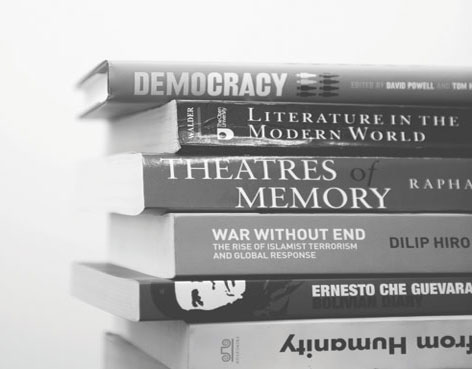
Last month the webinar “Battling Bannings- Authors discuss intellectual freedom and the freedom to read” saw Index on Censorship’s Vicky Baker moderate a discussion between historian Wendy Doniger and children’s book authors Christine Baldacchino and Jessica Herthel.

Below are some of the comments and articles that have addressed the issues of academic freedom as written about in the series appearing at Social Science Space.

Craig Brandist compares aspects of British higher education to the old Soviet Union, with a similar tendency towards stagnation and strategies that workers adopt to absorb managerial pressure.

The American presidential campaign season, official and unofficial, seems essentially endless. But as the US enters the homestretch for 2016, Howard Silver wonders how much all this sound and fury really matters to voters

The boundaries of academic freedom in the US have shifted, argues Sam Binkley. What is at stake now is not only the freedom to think, speak and generate knowledge, but the freedom, even the requirement that one becomes a certain kind of person in order to think and speak in certain kinds of ways.
An introduction to a series of short essays exploring contemporary issues of academic freedom from a range of perspectives, focusing both on British and international trends.

How can we create reliable and replicable political science data? A recent article in the ‘American Political Science Review’ focuses on text analysis and suggests ways to make these data sound and reproducible.
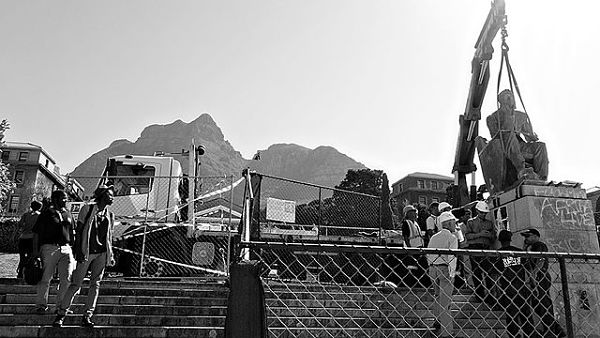
The decolonization debate in African universities raises critical issues about the relationship between power, knowledge and learning, argues Ahmed Essop. It also provides an opportunity to rethink the role of universities in social and economic development and in fashioning a common nation.

The Royal Swedish Academy of Sciences has awarded this year’s Nobel Prize in Economic Sciences to the American economists Robert E. Hall […] Four Americans working in the social and behavioral sciences are among the 20 people named MacArthur Fellows this year. Recipients may be […] Euan Adie, the founder of Altmetric and later of Overton, discusses the reasons the led to Overton’s focus on showing researchers how […] The following is an adapted extract from The Cultural Industries, fifth edition, by David Hesmondhalgh. The increasing presence of information technology (IT) […] Developers of AI data centers have a public trust problem. According to multiple surveys, a majority of Americans say they would oppose […] I was adding some final flourishes on the topic of ‘iatrocracy’ to my forthcoming book with Natewindé Sawadogo – Sickness and Social […]
EXPLORE
Impact
Economic Peaks, Troughs and This Year’s Nobelists in Economics
READ MORE
Four From Social Science World Receive 2026 MacArthur Fellowships
READ MORE

Quick Insight: Euan Adie on Getting Academics Credit for Their Impact
READ MORE
Innovation

IT Giants and Their Operations: Should We Be Concerned?
READ MORE

What We Miss When We Study Public Trust with Surveys Alone
READ MORE

AI and ‘Iatrocracy’ – A Cautionary Tale
READ MORE