



Could Distributed Peer Review Better Decide Grant Funding?
The landscape of academic grant funding is notoriously competitive and plagued by lengthy, bureaucratic processes, exacerbated by difficulties in finding willing reviewers. Distributed […]

Editor’s Note: As a means of supporting those attempting to do their best under trying circumstances, SAGE Publishing has drawn from its […]
The call for ‘social distancing’ in the wake of the coronavirus and its attendant COVID-19 disease has seen schools and universities around the world hurriedly attempting to turn their physical classrooms into virtual ones. While this may be best immediate reaction from an epidemiological point of view, from a pedagogic perspective, it has left instructors desperately trying to retrofit and reformat their courses while trying not to unduly disadvantage large numbers of their students. As a means of supporting those attempting to do their best under trying circumstances, SAGE Publishing has drawn from its large body of published and peer-reviewed research to offer the resources below — free of charge — to serve teachers and students around the world.

The United Kingdom’s reputed the self-isolation proposal, and its attendant controversy about the alleged influence of social and behavioral scientists on the government’s approach, is a nice indicator of how limited the social science influence actually is – and why it needs to be greater.
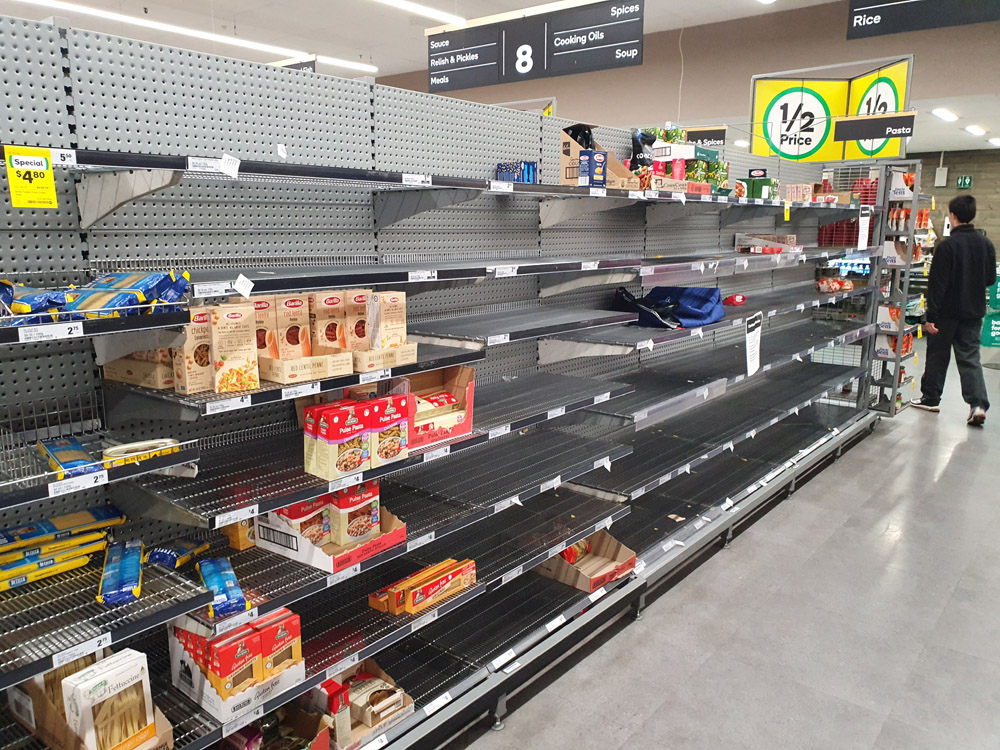
David Canter considers what panic really is and why its main cause is … telling people not to panic.

t’s Academic Book Week 2020! The theme this year is the environment, and makers, providers and readers of academic books will be celebrating them as vehicles for ground-breaking ideas. To kick off the week, David Beer, author of ‘The Data Gaze,’ discusses the notion of ‘digital atrophy’ and consumer capitalism within the technological and social environment we inhabit.

Status List of 2020 Social and Behavioral Science Conferences Amid concerns about the spread of the new coronavirus and its accompanying disease, […]

Swelling its total roll call of fellows to 140 elected in the past two decades, the directors of the American Academy of Political and Social Science have elected five distinguished scholars to be inducted as fellows of the AAPSS. Katherine Cramer, Eric Foner, Helen Milner, Mario Small, and Bruce Western will be inducted at a ceremony in October.

Jargon, a specialized language or set of expressions used by a specific group, is by its nature exclusionary, so it’s likely no surprise that scientific, technical or legal jargon may leave outsiders in the cold. A series of studies from researchers at Ohio State University suggests that jargon may turn off people well beyond an offending passage, and that one popular way to soften any harm – using jargon but immediately defining it – may not work.
Jürgen Habermas, a globally known social theorist whose explorations of democracy, validity and communication have gained new prominence in the current moment, […] People often see science as a world apart: cool, rational and untouched by persuasion or performance. In this view, scientists simply discover […] “Research impact” means different things to different people. Some refer broadly to how science changes behaviors, beliefs, or practices outside academic institutions. […] David Canter considers informal places where people socialize, suggesting they’re an arena ChatGPT and other LLMs can’no’t replicate. As someone who lives […] It’s become cliche since Clive Humbly coined it in 2006, but data is indeed the new oil. It’s a mantra repeated by […] In September 2025, The Guardian reported about a lawyer in Australia having faced sanctions due to false citations. These citations were not […]
EXPLORE
Impact

Jürgen Habermas, 1929-2026: Exponent of the Public Sphere
READ MORE

Scientists Should Keep in Mind It’s Called the ‘Marketplace of Ideas’ for a Reason
READ MORE

Survey Finds Social Scientists Feel Unsupported in Seeking Societal Impact
READ MORE
Innovation

Reaching Parts to Which AI Has No Access
READ MORE

Andrea Medina-Smith on Making Research Data More FAIR
READ MORE

A Status Check on Hallucinated Case Law Incidents
READ MORE