

Could Distributed Peer Review Better Decide Grant Funding?
The landscape of academic grant funding is notoriously competitive and plagued by lengthy, bureaucratic processes, exacerbated by difficulties in finding willing reviewers. Distributed […]
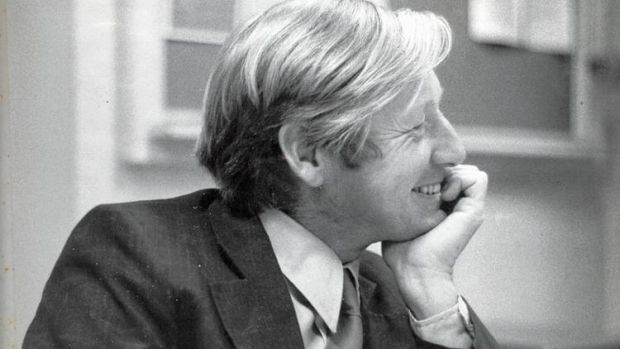
New Zealand native Brian Sutton-Smith, a developmental psychologist who brought study of fun off the playground and into the classroom, passed away earlier this month at age 90.
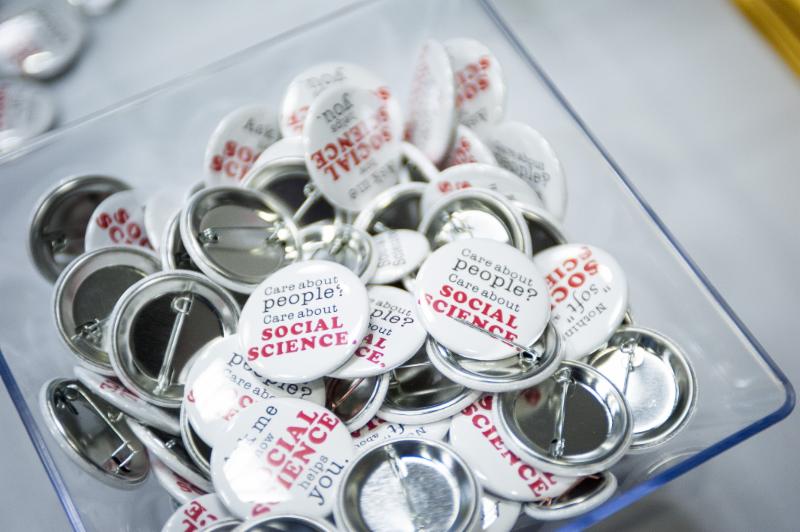
With a new Congress expected to take up old causes that might not sit well with the science community, a consortium of social and behavioral science associations brought the message home to legislators that social science was part of their district, too.

The eternal conflict between the abstract and the applicable haunts the halls of many business schools. One way to help close the gap between research and practice is to re-examine how ‘impact’ is measured in the field.
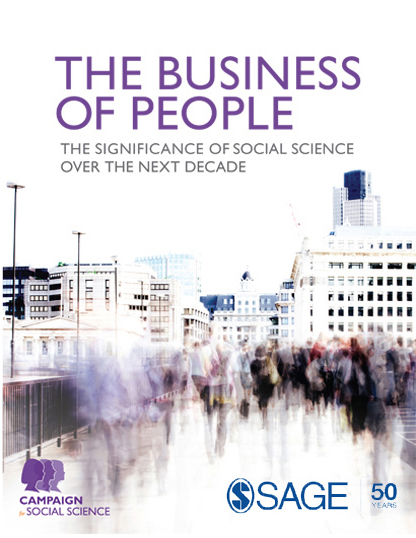
A critique of the recent pre-general election ‘Business of People’ report has lead the chair of the organization behind the report, Britain’s Campaign for Social Science, to respond to arguments that social scientists should not be asking for increases in government spending on science and research.

Academic researchers – not just media pundits – should have their say in holding policy promises to account. Jonathan Breckon charts the various activities around the United Kingdom aimed at providing a rigorous evidence base in the run-up to the General Election.

Once again the American Community Survey — beloved of social scientists and the despair of many conservatives — is in the crosshairs.

Social science is vital too The Guardian Social Science has to be embedded in any strategy for science and innovation worth […]

The Campaign for Social Science is asking the British government-to-be for a greater recognition of social science, arguing that the nation’s future prosperity will depend on it.

The Royal Swedish Academy of Sciences has awarded this year’s Nobel Prize in Economic Sciences to the American economists Robert E. Hall […] Four Americans working in the social and behavioral sciences are among the 20 people named MacArthur Fellows this year. Recipients may be […] Euan Adie, the founder of Altmetric and later of Overton, discusses the reasons the led to Overton’s focus on showing researchers how […] The following is an adapted extract from The Cultural Industries, fifth edition, by David Hesmondhalgh. The increasing presence of information technology (IT) […] Developers of AI data centers have a public trust problem. According to multiple surveys, a majority of Americans say they would oppose […] I was adding some final flourishes on the topic of ‘iatrocracy’ to my forthcoming book with Natewindé Sawadogo – Sickness and Social […]
EXPLORE
Impact
Economic Peaks, Troughs and This Year’s Nobelists in Economics
READ MORE
Four From Social Science World Receive 2026 MacArthur Fellowships
READ MORE

Quick Insight: Euan Adie on Getting Academics Credit for Their Impact
READ MORE
Innovation

IT Giants and Their Operations: Should We Be Concerned?
READ MORE

What We Miss When We Study Public Trust with Surveys Alone
READ MORE

AI and ‘Iatrocracy’ – A Cautionary Tale
READ MORE