



Could Distributed Peer Review Better Decide Grant Funding?
The landscape of academic grant funding is notoriously competitive and plagued by lengthy, bureaucratic processes, exacerbated by difficulties in finding willing reviewers. Distributed […]

The Covid-19 pandemic seems to be subsiding into a low-level endemic respiratory infection – although the associated pandemics of fear and action […]

The generalist degree has a big part to play in the emerging higher education landscape for graduates. Humanities, social science, general science, technology and creative industries fields such as design can deliver adaptable, flexible mindsets.
The management community’s sudden interest in Grand Challenges risks turning Grand Challenges literature into a Tower of Babel.

Amitai Etzioni, an Israeli-American sociologist, senior policy adviser, educator and father of the communitarianism philosophy, died May 31. He was 94.
Jennifer Remnant, a Chancellor’s Fellow at the University of Strathclyde business school based in the Scottish Centre for Employment Research, will lecture […]

Robert “Bob” Lucas Jr., an economist, educator and Nobel Prize in Economics laureate, died May 15. He was 85.

Five organizations representing knowledge networks, research libraries, and publishing platforms joined the Federation of Humanities and Social Sciences to review the present and the future of open access — in policy and in practice – in Canada
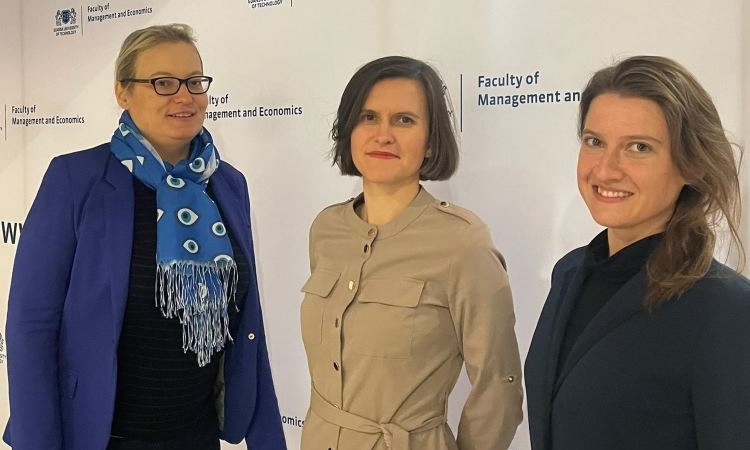
Joanna Wolszczak-Derlacz, Dagmara Nikulin, and Sabina Szymczak from Gdańsk University of Technology discuss their recent paper “Global value chains and wages under […]

The Royal Swedish Academy of Sciences has awarded this year’s Nobel Prize in Economic Sciences to the American economists Robert E. Hall […] Four Americans working in the social and behavioral sciences are among the 20 people named MacArthur Fellows this year. Recipients may be […] Euan Adie, the founder of Altmetric and later of Overton, discusses the reasons the led to Overton’s focus on showing researchers how […] The following is an adapted extract from The Cultural Industries, fifth edition, by David Hesmondhalgh. The increasing presence of information technology (IT) […] Developers of AI data centers have a public trust problem. According to multiple surveys, a majority of Americans say they would oppose […] I was adding some final flourishes on the topic of ‘iatrocracy’ to my forthcoming book with Natewindé Sawadogo – Sickness and Social […]
EXPLORE
Impact

Economic Peaks, Troughs and This Year’s Nobelists in Economics
READ MORE

Four From Social Science World Receive 2026 MacArthur Fellowships
READ MORE

Quick Insight: Euan Adie on Getting Academics Credit for Their Impact
READ MORE
Innovation
IT Giants and Their Operations: Should We Be Concerned?
READ MORE

What We Miss When We Study Public Trust with Surveys Alone
READ MORE

AI and ‘Iatrocracy’ – A Cautionary Tale
READ MORE