


Could Distributed Peer Review Better Decide Grant Funding?
The landscape of academic grant funding is notoriously competitive and plagued by lengthy, bureaucratic processes, exacerbated by difficulties in finding willing reviewers. Distributed […]
International Clinical Trials Day is on Tuesday May 20th but half of all clinical trials have never been published and some have […]

UPDATED, While the FY2015 funding bill for science includes a record budget for the NSF, two paragraphs in the document are raising red flags in the social and behavioral science community.

The following articles are drawn from SAGE Insight, which spotlights research published in SAGE’s more than 700 journals. The articles linked below are free […]

Grad sudents looking for a professor to be a mentor had a better chance of getting a positive response – or a response at all – if they were white and male, according to a new study that broke down findings by discipline and whether a school was public or private.

No one expected Tamiflu to be a wonder drug, but indications are that it’s moderately useful in fighting a serious public health threat. But that message was lost last week in an ill-starred rush to beat up on ‘wicked’ Big Pharma, argues Robert Dingwall.

Research collaboration now involves significant online communication. But sending files back and forth between collaborators creates redundancy of effort, causes unnecessary delays and, many times, leaves people frustrated with the whole idea of collaboration. Christof Schöch looks at some web-based collaborative writing tools and presents some helpful tips on finding the right tool for the job.

Less than a week remains to submit abstracts for the Regional Studies Association’s European Conference 2014, slated for June 16-18 in Izmir, […]
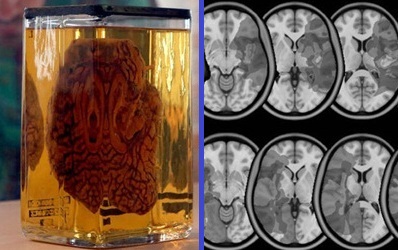
In a pair of views from our partner site The Conversation, two exponents of brain research discuss the utility of brain scan technology. Here Catherine Loveday suggests that observational methods are still more valuable.
Jürgen Habermas, a globally known social theorist whose explorations of democracy, validity and communication have gained new prominence in the current moment, […] People often see science as a world apart: cool, rational and untouched by persuasion or performance. In this view, scientists simply discover […] “Research impact” means different things to different people. Some refer broadly to how science changes behaviors, beliefs, or practices outside academic institutions. […] David Canter considers informal places where people socialize, suggesting they’re an arena ChatGPT and other LLMs can’no’t replicate. As someone who lives […] It’s become cliche since Clive Humbly coined it in 2006, but data is indeed the new oil. It’s a mantra repeated by […] In September 2025, The Guardian reported about a lawyer in Australia having faced sanctions due to false citations. These citations were not […]
EXPLORE
Impact

Jürgen Habermas, 1929-2026: Exponent of the Public Sphere
READ MORE

Scientists Should Keep in Mind It’s Called the ‘Marketplace of Ideas’ for a Reason
READ MORE

Survey Finds Social Scientists Feel Unsupported in Seeking Societal Impact
READ MORE
Innovation

Reaching Parts to Which AI Has No Access
READ MORE

Andrea Medina-Smith on Making Research Data More FAIR
READ MORE

A Status Check on Hallucinated Case Law Incidents
READ MORE