


Could Distributed Peer Review Better Decide Grant Funding?
The landscape of academic grant funding is notoriously competitive and plagued by lengthy, bureaucratic processes, exacerbated by difficulties in finding willing reviewers. Distributed […]
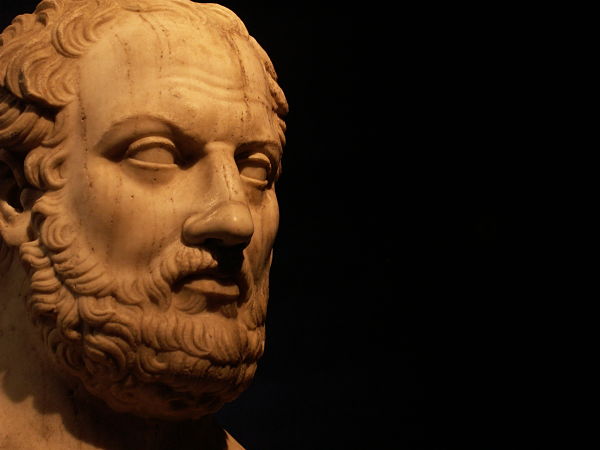
The claim that Thucydides’ account of the past is useful is often extended to historiography in general, rather than just to his specific – and idiosyncratic – approach. And that, suggests Neville Morley, may be the real trap of Thucydides.

T.S. Eliot said “April is the cruelest month.” This November has been pretty harsh, too, says blogger Howard J. Silver, who wonders what the new U.S. president will mean for a number of issues, including research funding.

Erich Bloch was the first non-academic to serve as director of the NSF. Although a computer engineer by background, he recognized the value of the social and behavioral sciences.

In this Social Science Bites podcast, Harvard’s Jennifer Hochschild explains to interviewer David Edmonds some of the pertinent data points from her years of using quantitative and qualitative analysis to map the racial, ethnic and class cleavages in America’s demography.
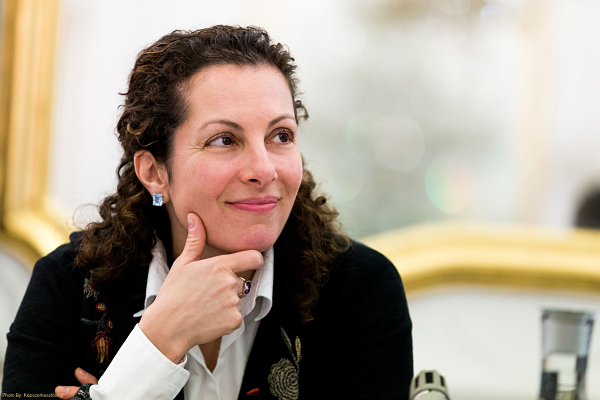
Expertise in governing has been under attack, argues Beth Simone Noveck, but not just in recent demagogic attacks on “the elites.” For years, she explains in the annual SAGE/Campaign for Social Science lecture delivered November 22 in London, the expertise of the populace has been structurally excluded from the levers of power.
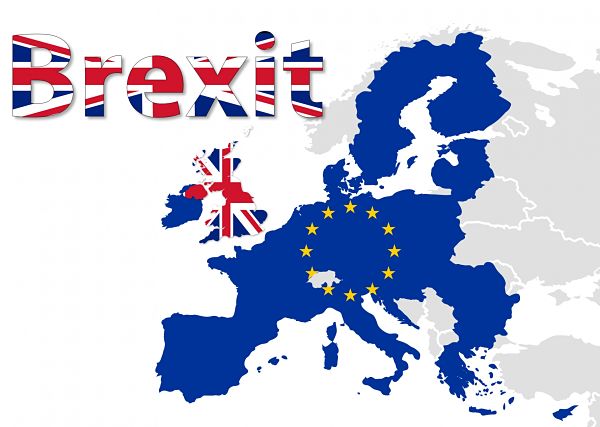
SAGE Publishing is providing free access to a range of academic research which engages directly with the Brexit referendum and its potential impacts or gives a background on the UK-EU relationship.

The Board on Behavioral, Cognitive, and Sensory Sciences, part of the Division of Behavioral and Social Sciences and Education of the National […]

The election of Donald Trump illustrates the hazards encountered when scientists and scientific institutions alienate themselves from historic global changes.


Jürgen Habermas, a globally known social theorist whose explorations of democracy, validity and communication have gained new prominence in the current moment, […] People often see science as a world apart: cool, rational and untouched by persuasion or performance. In this view, scientists simply discover […] “Research impact” means different things to different people. Some refer broadly to how science changes behaviors, beliefs, or practices outside academic institutions. […] David Canter considers informal places where people socialize, suggesting they’re an arena ChatGPT and other LLMs can’no’t replicate. As someone who lives […] It’s become cliche since Clive Humbly coined it in 2006, but data is indeed the new oil. It’s a mantra repeated by […] In September 2025, The Guardian reported about a lawyer in Australia having faced sanctions due to false citations. These citations were not […]
EXPLORE
Impact

Jürgen Habermas, 1929-2026: Exponent of the Public Sphere
READ MORE

Scientists Should Keep in Mind It’s Called the ‘Marketplace of Ideas’ for a Reason
READ MORE

Survey Finds Social Scientists Feel Unsupported in Seeking Societal Impact
READ MORE
Innovation

Reaching Parts to Which AI Has No Access
READ MORE

Andrea Medina-Smith on Making Research Data More FAIR
READ MORE

A Status Check on Hallucinated Case Law Incidents
READ MORE