


Could Distributed Peer Review Better Decide Grant Funding?
The landscape of academic grant funding is notoriously competitive and plagued by lengthy, bureaucratic processes, exacerbated by difficulties in finding willing reviewers. Distributed […]
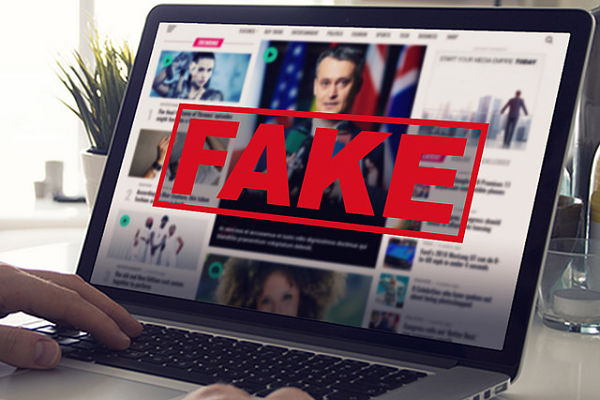
Facebook CEO Mark Zuckerberg recently acknowledged his company’s responsibility in helping create the enormous amount of fake news that plagued the 2016 election – after earlier denials. Yet he offered no concrete details on what Facebook could do about it. Fortunately, there’s a way to fight fake news that already exists and has behavioral science on its side: the Pro-Truth Pledge project.

One of the largest meta-analysis conducted in the social sciences: asks what the relationship is between who you are (i.e., personality), your work enjoyment (i.e., job satisfaction) and your happiness (i.e., life satisfaction) to find out whether we need to be happy at work to be happy life. That’s not all it found out.
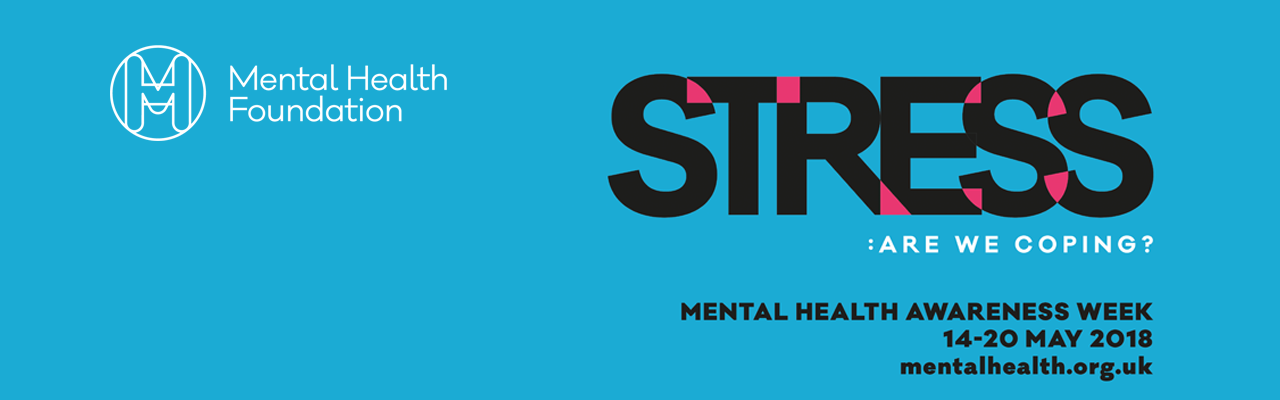
In the latest of its monthly series of interdisciplinary microsites addressing important public issues, SAGE Publishing today is offering free access to academic articles that support Mental Health Awareness Week. The week, sponsored by Britain’s Mental Health Foundation, this year is focused on stress (“Are we coping?”), which the collection covers along with the causes, diagnosis, experiences and treatment of mental illness, are the content areas represented in the collection.
How do firms transform big data and why do firms differ in their abilities to create value from big data? in a research article that tries to find answers to these questions. Jing Zeng and Keith Glaister find “it is not the data itself, or individual data scientists, that generate value creation opportunities. Rather, value creation occurs through the process of data management.”

CASBS at Stanford University and SAGE Publishing are announcing nominations to the fifth annual SAGE-CASBS awards. The award goes to researchers who have made outstanding societal contributions by using social and behavioral research to address or understand vital social concerns.
The recent revelation that Cambridge Analytica was able to acquire the Facebook data led to a surge of interest and questions around what companies do with people’s data. Amidst all of this, little attention has been paid to the feelings of those whose data are used, shared, and acted upon.
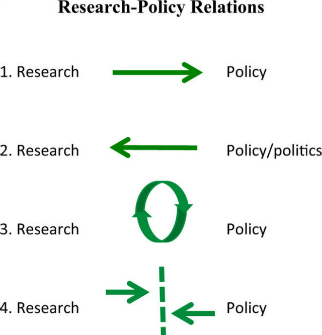
Christina Boswell and Katherine Smith set out four different approaches to theorizing the relationship between knowledge and policy and consider what each of these suggests about approaches to incentivising and measuring research impact.

In the first of what will be a monthly series, SAGE Publishing will open up articles in a specific area of public […]
People often see science as a world apart: cool, rational and untouched by persuasion or performance. In this view, scientists simply discover […] “Research impact” means different things to different people. Some refer broadly to how science changes behaviors, beliefs, or practices outside academic institutions. […] One researcher studies how war affects children, another took a literal worm’s eye view to examine rural development, while two others scrutinized […] David Canter considers informal places where people socialize, suggesting they’re an arena ChatGPT and other LLMs can’no’t replicate. As someone who lives […] It’s become cliche since Clive Humbly coined it in 2006, but data is indeed the new oil. It’s a mantra repeated by […] In September 2025, The Guardian reported about a lawyer in Australia having faced sanctions due to false citations. These citations were not […]
EXPLORE
Impact

Scientists Should Keep in Mind It’s Called the ‘Marketplace of Ideas’ for a Reason
READ MORE

Survey Finds Social Scientists Feel Unsupported in Seeking Societal Impact
READ MORE

Canada’s SSHRC Names 2025 Impact Winners
READ MORE
Innovation

Reaching Parts to Which AI Has No Access
READ MORE

Andrea Medina-Smith on Making Research Data More FAIR
READ MORE

A Status Check on Hallucinated Case Law Incidents
READ MORE